
Events and News
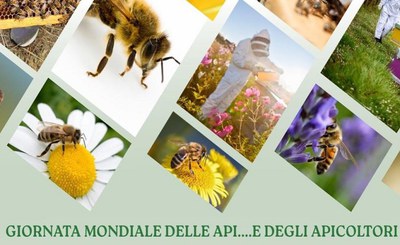
Bees, Beekeepers and Protected Areas
May 20, 2025 — May 20, 2025 PescasseroliOn the occasion of World Bee and Beekeepers Day, the Abruzzo, Lazio and Molise National Park will be the site of an important event dedicated to the protection of pollinators and the enhancement of the role of beekeeping in protected areas. The meeting will see the participation of researchers, technicians and representatives of the beekeeping and environmental world.
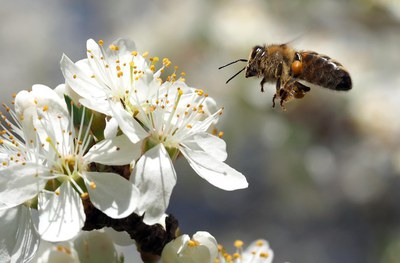
World Bee Day 2025
May 20, 2025 — May 20, 2025Bees and other pollinators, such as butterflies, bats and hummingbirds, are increasingly threatened by human activities.
Pollination is, however, a fundamental process for the survival of our ecosystems. Nearly 90% of the world's wild flowering plant species depend, entirely or at least in part, on animal pollination, along with over 75% of the world's food crops and 35% of global agricultural land. Pollinators not only contribute directly to food security, but are also essential for the conservation of biodiversity.
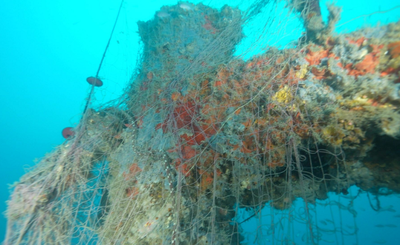
“GHOSTNETS”: nearly 3 tons of ghost nets removed and 52 thousand square meters of seabed restored in Sicily
May 14, 2025The first marine ecosystem restoration operations included by the PNRR MER - Marine Ecosystem Restoration – Intervention A12 “GhostNets” have been completed
Every year, approximately 100,000 mammals and one million marine birds die due to entrapment in abandoned fishing nets or after ingesting the fragments they release into the sea. 86% of marine waste found on the seabed is attributable to fishing activities, with a clear prevalence of abandoned, lost or disused fishing lines, ropes and nets (ISPRA data). Ghost nets therefore represent one of the most insidious forms of marine pollution.
For this reason, ISPRA, the implementing body of the PNRR MER project, has entrusted the economic operators Fondazione Marevivo, Castalia Consorzio Stabile and CoNISMa, the National Inter-University Consortium for Marine Sciences, in the “GhostNets” operation, with the recovery of fishing nets and gear abandoned or accidentally lost at sea.
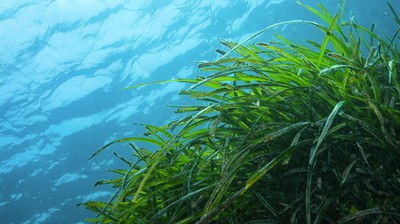
Innovative Technologies for Monitoring Marine Protected Areas
May 14, 2025The DigitAP project dedicated to Marine Protected Areas (MPA) is getting underway, with the start of the delivery phase of the equipment intended for environmental monitoring of species and habitats and anthropic pressures.
This involves high-tech equipment, including two different types of drones: a first model equipped with a laser light LiDAR sensor, ideal for 3D mapping of the territory and submerged structures, and the other equipped with a multispectral probe, capable of detecting environmental parameters, including the characteristics of vegetation and water quality.

Blu Livorno. The Biennial of Sea and Water
May 14, 2025 — May 17, 2025 Acquarium of LivornoAs part of the Biennale del mare-Blu Livorno On May 14th, starting at 2:30 p.m., the conference "Marine biodiversity: 20 years of scientific and educational collaboration between Italy and China" will take place in the panoramic hall of the Livorno Aquarium. The conference is organized by ISPRA together with the Italian Embassy in Beijing and the University of Pisa, as part of the 3rd bilateral workshop on scientific research and advanced training applied to marine sciences, which will see the participation of professors from the Zhejiang Ocean University and a large delegation of students.
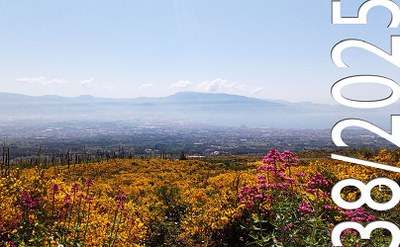
Publication of RETICULA n. 38/2025
May 12, 2025The number 38 of RETICULA technical journal is now available online.
This issue's Editorial reflects on one of the necessary measures to combat invasive alien species (IAS), namely the early notification of the competent authorities of the appearance of a new IAS and its rapid removal. The articles give an update on the activities of pollinator monitoring in the Vesuvius area, with the double function of promoting biodiversity and contributing to public awareness; on the results of the LIFE Perdix project, whose main objective was the reintroduction of the Italian Partridge (Perdix perdix italica) in the Valle del Mezzano. The experience of the Bruschera marshes within the BioBlitz Lombardia programme as an opportunity for citizens to approach the world of natural sciences and biodiversity.
As usual, the News section contains many useful information reported by users of the journal and by the Editorial Board
World Migratory Bird Day 2025
May 10, 2025 — May 10, 2025Saturday, May 10 is World Migratory Bird Day, which this year highlights the relationship between migratory birds and insects in an alarming decline for both. The theme chosen for 2025 is “Shared Spaces: Creating Bird-Friendly Cities and Communities” to highlight the importance of creating safe and sustainable environments for migratory birds to thrive.
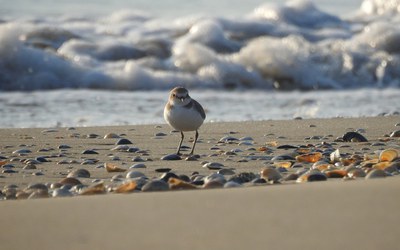
These days, on our beaches, it is possible to observe the Kentish Plover again, a small wader that is dedicating itself to nesting. The General Command of the Carabinieri, the ringers and the local associations adhering to the National Committee for the Conservation of the Kentish Plover, have resumed nest monitoring and ringing activities, in compliance with the Birds Directive and the AEWA Agreement on migratory water birds. ISPRA coordinates the ringing project with colored rings visible from a distance and has drawn up the Protocol for the collection of data on the nesting population.
Birds and Infrastructure: mitigating Impacts
May 09, 2025 10:00 AM — May 09, 2025 01:00 PM Laguna di Orbetello Via Giacomo Leopardi, 9, OrbetelloLarge infrastructures such as wind farms and airports have a significant impact on biodiversity and the environment. In the design of such facilities, it is often overlooked that wind and air are a resource shared by birds. Wind turbines in areas frequented by migratory birds or local species, or aircraft turbines can cause collisions, generating "conflicts" between birds and facilities that are difficult to resolve. During the seminar, experiences and case studies will be discussed, exploring methods to assess and reduce the risk of collisions, sharing planning approaches with institutions and energy producers.
The value (not only environmental) of biodiversity
May 09, 2025 09:30 AM — May 09, 2025 01:30 PM GenovaDuring the second stage of the Sustainable Development Festival, at the Palazzo Ducale in Genoa, ASviS organizes a debate between high-profile experts, representatives of institutions and stakeholders, on the centrality of biodiversity, not only in an environmental, but also economic and social perspective. Biodiversity, in fact, represents not only a heritage to be protected, as provided for by the Italian Constitution after the 2022 reform promoted by ASviS, but also a strategic resource for the economy and society.
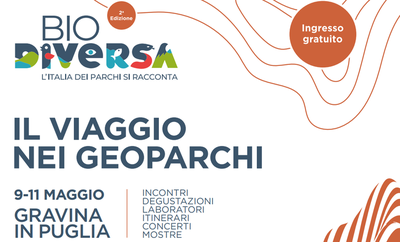
Biodiversa 2025. Italy's parks tell their story
May 09, 2025 — May 11, 2025 Gravina in PugliaA trip in the Geoparks
An event that celebrates the beauty and value of Italian geodiversity, promoted by the Alta Murgia National Park Authority.
“The Journey to Geoparks” is the title of this second edition: between landscapes sculpted by time, biodiversity and ancient traditions, Biodiversa will take us on a journey through the history of the Earth, to discover wonderful places and the excellences they preserve. Three days of meetings, exhibitions, workshops and tastings to discover Italian Geoparks as places of protection, environmental education and sustainable development of local communities.

A Plan for the Restoration of Nature
May 08, 2025 10:00 AM — May 08, 2025 12:30 PM WebinarFollowing the entry into force of the Nature Restoration Law, Member States must develop a National Restoration Plan by September 2026. This document is of fundamental importance for the successful implementation of the Regulation. In order to understand the current situation at European level and how this plan will be built and governed at Italian level, Lipu and WWF Italy are organizing a meeting with the major European and National institutions that will intervene to outline an initial updated framework and future actions.
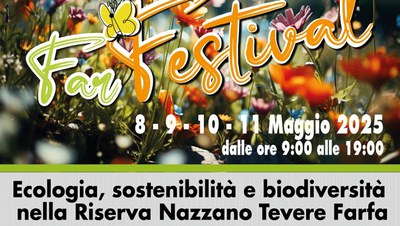
Far Festival 2025
May 08, 2025 — May 11, 2025 Nazzano (RM), Riserva Naturale Tevere-FarfaFrom 8 to 11 May, the first edition of FarFEST will be held at the Nazzano Tevere-Farfa Regional Nature Reserve: 4 days dedicated to ecology, sustainability and biodiversity in the Nazzano Tevere Farfa Reserve.
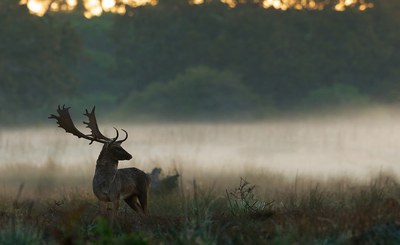
At Rainews' Futuro24 the Presidential Estate of Castelporziano and the activities of ISPRA
May 06, 2025The Presidential Estate of Castelporziano is a natural area that extends for 6000 hectares, reaching the coastline, and is just a few kilometers from the center of Rome. It is a unique territory, covered for a third by one of the few remaining examples of mixed lowland forest. The area is home to many animal species, representing a stopping point for many bird species. There is also a complex community of wild ungulates: roe deer, wild boar, fallow deer and red deer.
Monk Seal: Two Sightings in a Few Days
May 05, 2025Over the past week, the monk seal, one of the species most at risk of extinction and strictly protected under the Habitats Directive, has been sighted in the waters between the Punta Campanella Marine Protected Area and the Site of Community Interest of the Island of Capri.
ISPRA and the AMP Punta Campanella have started a collaboration to monitor their presence through non-invasive techniques, starting with environmental DNA analysis. The main cause of the reduction in the monk seal population is attributed to voluntary killing by humans and accidental capture with some fishing gear. But also to the repeated disturbance due to excessive human proximity to the places where they rest or where they reproduce and care for their young along the coast, which pushes the animals to abandon the most suitable sites. Understanding which sites they frequent most is of crucial importance to implement conservation actions and ensure the survival of the species.
EVENT CANCELLED! Discovering the residual vegetation of a Mediterranean forest in the heart of Rome! Citizen Science activities
Apr 26, 2025 09:30 AM — Apr 26, 2025 12:30 PMThe National Biodiversity Network of ISPRA is also this year a partner of the National Academy of Sciences known as the XL, the body that coordinates the initiatives of the territory of the Metropolitan City of Rome. On April 26, the Network promotes a Citizen Science activity at the Pineto Regional Urban Park that will lead participants to discover the residual vegetation of a Mediterranean forest in the heart of Rome. Participants will be accompanied by researchers from the Institute along a path of about 3 km during which the topics related to the importance of land management and the Natura 2000 Network, lichens as bioindicators and bioaccumulators for monitoring air quality will be discussed. The endemic species present along the path will be described up to the description of the residual vegetation typical of the Mediterranean environment and the species of avifauna present in the visited territory will be "listened to".

FLORACULT 2025
Apr 25, 2025 — Apr 27, 2025FLORACULT returns for its fourteenth edition from Friday 25 to Sunday 27 April 2025.
The 2025 FLORACULT program includes workshops, installations, cultural and recreational experiences, meetings with internationally renowned researchers and artists, to delve into the most important issues related to the world of gardens, nature and the environment.
The theme of this edition is "cultivating wonder", an invitation to rediscover the beauty of nature and its inexhaustible ability to amaze us.
Also for this edition, ISPRA, the scientific partner of the event, will participate in FloraCult.

#ObiettivoNatura:a shot to tell biodiversity!
Apr 23, 2025The new photography column #ObiettivoNatura is starting on our Instagram profile @ispra_ambiente, an initiative designed to tell the story of the relationship between humans and the environment through the community's shots.
Every month will be proposed a different theme, to explore - with the watchful eye of photography - biodiversity and its many expressions, even in the most unexpected contexts.
The goal is to stimulate a conscious look at what surrounds us and enhance the bond with nature, in all its forms.
Participating is simple: go to our Instagram profile @ispra_ambiente, search for the post with the theme of the month and send us your photos via direct message.
The most beautiful images will be republished on our social channels.
Visit our profile Instagram

Project APINCITTA'
Apr 19, 2025The APINCITTA’ biomonitoring project uses the Apis mellifera (honey bee) as an environmental indicator.
Promoted, financed and coordinated by the Carabinieri Forestry, Environmental and Agri-food Unit Command (CUFA), it sees the presence of ISPRA, other national institutions (Istituto Superiore di Sanità, CREA and IZSLT and the Italian Beekeeping Federation association.
Started in 2023, the deadline is scheduled for 2026. The project includes 60 apiaries, distributed across the national territory and located mainly at the headquarters and facilities of the forestry carabinieri.
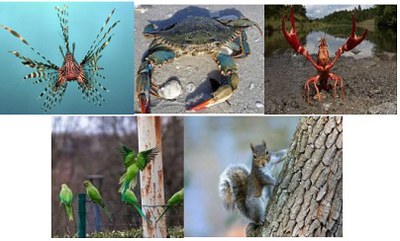
Aliens, Biodiversity, Sustainability
Apr 16, 2025 04:30 PM — Apr 16, 2025 06:30 PM WebinarOne of the biggest emergencies of recent years is the invasion of alien species that, as a result of globalization, enter new regions and ecosystems, upsetting the balance of the native species present, sometimes even replacing them. All this leads to a potential imbalance of the invaded ecosystem and to its potential degradation.

ISPRA’s ‘Nautilus’ Discovers Coral Forests Among the Submerged Mountains of the Mediterranean
Apr 16, 2025The images returned by the ROV revealed breathtaking scenarios: extensive colonies of red coral (Corallium rubrum) up to 900 meters deep, dense forests of pen corals (Funiculina quadrangularis) between 100 and 140 meters, and a surprising benthic biodiversity, with the presence of black corals (Antipathes dichotoma, Leiopathes glaberrima), white corals (Madrepora oculata, Desmophyllum pertusum), sponges and banks of oysters and giant barnacles.

The big paradox: killing some Animals to save others
Apr 13, 2025 02:00 PM — Apr 13, 2025 03:00 PM Rome, Auditorium Parco della Musica Ennio MorriconeIn recent decades, our relationship with animals has changed a lot. From a utilitarian attitude, we have developed a more empathetic bond, both with domestic and wild animals. This change, together with the cultural, emotional and cognitive factors that influence our way of seeing death, affects our judgment on interventions that involve the suppression of animals, even when the intent is to protect the species, as in the case of invasive species that threaten native ones.
II° National conference Citizen Science
Apr 09, 2025 — Apr 12, 2025 BolognaThree days of presentations on the new horizons of Citizen Science in Italy, which will culminate in the “Citizen Science Day”, a participatory event open to all citizens.
The conference is made up of initiatives aimed at both specialists in the sector and the general public and will end with a final event, open to all with free admission. During the Citizen Science Day there will be moments of in-depth study, practical exercises, performances, activities to be carried out in the city on the themes connected to participatory science.
Comparison on the implementation of the National Guidelines for the conservation of Mediterranean trout and its habitat
Apr 08, 2025 09:30 AM — Apr 08, 2025 01:00 PM Morano calabro (CS), Catasta PollinoOn April 8, a meeting planned by the LIFE STREAMS Project will take place at the “Catasta Pollino” Center in Morano Calabro (CS), in the Pollino National Park Authority, to verify the implementation of the Guidelines for the conservation of Mediterranean trout and its habitat (Action C.5 – ISPRA Manuals and Guidelines 207/2024), in person or online.
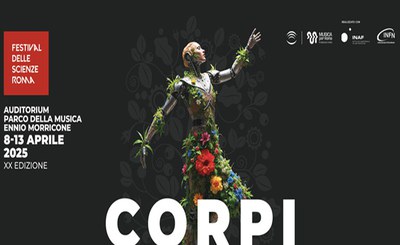
ISPRA participation in Science Festival of Rome
Apr 08, 2025 — Apr 13, 2025 Roma, Auditorium Parco della MusicaFrom 8 to 13 April 2025, the Rome Science Festival returns to the Auditorium Parco della Musica Ennio Morricone with its 20th edition.
Bodies is the theme of this edition.
When we talk about bodies, our first thought goes to human bodies, with their features, shapes and functions. Bodies that, through changes and adaptations, are the result of a long biological and cultural evolution. Which in turn has also influenced the perception of the body itself, which changes depending on society and historical periods, and constitutes the foundation of social interactions and cultural dynamics, since it determines what is considered attractive or acceptable
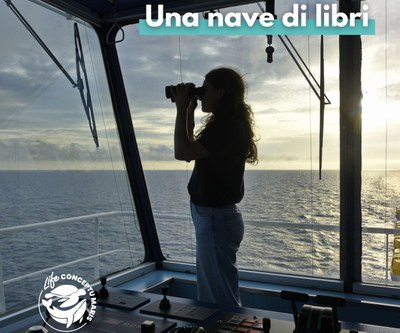
Life Conceptu Maris and A Ship of Books for Barcelona
Apr 05, 2025 — Apr 10, 2025On April 5, the scientists of the Life Conceptu Maris project will depart from Civitavecchia for Barcelona. This time, in addition to the usual monitoring of cetaceans and turtles, there will also be moments of scientific dissemination on board. The occasion is the event La Nave dei Libri (The Ship of Books), which brings readers and writers on board, bringing them together. During the crossing on April 6, the Italian students on board and the five European school delegations of the Erasmus+ "Desibook" project from Bulgaria, Greece, Italy, Spain and Turkey will have the opportunity to meet the researchers on the passenger deck and learn how to spot dolphins, whales and sea turtles, directly overlooking the sea.
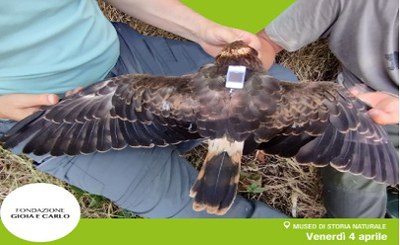
Montagu’s harrier in Maremma
Apr 04, 2025 04:00 PM — Apr 04, 2025 06:00 PM Grosseto, Museum of Natural History of MaremmaResults of the first year of the Project by the working group "Montagu’s harrier".
The Museum of Natural History of Maremma is organizing next 4 April a meeting to present the results of the first year of study on Montagu’s harrier (Cyrcus pygargus).
ISPRA researchers will participate at the event.
National conference "Protected Areas & Conservation”
Apr 02, 2025 — Apr 04, 2025 Rome, Tenuta Presidenziale di CastelporzianoAs indicated by the United Nations in the framework of the Convention on Biological Diversity (CBD), by 2030 we will have to effectively conserve at least 30% of the Planet, both on land and at sea, in addition to restoring degraded habitats and reducing human pressure on nature.
The challenge of creating new ecologically connected protected areas and managing them effectively has therefore begun and can only pass through sharing the most advanced data on the distribution of biodiversity and the most effective ways to conserve and restore it.
In this context, the National Conference “Protected Areas & Conservation” was born, with the aim of creating an exchange of knowledge and best practices on the conservation of biodiversity inside and outside protected areas to contribute at an Italian level to the objectives of the Global Biodiversity Framework.
City Nature Challenge 2025, ISPRA promotes Citizen Science activities in Rome
Apr 01, 2025The 2025 edition of the City Nature Challenge (CNC) will be held from 25 to 28 April, an international competition between citizens of hundreds of cities around the world to document biodiversity and spread the culture of environmental protection.
In this context, ISPRA is promoting two Citizen Science activities in Rome.
Manual for the application of Appropriate Assessment procedures in marine sites
Apr 01, 2025ISPRA as part of the activities included in the project LIFE SEA.NET “Urgent actions for the implementation of marine Natura 2000 Network” has carried out the "Manual for the application of Appropriate Assessment procedures in marine sites", which illustrates the results of one of the research actions of the project, coordinated by Legambiente. The document provides technical indications to support the writers of the Impact Assessments, the evaluators and the management bodies of the Natura 2000 sites, proposing methodologies for characterization, impact assessment and identification of specific mitigation and compensation measures for marine-coastal habitats and for marine species of community interest potentially affected by the construction of works and interventions at sea.
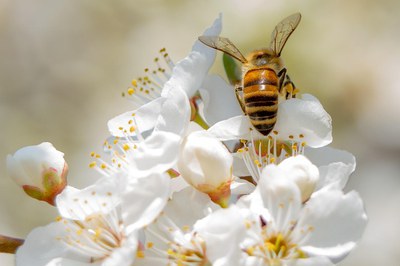
Restoring nature in an intergenerational perspective: a dialogue between disciplines
Mar 27, 2025 12:00 PM — Mar 27, 2025 02:00 PM Rome, Università LUMSA, Via Pompeo Magno 28,On Thursday 27 March, LUMSA University is organizing the seminar "Restoring nature in an intergenerational perspective: a dialogue between disciplines" created for the PRIN Call 2022 PNRR "Restoring Nature for the Children of Italy" - RINASCI.