
Events and News
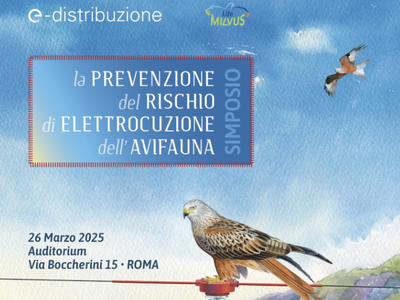
Prevention of the risk of electrocution of avifauna
Mar 26, 2025 09:30 AM — Mar 26, 2025 04:00 PM Rome, Auditorium Via Boccherini 15The event, organized within the LIFE MILVUS project, analyzes the impact that electrocution determines on the conservation of threatened species, will present virtuous experiences developed in Italy and other European countries to mitigate the phenomenon and will be an opportunity to discuss possible measures to be adopted to intensify the efforts of knowledge and prevention in Italy.
Women Agriculture Sustainability
Mar 25, 2025 10:00 AM — Mar 25, 2025 01:00 PM Rome, Sala della Protomoteca, Piazza del CampidoglioThe conference, organized by the Department of Agriculture, Environment and Waste Cycle of the Municipality of Rome and Noi Rete Donne, will be held on March 25 in the Protomoteca Capitolina hall. The conference will be attended by the General Director of ISPRA, Maria Siclari.
International Day of Forests 2025
Mar 21, 2025 — Mar 21, 2025The International Day of Forests is celebrated every 21 March and represents a fundamental moment to reflect on the importance of forests for our planet. Established by the United Nations General Assembly in 2012, the day aims to highlight the fundamental role that forests play not only in the provision of wood and non-wood products (berries, mushrooms, resins, etc.), but also in the provision of ecosystem services such as erosion control, biodiversity conservation, climate regulation and in providing livelihoods to hundreds of millions of people.
The theme of the 2025 is "Forests and Food", that highlights the crucial role of forests in food security and nutrition.
In addition to providing food, fuel, income and employment, forests support soil fertility, protect water resources and provide habitats for biodiversity. They are essential to the survival of forest-dependent communities, particularly indigenous peoples, and help mitigate climate change by storing carbon.
Science and Faith for the care of the Common Home
Mar 21, 2025 — Mar 22, 2025 AssisiInspired by the universal message of the Canticle of Creatures, the event, organized by the Courtyard of San Francesco with the scientific direction of Arpa Umbria and Safa, aims to explore the dialogue between science and faith as a fundamental tool for addressing the global challenges linked to climate change, the protection of biodiversity and the responsible management of natural resources.
Through a constructive discussion between scientific experts, institutional representatives and figures from the business world, the initiative aims to promote a shared and multidisciplinary approach, capable of combining scientific knowledge and ethical vision for a more sustainable future.
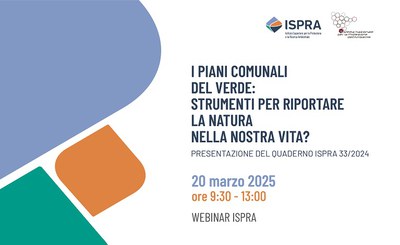
Municipal green plans: tools to bring nature back into our lives?
Mar 20, 2025 09:30 AM — Mar 20, 2025 01:00 PMBringing nature back into our lives: this is what the European Biodiversity Strategy for 2030 says. And since the lives of millions and millions of citizens are concentrated in cities and in the increasingly anthropized contexts of our territories, it is from the cities that we must start again to reverse the trend of the progressive degradation of ecosystems, including urban ones.
The new publication "Urban nature Plans: tools to bring nature back into our lives? - produced and published by Urban Area section - It therefore starts from the cities to reflect on a planning tool that is still not very widespread in Italy - the Municipal Green Plan - with the aim of understanding its contents, strategies and transformative potential for healthier, more inclusive and resilient territories. Torino, Vercelli, Bolzano, Padova, Rovigo, Parma, Bologna, Forlì, Livorno, Avellino: these are the 10 Green Plans analyzed.
Representatives of MASE, ANCI and ICLEI have been invited to the webinar and the program includes technical insights and a session dedicated to Municipalities.
Peace with Nature: Research, Organizations and Institutions together
Mar 18, 2025 09:00 AM — Mar 18, 2025 01:00 PM Rome, Orto BotanicoThanks to its strategic position in the Mediterranean, its varied geomorphology and the extraordinary diversity of habitats, Italy is the European country with the greatest variety of living species and the highest rate of endemic species.
Furthermore, Italy is one of the few nations in the world to have established the defense of biodiversity as a fundamental principle in its Constitution. In February 2022, in fact, the Constitutional Law of 11 February 2022, no. 1 was approved by Parliament, which recognizes an express importance to the protection of the environment, biodiversity and ecosystems in the part dedicated to Fundamental Principles.
The contemporary challenges presented by the biodiversity crisis, which include efforts to address the direct factors that are at the root of the crisis itself, such as the destruction and degradation of habitats, the excessive extraction of biological resources, pollution, invasive alien species and climate change, transcend national borders.
"Teveremolluschifantastici...and where to find them" excursion on March 15th at the Nazzano Tevere-Farfa Regional Nature Reserve
Mar 15, 2025 — Mar 15, 2025 Riserva Naturale Regionale Nazzano Tevere-FarfaOn the occasion of the International Day of Action for Rivers, which is celebrated on March 14, ISPRA researchers will be in the Nazzano Tevere-Farfa Regional Nature Reserve as part of the participatory science project "Teveremolluschifantastici...e dove trovarli" to monitor the presence and distribution of native and alien molluscs in the Tiber River.
Nature restoration law and European, national and regional strategies for biodiversity conservation
Mar 14, 2025 09:00 AM — Mar 14, 2025 06:00 PM BariThe initiative will focus on the EU Regulation 2024/1991 on nature restoration, an innovative and unique regulation in the world, which is fundamental for the implementation of the EU Biodiversity Strategy 2030. This regulation provides binding targets for the restoration of degraded ecosystems, both in protected areas and in agricultural and urban areas, contributing not only to the protection of biodiversity, but also to the fight against the climate crisis and the revitalization of rural areas.
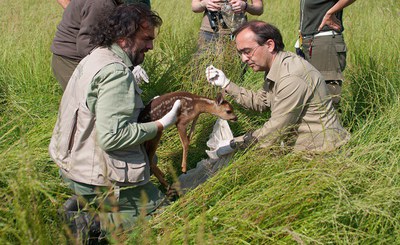
The spring season of openings at the Presidential Estate of Castelporziano starts again on March 15th
Mar 13, 2025Guided tours will be held on weekends, until Sunday, June 15; visitors will be able to choose between three different tour routes: the historical-artistic one, the archaeological one and the naturalistic one, which - for this season - will concern the Campo di Rota itinerary.
ISPRA conducts, in collaboration with the Estate, research and monitoring activities of the fauna present in the area through the use of the most advanced techniques for studying animal species, from ringing of bird fauna to understand their migratory dynamics, to radiotelemetry to track the movements of animals, from photographic traps to detect the presence of different species remotely, to the use of thermal cameras that detect their presence in the total absence of light.
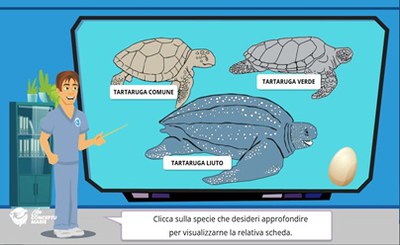
Course to recognize cetaceans and turtles
Mar 13, 2025On the Life Conceptu Maris website there is a simple course available in four languages to identify all the cetaceans and turtles of the Mediterranean Sea.
The course provides simple and interesting interactive videos that explain which species of cetaceans and turtles can be found in our seas, also giving useful indications to recognize them. The videos are part of the course on biodiversity conservation and collision risk, dedicated to cetaceans and marine turtles created by Fondazione Cima.
ISPRA is a partner of the Project.
First Forum on Biodiversity, Natural Capital and Ecosystem Services in the Po District
Mar 12, 2025 — Mar 13, 2025 Milano, Fondazione Riccardo Catella, Via G. de Castillia 28The Po River District Authority and the Foundation for Sustainable Development are organizing the First Forum on Biodiversity, Natural Capital and Ecosystem Services in the Po District on 12 and 13 March in Milano.
The Po River District Authority and the Foundation for Sustainable Development are collaborating on a research and development project for the valorization of biodiversity in the Po District, aimed at the implementation of territorial policies that combine biodiversity conservation and water protection, also in relation to ongoing climate changes
Man, nature and the climate crisis
Mar 06, 2025 05:45 PM — Mar 06, 2025 07:00 PM Rome, Università Sapienza, Aula E. Amaldi, Edificio G. MarconiThe Eutopie project, dialogues between science and society for research on human beings was born from the need to create, within the university community, a space for reflection on scientific issues of great social relevance. Between March and June 2025, four monthly debate meetings will take place at the Sapienza University of Rome. Each appointment will see the participation of experts, through whose reports we will try to stimulate open discussion and dialogue with the public.
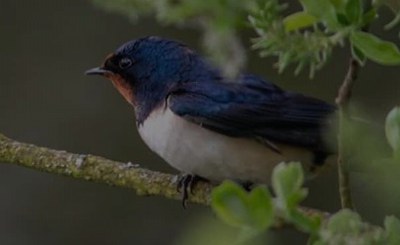
360° ornithology
Mar 05, 2025 08:45 PM — Mar 05, 2025 10:30 PM MUSE – Museo delle Scienze di TrentoThe meeting, organized by MUSE of Trento, will be an opportunity to raise awareness of the fascinating world of birds that populate the Italian skies, the secrets revealed thanks to new technologies and the latest ornithological studies.
World Wildlife Day 2025
Mar 03, 2025 — Mar 03, 2025On 20 December 2013, at its 68th session, the United Nations General Assembly proclaimed 3 March (day of signing the Convention on International Trade in Endangered Species of Wild Fauna and Flora), World Wildlife Day 2025 to celebrate and make aware public opinion on animals and wild plants of the world.
The international day 2025 “Wildlife Conservation Finance: Investing in People and Planet" explores how we can work together to make our current insufficient financial flows more effective and sustainable to build a resilient future for both people and the planet.
With over 1 million species estimated to be threatened with extinction, and facing the intensifying triple planetary crisis, innovative finance for wildlife conservation is more urgent than ever. More than half of the world’s GDP is dependent on nature, making biodiversity loss a significant threat to financial stability.
World Wildlife Day 2025 will serve as a platform for exchange and exploration of innovative financial solutions for wildlife conservation. It will showcase financial innovations, the challenges faced by civil society, governments, organisations, and the private sector, and the collaborative approaches needed to ensure sustainable funding for biodiversity.
World Wildlife Day 2025
Mar 03, 2025 — Mar 03, 2025March 3, World Wildlife Day, is the day in which we celebrate the conservation of wild flora and fauna
The invention of the concept of "wild" begins to manifest itself in human culture with the domestication of animals and plants. In the Latin etymology of the two words, silva, forest, is contrasted with domus, house, highlighting the meaning and horizon of values that our culture attributes to these two categories. It should be noted that nowadays, in some of the few human populations of hunter gatherers present in very small and remote areas of our planet this distinction is not linguistically present.
World Wildlife Day (WWD), established by the United Nations General Assembly in 2013, celebrates "wild" nature. Global phenomena such as the destruction and fragmentation of habitats, pollution, climate change, the introduction of invasive alien species, poaching and trade of wild species, unsustainable hunting and fishing activities are among the main threats to biodiversity of which wild fauna and flora are an integral part. On March 3, 1973, the Washington Convention (CITES) was signed with the aim of regulating, monitoring and prohibiting the trade of plant and animal species at risk of extinction as well as their products and derivatives.
COP 16.2 concluded
Feb 25, 2025 — Feb 27, 2025 Rome, F.A.OOn 27 February 2025, in Rome, Governments agreed on the strategy to raise the funds necessary to protect biodiversity and achieve the action objectives of the Kunming-Montreal Global Biodiversity Framework (KMGBF), successfully concluding the work of the United Nations Conference on Biodiversity, COP16, suspended in Cali, Colombia, in 2024.
Parties to the Convention on Biological Diversity worked into the early hours of the morning to finalize agreements on biodiversity financing, planning, monitoring, reporting and review, as well as the full set of indicators to measure global and national progress towards the implementation of the KMGF, agreed in Montreal at COP15 in 2022.
After intensive negotiations, the Parties to the Convention agreed on a path forward in terms of resource mobilization, in order to close the global financing gap for biodiversity and achieve the goal of mobilizing at least US$200 billion per year by 2030, including US$20 billion per year in international flows by 2025, rising to US$30 billion by 2030.
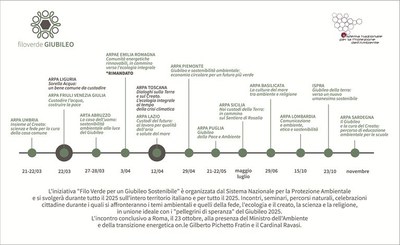
“Green wire for a sustainable Jubilee” the SNPA events to reflect on ecology, science and faith
Feb 24, 2025In March, on the occasion of World Water Day will start the initative “Green wire for a sustainable Jubilee" with the first three regional events organized by Arpa Friuli Venezia Giulia, Arpa Liguria and Arpa Umbria (which will start as early as March 20th). This is a series of events which, involving the entire Italian territory at a regional level and, finally, at a national level, with meetings, seminars, nature trails and city celebrations.
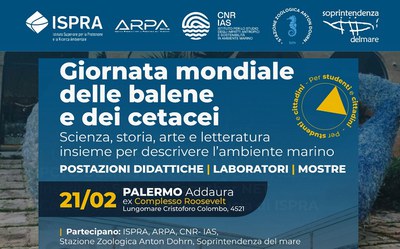
World Whale and Cetacean Day: ISPRA and ARPA Sicily celebrate the sea with students
Feb 21, 2025 PalermoOn the occasion of World Whale and Cetacean Day, on 21 February, ISPRA and ARPA Sicilia are organizing a day-event dedicated to the sea and to the students of the classes participating in the courses for transversal skills and orientation - PCTO 2024-25 DLands of ISPRA (Liceo B. Croce, Palermo) and the classes of the PCTO 2023-24 ReStreet (Address Construction, Environment and Territory of the M. Rutelli Institute, Palermo), at the Roosevelt buildings in Palermo. A path along 16 stations between the structures of ARPA Sicilia and ISPRA to explore the marine environment through science, history, art and literature, thanks to the participation of important research bodies such as CNR-IAS, Stazione Zoologica Anton Dohrn, INGV and the Superintendency of the Sea
The event is financed by the Scienze Together NET project, a European network that unites ISPRA with the main Research Institutions and Universities to promote scientific dissemination alongside scholars and researchers. Educational stations, laboratories and information points will be available with researchers and technologists from the participating institutions, exhibitions and exhibitions of scientific and historical finds
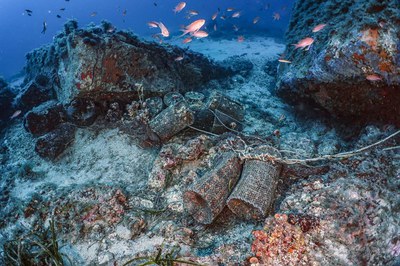
The PNRR-MER at the Eudi Show in Bologna: an "environmental restoration" to save our seabed from ghost nets
Feb 21, 2025 — Feb 23, 2025Ghost nets suffocate our seas. At the Eudi Show in Bologna, the most important event in Italy dedicated to the world of diving, Cecilia Silvestri of ISPRA, on 22 February, will illustrate the initiatives for the recovery of ghost nets envisaged in the PNRR-MER project, the largest PNRR program on the restoration of habitats and seabeds.
The recovery of ghost networks represents a true "environmental restoration". In fact, the technical underwater operators dive with meticulousness and respect towards the submerged heritage, freeing the seabed from abandoned nets that damage precious ecosystems.
The protection of marine ecosystems, the techniques for removing the so-called 'ghost nets' - missing or abandoned fishing tools that continue to trap marine fauna - will be at the center of the intervention of the ISPRA researcher. Thanks to the initiatives launched as part of the PNRR-MER project, the joint commitment of institutions, sector operators and volunteers, the aim is to recover and recycle these nets, thus giving new life to the seabed and protecting biodiversity.
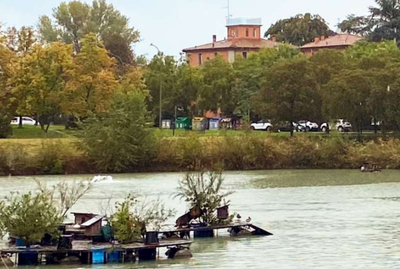
BiodiversiTalk#6 -Research on the Green Plans
Feb 20, 2025 — Feb 20, 2025 Politecnico of MilanoSeries of seminars part of the Spoke 5 research activities of the National Biodiversity Future Center (NBFC)
The BiodiversiTalks series of seminars aims to stimulate discussion and fuel the research activities of Spoke 5 of the National Biodiversity Future Center (NBFC), offering reflections and good practices to understand how plans, projects and co-creation processes can contribute to conserving and increasing biodiversity in urban contexts.
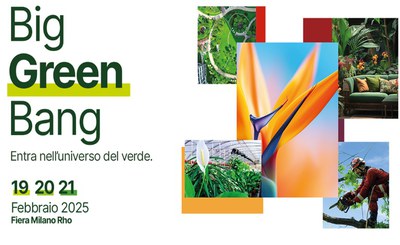
The landscape and beauty of our cities. Is planting trees easy and right?
Feb 19, 2025 02:30 PM — Feb 19, 2025 06:30 PM Milano-Rho fairOn 19 February 2025, as part of the Myplant & Garden (International Green Expo) event at the Milan - Rho fair, will take place the conference "The landscape and beauty of our cities. Is planting trees easy and right?" with he participation of operators and experts in the sector at an international, national and local level.
ISPRA will illustrate the PNRR-PNC project "The good use of green and blue spaces for the promotion of health and well-being", started in 2023 and implemented with the technical and financial support of the Ministry of Health.
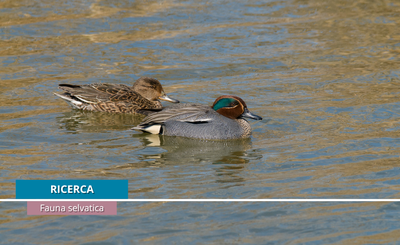
Avian botulism and wild birds: first report in Italy of a severe outbreak in a protected area
Feb 13, 2025Between late summer and early fall 2019 and during the following three years, the outbreak occurred in a wetland of Northern Italy, in Regional Park ”Delta del Po Emilia-Romagna”. A study, published in “Animals” MDPI journal and written by ISPRA researchers, analyzes the sequence of events in relation to environmental conditions and mitigation management measures.
Darwin Day 2025
Feb 12, 2025 — Feb 12, 2025 PaviaDarwin Day is a celebration honoring Charles Darwin held on the anniversary of his birth on 12 February.
Kosmos, the natural history museum of the University of Pavia, in collaboration with the Department of Earth and Environmental Sciences and with the “Lazzaro Spallanzani” Department of Biology and Biotechnology of the University of Pavia, is organizing a conference in which researchers and university professors will address the different aspects of evolution
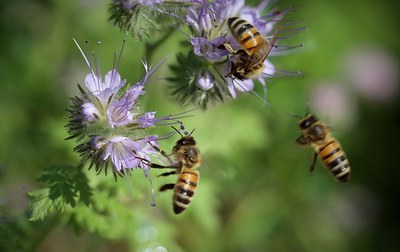
Environmental protection and economic activity to reflect on the prospects three years after the modification of articles 9 and 41 of the Constitution
Feb 11, 2025 10:00 AM — Feb 11, 2025 12:30 PM Rome, Chamber of Deputies, Piazza MontecitorioThree years after the constitutional amendment of articles 9 and 41, WWF Italy is organizing an event that will explore the relationship between environmental protection, economic activities and public intervention in the economy, with the contribution of academics, institutions, business representatives and civil society.
12th National Food Waste Prevention Day
Feb 05, 2025 — Feb 05, 2025National Food Waste Prevention Day is celebrated on February 5th, this year's theme, #timetoact, underlines the importance of immediate action to combat this phenomenon and achieve United Nations goal 12.3
ISPRA has just published the update on food waste in the new 2025 indicator database. The sad discovery, a dozen years ago, that a third of food is not consumed but wasted, aroused enormous interest from governments, academia and the sector private. Since then, although awareness and efforts have increased, food waste has not decreased. Compared to the first global estimates by FAO in 2011 (1.3 billion tonnes), recent studies that also consider losses in the field report 2.5 billion tonnes, equal to 40% of production (WWF, 2021)
In order to estimate waste in the entire Italian food system (systemic waste) ISPRA includes, in addition to losses in production and consumption chains such as FAO and UNEP, also overfeeding beyond recommended needs and the net loss in livestock farming resulting from input conversion edibles for humans (wheat, soy, corn, etc.). The updated result is that approximately 66% of the food energy produced is wasted. This tells us that three times what is needed on average is produced and is distributed unfairly and wasted. In terms of kcal/person/day there is an increase of 17% between 2015 and 2021. Faced with a population reduction of 2.7%, the country's waste (kcal/day) increases by 14%. The causal trend already identified by ISPRA is confirmed. The growth of industrial efficiencies generates increases in overproduction and supply which then amplify waste and impacts (an effect known scientifically as the Jevons paradox or "bounce").
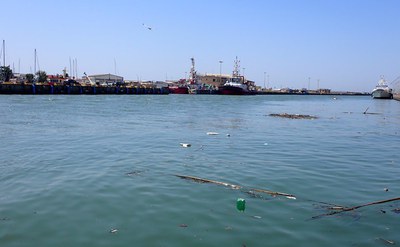
Computing riverine inputs of macrolitter into the Central Tyrrhenian Sea (Western Mediterranean Sea) from the Tiber River during the 1st post-pandemic year
Feb 04, 2025Published in the "peer reviewed" journal Science of the Total Environment, a joint ISPRA and Uniroma Tre study on the floating macrolitter that reaches the sea from the Tiber river through its two mouths (Fiumara grande and Canale di Fiumicino) with a particular temporal focus on 1 ° post-pandemic year.
In the period investigated, the results confirmed the high number of macrolitter transported by the river, with an estimated density at the mouth equal to 1170±151 objects/km2; However, compared to previous years, a reduction in macrolitter was detected with a percentage increase in single-use macro-waste linked to both packaging and objects linked to the pandemic period. Furthermore, much of the waste reaches the sea already fragmented.
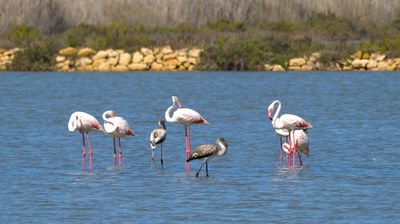
Reportage "Tarquinia salt pans, a treasure chest of biodiversity and geodiversity"
Feb 04, 2025The Saline di Tarquinia Nature Reserve is a hyperhaline wetland area, among the few remaining in the Tyrrhenian Sea, in whose extension various geological-environmental aspects are represented. The area is mostly occupied by shallow water basins, almost all communicating, salty and hyperhaline, separated by stone and wooden embankments. The Tarquinia Saline, currently SPA (Special Protection Area) and SAC (Special Conservation Area), became a protected area in 1980, as it was recognized as having a high naturalistic value, with environmental characteristics particularly suitable for stopping and the nesting of numerous migratory birds.
World Wetlands Day 2025
Feb 02, 2025 — Feb 02, 2025The World Wetlands Day on February 2, celebrates the signing of the Ramsar Convention on Wetlands of International Importance in 1971, and aims to raise awareness around the world of the great importance of wetlands for people and for our planet.
The Ramsar Convention defines wetlands as “marshes, bogs or reservoirs, whether natural or artificial, permanent or temporary, with stagnant or flowing water, fresh, brackish or salt, including expanses of marine water whose depth, during low tide, does not exceed six metres". The Convention is the only international treaty on the environment that deals with these particular ecosystems which, in addition to hosting and conserving a rich biological diversity of plants, birds, mammals, reptiles, amphibians, fish and invertebrates, guarantee huge resources of water and food and play a fundamental role in mitigating climate change. The integrity of these environments is threatened by human activities.
Tales of monitoring and river molluscs
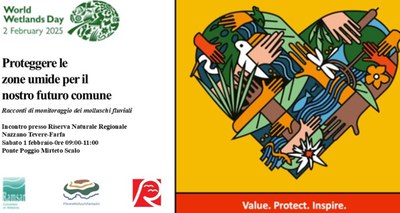
Feb 01, 2025 — Feb 01, 2025 Regional Nature Reserve Nazzano Tevere-FarfaOn the occasion of World Wetlands Day 2025, the Participatory Science project "#teveremolluschifantastici...e dove trovarli"" is organizing an excursion on 1 February to the Nazzano Tevere-Farfa Regional Nature Reserve to talk about river ecology, freshwater molluscs and water monitoring with practical experiments. The project aims to increase awareness of river biodiversity and contribute to the conservation of inland water ecosystems, also by mapping the presence and distribution of molluscs, with a pilot project on the Tevere river; the data collected flows into the portal of the National Biodiversity Network.
World wetlands day and the Puglia campaign carried out by ISPRA
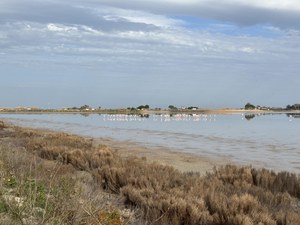
Jan 30, 2025The number of aquatic birds has been one of the main metrics for assessing the conservation status of wetlands since the Ramsar Convention: an accurate method that is not affected by political pressure or exploitation. This January too, ISPRA carried out its share of field activities, together with the vast network of external detectors that widely covers the national territory as a perfect example of citizen science. The Institute's cars have been spotted everywhere, from the frozen reservoirs of Cadore to the mud of Capitanata, with demanding stops in the Venetian lagoons and some visits to the Tyrrhenian side.