Istituto Superiore per la Protezione
e la Ricerca Ambientale

Cerca
Invisible to the eye, but not to science: the pygmy sperm whale leaves its mark in the Mediterranean


Mar 30, 2026

Revealed by traces of DNA suspended in water

A discovery from the European project LIFE-CONCEPTU MARIS, led by ISPRA

New technologies are revolutionizing marine biology; an unexpected discovery is reshaping our understanding of biodiversity in the Mediterranean Sea. The pygmy sperm whale, or Blainville’s dwarf sperm whale (Kogia breviceps), previously believed to be absent from these waters, has been identified thanks to the analysis of environmental DNA (eDNA)—the collection of genetic traces that organisms leave behind in their environment.

No direct sightings, no underwater footage: the presence of this elusive cetacean has emerged through genetic traces released into the marine environment and collected in simple water samples. This innovative technique opens new perspectives for studying and monitoring hard-to-observe species and confirms the potential of “molecular investigation” as a key tool for exploring still poorly known ecosystems and updating species distribution in the Mediterranean.

The surprising discovery was made by researchers from the University of Milano-Bicocca, in collaboration with ISPRA, the Stazione Zoologica Anton Dohrn, and the University of Valencia. They worked within the European project LIFE-CONCEPTU MARIS, led by ISPRA and recently concluded, whose goal was to monitor cetaceans and sea turtles in the Mediterranean using commercial ferries as platforms for data and sample collection.

Profile of an elusive cetacean
The pygmy sperm whale reaches about 3–3.5 meters in length, inhabits tropical and warm temperate seas, and feeds mainly on squid, which it locates using sophisticated biosonar. Extremely rare to observe in the open sea, it is likely more widespread than it appears: it simply spends most of its life far from the coast and out of human sight.

To detect it, researchers collected seawater samples from commercial ferries in transit. In total, 12 liters of water were collected at each of the 393 sampling points across the central-western Mediterranean.

The water, immediately filtered on board, allowed scientists to capture all suspended biological material containing DNA fragments. In the laboratory, using advanced sequencing techniques, the surprising discovery was made: pygmy sperm whale DNA was found in 10 different samples, corresponding to at least 5 independent presence events. These traces were distributed across a vast area stretching from the Tyrrhenian Sea to the Strait of Gibraltar.

Highlight

Topics in evidence

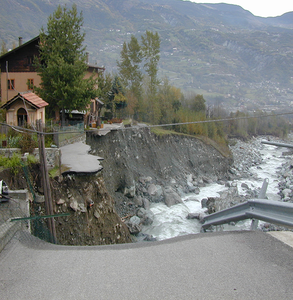
Workshop “Photographic Monitoring of Landslides”
Apr 22, 2026 09:45 AM — Apr 22, 2026 01:00 PM Rome, sede ISPRA, via Vitaliano Brancati 48 and online

The workshop will present new technologies for landslide monitoring, with a focus on photomonitoring and on the results of experimental activities carried out by Sapienza University of Rome across 13 landslide sites throughout the country, within the framework of the GeoSciences IR project, funded by the PNRR MUR and coordinated by ISPRA.

continue
ISPRA participates in the  Rome Science Festival 2026
ISPRA participates in the Rome Science Festival 2026
Apr 15, 2026 — Apr 19, 2026 Rome, Auditorium Parco della Musica Ennio Morricone

From April 15 to 19, 2026, the Rome Science Festival returns to the Auditorium Parco della Musica Ennio Morricone.

The universe and life are not static entities, but the result of an unceasing dance between chaos and order. This dynamic balance manifests itself at every scale of reality: from the origins of the Big Bang to the mathematical structures of seashells, all the way to the complexity of human thought, where billions of electrical impulses coordinate to generate consciousness and emotions.

This duality does not belong solely to science, but permeates every form of human expression and structure.

Chaos and harmony are not opposites, but complementary forces. Exploring their dialogue is essential to understanding change and facing the future with greater awareness.

continue
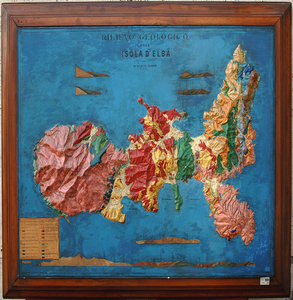
The Geothematic Cartography of the CARG Program
Apr 16, 2026 — Apr 16, 2026 Florence, Istituto Geografico Militare, Via Cesare Battisti, 10

ISPRA and the Italian Military Geographic Institute are organizing the conference “The Geothematic Cartography of the CARG Program” scheduled for April 16, 2026, at the headquarters of the Italian Military Geographic Institute in Florence.

The event represents an important opportunity for scientific and technical discussion on the results and developments of the CARG Program (Geological Map of Italy), with particular focus on the production of geothematic cartography, including geomorphological, hazard, hydrogeological, and geomineral mapping. Throughout the day, experts from ISPRA, universities, research institutions, and public bodies will present thematic map sheets currently under development within the CARG framework, illustrating methodologies, expected results, and future perspectives. Significant attention will also be given to the collaboration between ISPRA and the Italian Military Geographic Institute, as well as to new frontiers in digital cartography.

The day will open with institutional greetings from high-level representatives of the Italian Military Geographic Institute and ISPRA. A visit to the Italian Military Geographic Institute is scheduled at the end of the event.

continue
All ISPRA Events All News