
Publications
Disaggregation of the national emissions inventory at the provincial level
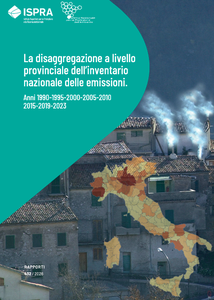
The report describes the activity of provincial-level disaggregation of air pollutant and greenhouse gas emissions estimated in the ISPRA national emissions inventory, carried out using a top-down approach for the years from 1990 to 2023.
Greenhouse gas emissions in Italy: reduction targets and emission scenarios. Edition 2026
The report outlines Italy’s emissions profile from 1990 to 2024, highlighting ongoing trends and identifying the key factors that influence the evolution of greenhouse gas emissions.
Environment in Italy: An Overview, 2025 Environmental Data Yearbook
Environment in Italy: An Overview, 2025 Environmental Data Yearbook is a statistical report that provides an up-to-date and scientifically grounded overview of the state of the environment in Italy. The document uses more than 300 indicators included in the ISPRA Environmental Indicators Database to provide official information for policy makers, administrators, technical experts, and citizens.
National Inventory Document 2026. Italian Greenhouse Gas Inventory 1990-2024
The document presents Italy’s official reporting of greenhouse gas emissions and removals, submitted to the United Nations Framework Convention on Climate Change (UNFCCC) and the Paris Agreement. This document is also submitted to the European Union in accordance with the “Governance of the Energy Union and Climate Action” Regulation.
Italian Emission Inventory 1990-2024. Informative Inventory Report 2026
The report describes the estimate of atmospheric emissions that Italy officially reports in accordance with the UN Convention on Long-Range Transboundary Air Pollution (CRLTAP/UNECE) and the related Protocols for the reduction of emissions of these substances.
The State of the Environment in Italy 2025: Indicators and Analysis
The report The State of the Environment in Italy 2025: Indicators and Analysis, produced by the Italian Institute for Environmental Protection and Research (ISPRA), provides an updated and integrated overview of the main environmental dynamics in the country. The analysis is based on a selection of indicators drawn from the ISPRA Environmental Indicators Database ( https://indicatoriambientali.isprambiente.it/it ).
Efficiency and decarbonization indicators in Italy and in the biggest European Countries – Edition 2025

National trends of energy and economic indicators have been analysed in relation to greenhouse gas emissions and energy consumption. The analysis of efficiency and decarbonisation indicators at sectoral level was also carried out, with particular attention to sub-sectors of industry. The role of driving factors for GHGs trends has been analyzed, such as economic growth, fossil and renewable energy, transformation efficiency, carbon and energy intensities.
Atlas 2025. Territories in Transformation
Environment in Italy: An Overview, 2024 Environmental Data Yearbook
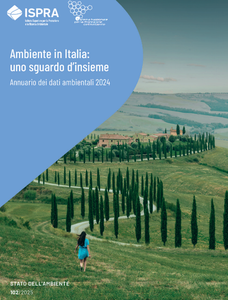
Environment in Italy: An Overview, 2024 Environmental Data Yearbook is a statistically significant and scientifically relevant report produced by the Italian Institute for Environmental Protection and Research (ISPRA), in collaboration with regional and autonomous provincial Environmental Protection Agencies, as part of the National System for Environmental Protection (SNPA).
Greenhouse gas emissions in Italy: reduction targets and emission scenarios
The report (in Italian) outlines the Italian emission picture from 1990 to 2023, highlighting current trends and identifying the key factors influencing greenhouse gas emission trends.
CO 2 emissions in the national and regional power sector
The report examines the dynamics of the main parameters of the national power sector in relation to carbon dioxide emissions. The role of the factors that determine the trend of greenhouse gas emissions was analysed: mix of fossil and renewable sources, transformation efficiency and fuel- specific emission factors. Emission factors for greenhouse gases and other air pollutants due to electricity generation were carried out. Moreover, the emission factors for electricity demand are developed.
Italian Greenhouse Gas Inventory 1990-2023. National Inventory Document 2025
The report describes the reporting of emissions of greenhouse gases that Italy officially communicates in accordance with the requirements of the United Nation Convention of Climate Change (UNFCCC), the Paris Agreement and the European Union’s Greenhouse Gas Monitoring Mechanism.
Italian Emission Inventory 1990-2023. Informative Inventory Report 2025
The report describes the reporting of emissions of transboundary substances that Italy officially communicates in accordance with the requirements of the United Nations Economic Commission for Europe Convention on Long Range Transboundary Air Pollution (CRLTAP/UNECE) and relevant Protocols.
Indoor air quality: minimization of pollutants with particular attention to radon gas
Technical booklet 32/2024 defines technical and behavioral indications for the management of indoor air quality pollutants. in residential environments and in particular for the reduction of radon levels, in accordance with the National Radon Action Plan (PNAR) These environments include homes, offices, community, recreational and social facilities in which the population spends much of its time and which can therefore be more exposed to pollutants which, remaining within closed spaces, are able to reach high concentrations.
Best practices relating to radon prevention and reduction interventions in closed environments, compatible with energy efficiency interventions and in accordance with the National Radon Action Plan
Technical notebook 31/2024 details a list of best practices relating to radon prevention and reduction interventions in closed environments, compatible with energy efficiency interventions and in accordance with the National Radon Action Plan (PNAR).
Environment in Italy: an overview. Environmental Data Yearbook 2023
Environment in Italy: an overview. Environmental Data Yearbook 2023 is a statistical report produced by the Italian Institute for Environmental Protection and Research(ISPRA) in collaboration with the regional and autonomous province environmental protection agencies as part of the National System for Environmental Protection (SNPA).
Atlas of Environmental Data. Edition 2024
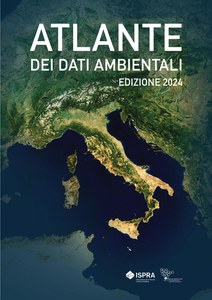
The Atlas of environmental data, a volume that ISPRA publishes in this new edition, which offers an overview and a selection of the main environmental data in Italy. It provides cartographic representations that show the distribution of the main environmental information on the territory which, together with graphs, tables and texts, illustrate the situation of our country.
Efficiency and decarbonization indicators in Italy and in the biggest European Countries – Edition 2024
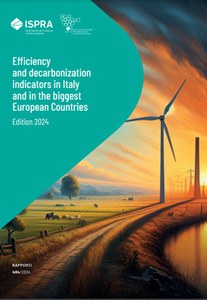
National trends of energy and economic indicators have been analysed in relation to greenhouse gas emissions and energy consumption
Italian Emission Inventory 1990-2022. Informative Inventory Report 2024

The report describes the reporting of emissions of transboundary substances that Italy officially communicates in accordance with the requirements of the United Nations Economic Commission for Europe Convention on Long Range Transboundary Air Pollution (CRLTAP/UNECE) and relevant Protocols.
Greenhouse gas emissions in Italy. Reduction targets for 2030
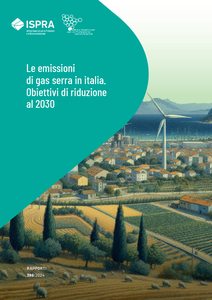
The report describes the greenhouse gas emissions and removals in Italy, based on the data officially transmitted in accordance with the provisions of the United Nations Framework Convention on Climate Change (UNFCCC), and the Governance of the Energy Union and Climate Action of the European Union.
Italian Greenhouse Gas Inventory 1990-2022. National Inventory Report 2024
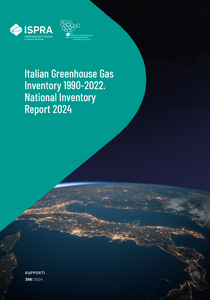
The report describes the reporting of emissions of greenhouse gases that Italy officially communicates in accordance with the requirements of the United Nation Convention of Climate Change (UNFCCC), and the European Union’s Greenhouse Gas Monitoring Mechanism.
Indoor air quality and radon risk: review of initiatives and best practices
This Booklet presents a survey of the main initiatives and best practices concerning the promotion of indoor air quality in public and private buildings, with special attention on school buildings. These initiatives include research projects, awareness actions and best practices aimed at improving indoor air quality in buildings, with a focus on initiatives related to indoor radon and interventions to reduce the associated risk.
Indoor air quality and radon risk in Italy and comparable realities: legislation, scientific literature, energy certifications
Radon, classified by the WHO and IARC as a Group 1 human carcinogen, is the second leading cause of lung cancer death after smoking. Under specific conditions, it tends to accumulate in indoor living environments, posing a significant health risk. Occupancy in inadequately designed and constructed buildings with unsuitable materials, and cases where management and maintenance are not performed correctly and consistently, can lead to adverse health effects not only for radon risk but also for elevated levels of chemical and microbiological agents
ITALY and ENVIRONMENT: Status, Prospects and Scenarios

The new ISPRA report offers citizens, technicians, researchers, observers, and policy makers an accurate analysis of the state of the environment in Italy, considering the main European economic-environmental strategies (Green Deal, 8 th EAP).
Efficiency and decarbonization indicators in Italy and in the biggest European Countries – Edition 2023
National trends of energy and economic indicators have been analysed in relation to greenhouse gas emissions and energy consumption. Particular attention was paid to the power sector, one of the main players in the national energy system. The role of driving factors for GHG emission trends has been analyzed, such as economic growth, fossil and renewable energy, transformation efficiency, carbon and energy intensities. Regarding power sector, the emission factors of greenhouse gases have been elaborated. Efficiency and decarbonization indicators have been compared in Italy and in the biggest European Countries. The power sector performances of main European countries have been compared for fuel mixes, transformation efficiencies, and GHG emission factors.
Atlas of Environmental Data. 2023 edition
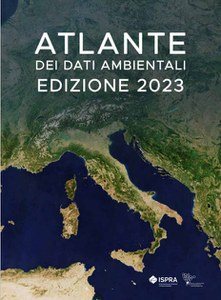
The Atlas of environmental data, a volume that ISPRA publishes for the first time, offers an overview of the main environmental data. It provides cartographic representations showing the spatial distribution of the main environmental information which, together with graphs, tables and texts, illustrate the state of the entire national territory.
Environment in Italy: an overview. Environmental Data Yearbook 2022
Environment in Italy: an overview. Environmental Data Yearbook 2022 is a statistical report produced by ISPRA with the aim of providing policy makers, public administrators, technicians and citizens with official information on the state of the environment in our country.
Italian Greenhouse Gas Inventory 1990-2021. National Inventory Report 2023
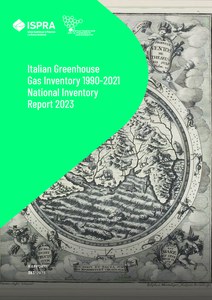
The report describes the reporting of emissions of greenhouse gases that Italy officially communicates in accordance with the requirements of the United Nation Convention of Climate Change (UNFCCC), the Kyoto Protocol, and the European Union’s Greenhouse Gas Monitoring Mechanism.
Italian Greenhouse Gas Emissions: emissions reduction target and scenarios

The report describes the greenhouse gas emissions and removals in Italy, based on the data officially transmitted in accordance with the provisions of the United Nations Framework Convention on Climate Change (UNFCCC), and the Mechanism of Greenhouse Gas Monitoring of the European Union.
Italian Emission Inventory 1990-2021. Informative Inventory Report 2023
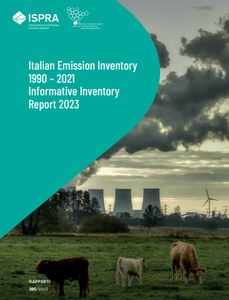
The report describes the reporting of emissions of transboundary substances that Italy officially communicates in accordance with the requirements of the United Nations Economic Commission for Europe Convention on Long Range Transboundary Air Pollution (CRLTAP/UNECE) and relevant Protocols.