Publications
EU Nature Directives Reporting (2013-2018)
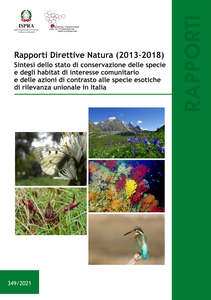
An overview of the conservation status of species and habitats of community interest and of measures to combat alien species of Union concern in Italy
“Carta della Natura” of Molise: mapping and assessment of habitats at the scale 1:25.000
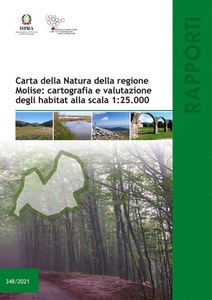
This technical document shows the activities and methodologies adopted to realised the “Carta della Natura” of Molise at 1:25.000 scale.
Bees and sustainable agriculture
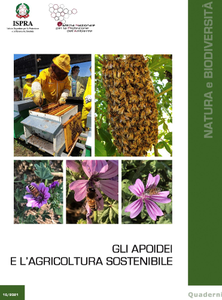
Animal pollinators, in particular bees, are of great importance in supporting structure, composition and functioning of natural and semi-natural habitats, including farmlands and peri-urban contexts. Almost 90% of the wild plants that bloom and over 75% of the main existing agricultural crops require animal pollination in terms of production, yield and product quality. Managed as well as solitary bees thus guarantee fundamental support for human society and activities.
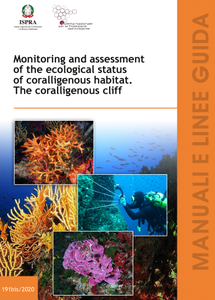
Monitoring and assessment of the ecological status of coralligenous habitat. The coralligenous cliff (English version)
Reticula n. 26/2021
The Yearbook in figures
Environmental Data Yearbook 2020
Monitoring potentially toxic Ostreopsis cf. ovata along the Italian coasts. Year 2019
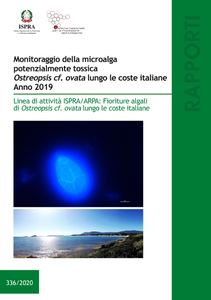
Working Programme ISPRA/ARPA: Ostreopsis cf. ovata blooms along the Italian coasts
Allergenic pollens in Italy: trends 2010-2020
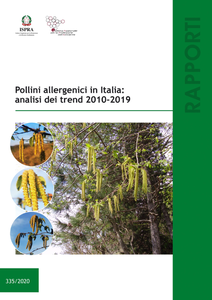
The Report describes the status of the presence of the main allergenic pollens and the Alternaria spore in Italy in 2019 and their air concentration trends, measured, from 2010 to 2019, by the monitoring stations of the POLLnet-SNPA network and by the Aerobiological Monitoring Center of Tor Vergata (Rome).
The experimental assessment of the effectiveness of the measures provided for by the National Action Plan for the sustainable use of plant protection products (NAP)
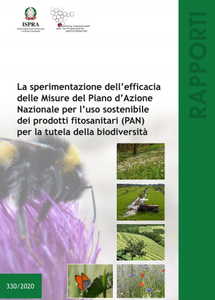
ISPRA 330/2020 report highlights the results of an experimental assessment of the effectiveness of the measures provided for by the National Action Plan for the sustainable use of plant protection products (NAP - defined according to EU Directive2009/128/CE) aimed at protecting biodiversity.
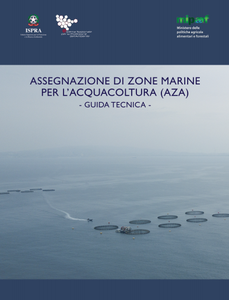
Allocated Zones for Aquaculture (AZA).Technical Guide
RETICULA n. 25/2020 Monographic Number
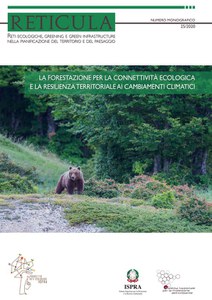
Forestation for ecological connectivity and territorial resilience to climate change
Memoirs of the "Fungi Special Project"
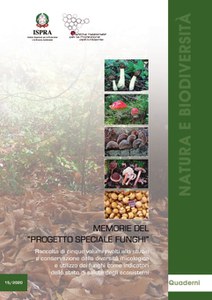
This collection “Memories of the Fungi Special Project” is part of the ISPRA Notebooks dedicated to Nature and Biodiversity. It contains five volumes whose texts were elaborated, drafted and concluded before August 2019
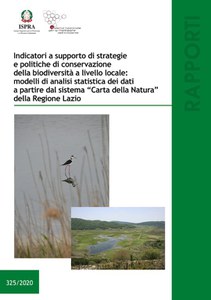
Biodiversity conservation strategies and policies at local level: statistical analysis models from the "Carta della natura" system of the Lazio Region
Reticula n. 24/2020
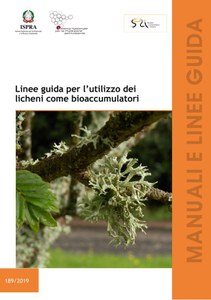
Guidelines for the use of lichens as bioaccumulators - Italian version
Let’s go down to the bottom of the sea – Travelling with a submarine robot
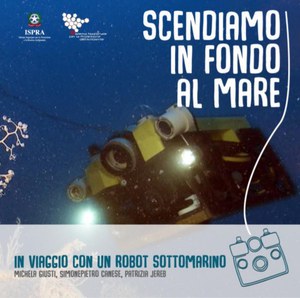
The book "Let's go down to the bottom of the sea - Travelling with a submarine robot ", addressed, above all (but not only), to children was inspired by the desire to tell them, in a simple and nice way, some aspects of the research activity at sea: this is how Pollux, a small underwater robot, was born. Together with his friends Astrea (the research vessel) and EM2040 (the echosounder), Pollux tells about some of the explorations carried out on the beautiful seabed of our "Blue Planet".
Environmental Data Yearbook - Edition 2019
Data on the Environment
Environmental Data Yearbook 2019
Environmental Data Yearbook in numbers

Environmental Data Yearbook 2019
Italian environment. Trend and Legislation
Environmental Data Yearbook 2019
Summarising...the environment
Environmental Data Yearbook 2019
The decline of bees and pollinators. The answers to the most frequently asked questions
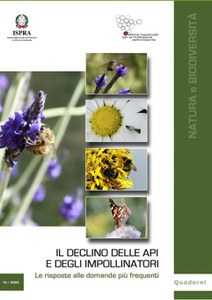
Almost 90% of the wild flowering plants and over 75% of the main agricultural crops require animal pollination for production, yield and quality of the produces. They are essential for human and (wild and domesticated) animal nutrition, but also for the production of fibers, building materials and biomass for energy, and support for the conservation of biological diversity, which represents the basis of our existence and our economies.
The Ecological Beach: sustainable management of the Posidonia banquette along the Lazio shorelines
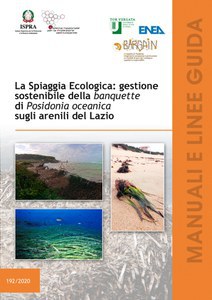
Every year seagrass wrack (from Posidonia oceanica) is deposited along the coasts of the Mediterranean Sea. The use of beaches for tourism purposes currently involves the removal of these deposits, which are negatively considered by stakeholders.
Monitoring and assessment of the ecological status of coralligenous habitat. The coralligenous cliff
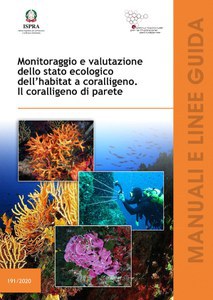
Reticula n. 22/2019 Monographic Number
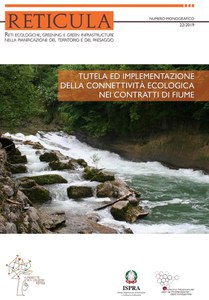
Protection and implementation of ecological connectivity in River Contracts
Reticula n.21/2019
Reticula n.20/2019
Reticula n.17/2018
Reticula n. 16/2017 - monographic number
The Carta della Natura system as source of data and information for planning activities
Reticula n. 15/2017