Publications
Walking through the environment
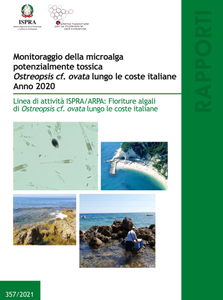
Monitoring potentially toxic Ostreopsis cf. ovata along the italian coasts. Year 2020. Working Programme ISPRA/ARPA: Ostreopsis cf. ovata blooms along the italian coasts
Methodological aspects for the application of bioassays included in the technical annex to the Environment Ministry Decree 173/16: protocol for the preparation of elutriate.
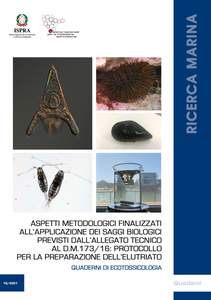
This booklet describes the methodological protocol to be used in the preparation of elutriates for the execution of bioassays on coastal marine sediments to be managed. The main aim is to minimize possible interference related to the techniques and methodologies used in the various public and private laboratories, as well as the need to comply with adequate chemical-physical conditions of the matrix to be tested that are closer to the field of application, in particular for those chronic/long term bioassays referred as "third type" in the Technical Annex of the Environment Ministry Decree 173/2016.
Guidelines for Monitoring the environmental effects of the produced water discharge deriving from offshore hydrocarbons extraction"
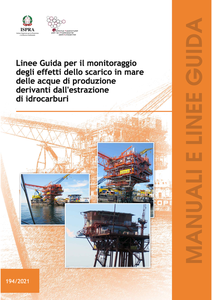
Companies involved in offshore oil and gas production activities operating on the Italian continental shelf are required to carry out environmental monitoring in order to obtain information on the actual and potential environmental impacts of Produced Water (PW) discharged in the sea for the marine ecosystem. Such activities are regulated under D. Lgs. 152/2006 (art.104) and the guidelines are a result of an ISPRA advisory group appointed by the Environmental Ministry (now MITE).
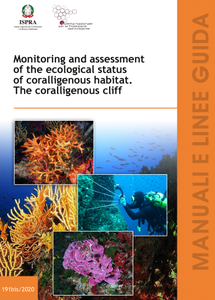
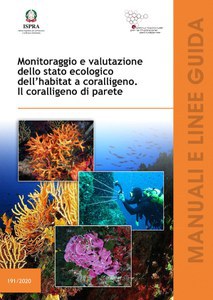
Monitoring and assessment of the ecological status of coralligenous habitat. The coralligenous cliff (English version)
The Yearbook in figures
Environmental Data Yearbook 2020
Environmental emergencies at sea: the case of the M/N "Costa Concordia"
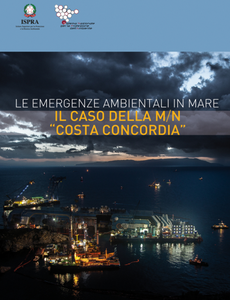
An environmental emergency at sea occurs when an event such a spill, accidental or deliberate, determines, in matrices such as biota, sediments, water and atmosphere, conditions that threaten the integrity of the marine ecosystems involved and require urgent response to be tackled.
Concordia. Photographic report from the removal of the wreck to the restoration of the damaged marine environments
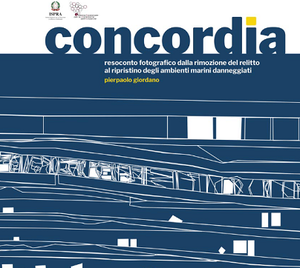
The Costa Concordia accident was undoubtedly an important test for the Italy's ability to respond to a complex technical-engineering problem.
Marine benthic macroinvertebrates: first national interlaboratory comparison in the SNPA scope
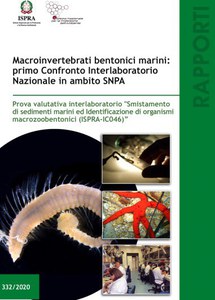
The current legislation on the classification and assessment of the quality status of coastal marine environments (EU Water Framework Directive 2000/60 /EC) identifies the macrozoobenthic communities as indicator (Biological Quality Element) to be used for the classification of the ecological status of these environments.
Monitoring potentially toxic Ostreopsis cf. ovata along the Italian coasts. Year 2019
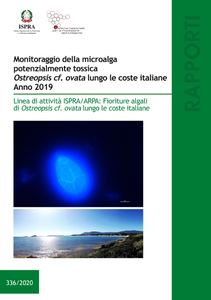
Working Programme ISPRA/ARPA: Ostreopsis cf. ovata blooms along the Italian coasts
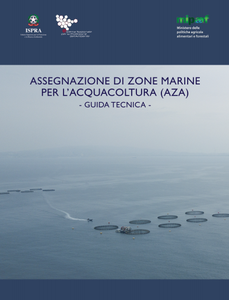
Allocated Zones for Aquaculture (AZA).Technical Guide
Quad. V – Guidelines on the Shoreline Clean-up Assessment Technique (SCAT)
The booklets on environmental emergencies at sea
Quad. IV – Addendum - kit oil spill responders should have at hand while going on the coast and at sea
The booklets on environmental emergencies at sea
Let’s go down to the bottom of the sea – Travelling with a submarine robot
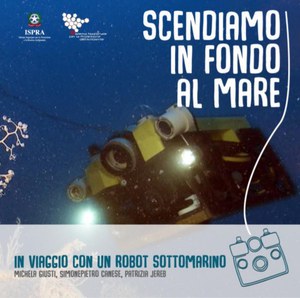
The book "Let's go down to the bottom of the sea - Travelling with a submarine robot ", addressed, above all (but not only), to children was inspired by the desire to tell them, in a simple and nice way, some aspects of the research activity at sea: this is how Pollux, a small underwater robot, was born. Together with his friends Astrea (the research vessel) and EM2040 (the echosounder), Pollux tells about some of the explorations carried out on the beautiful seabed of our "Blue Planet".
Environmental Data Yearbook - Edition 2019
Data on the Environment
Environmental Data Yearbook 2019
Environmental Data Yearbook in numbers

Environmental Data Yearbook 2019
Italian environment. Trend and Legislation
Environmental Data Yearbook 2019
Summarising...the environment
Environmental Data Yearbook 2019
The Ecological Beach: sustainable management of the Posidonia banquette along the Lazio shorelines
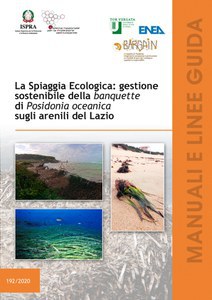
Every year seagrass wrack (from Posidonia oceanica) is deposited along the coasts of the Mediterranean Sea. The use of beaches for tourism purposes currently involves the removal of these deposits, which are negatively considered by stakeholders.
Monitoring and assessment of the ecological status of coralligenous habitat. The coralligenous cliff
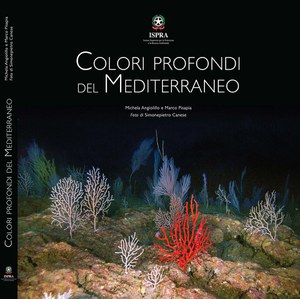
Deep colors of the Mediterranean