
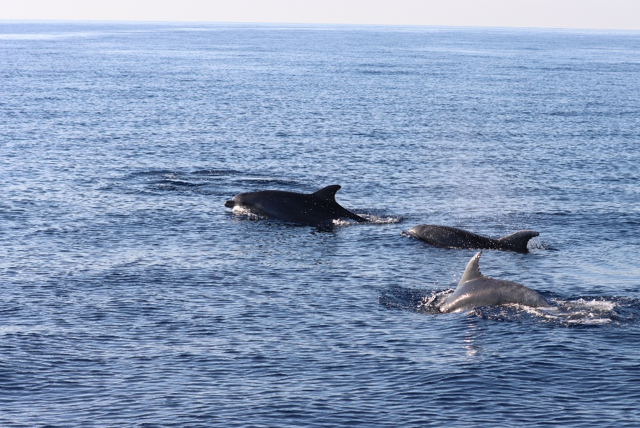
Beyond the coast: bottlenose dolphins follow the rhythm of the seasons in the Mediterranean
The sea is a complex environment, and to better understand it we often rely on categories that help describe it, such as distinguishing coastal waters from the open sea. While these distinctions are useful, nature rarely follows such clear-cut boundaries. The common bottlenose dolphin (Tursiops truncatus), widely regarded as the quintessential coastal dolphin, is a perfect example.
A new study shows that the most suitable habitats for bottlenose dolphins change with the seasons and, during certain times of the year, extend well beyond coastal waters. This reveals a more dynamic and complex picture than the traditional view of the species as being associated with coastal environments.
The research, coordinated by ISPRA within the framework of the FLT Med Network and the European LIFE Conceptu Maris project, reconstructed the seasonal distribution of suitable bottlenose dolphin habitats across the Western Mediterranean and the Adriatic Sea using 15 years of standardized monitoring conducted along commercial ferry routes.
With more than 635,000 kilometres surveyed and over 1,000 dolphin sightings recorded, the study developed and validated robust species distribution models. The results once again confirm the value of ferries as outstanding observation platforms for monitoring the Mediterranean throughout the year, enabling data collection even in offshore areas that are otherwise difficult to survey consistently.
The analysis shows that the distribution of suitable habitats follows a recurring seasonal pattern. During winter and spring, the most suitable areas are concentrated mainly over the continental shelf and along shelf-edge regions, which are generally more productive. In summer, suitable habitats progressively expand into offshore and deeper waters, reaching their greatest extent in autumn.
This seasonal dynamic is driven by the interaction between seabed morphology and oceanographic factors such as temperature, productivity, and water circulation. During the summer months, increased human activities along the coast may also contribute to the offshore expansion of suitable habitats, although this hypothesis requires further investigation.
Among the areas that consistently maintain favourable conditions are the Alboran Sea, the Balearic Sea, the Pelagos Sanctuary, the eastern Tyrrhenian Sea, the northern Adriatic Sea, and the continental shelf between Sicily and Tunisia.
The study provides a new perspective on the presence of bottlenose dolphins in the Mediterranean. Understanding how suitable habitats shift throughout the year offers valuable knowledge to support conservation strategies, guide the planning of human activities at sea, and assess the impacts of climate change on Mediterranean ecosystems.
Reference: Pasanisi, E., Gregorietti, M., Atzori, F., Azzolin, M., Campana, I., Carosso, L., ... & Arcangeli, A. (2026). Recurrent seasonal habitat patterns of Mediterranean bottlenose dolphins revealed by long-term monitoring and validated SDMs. Ecological Informatics, 103859.
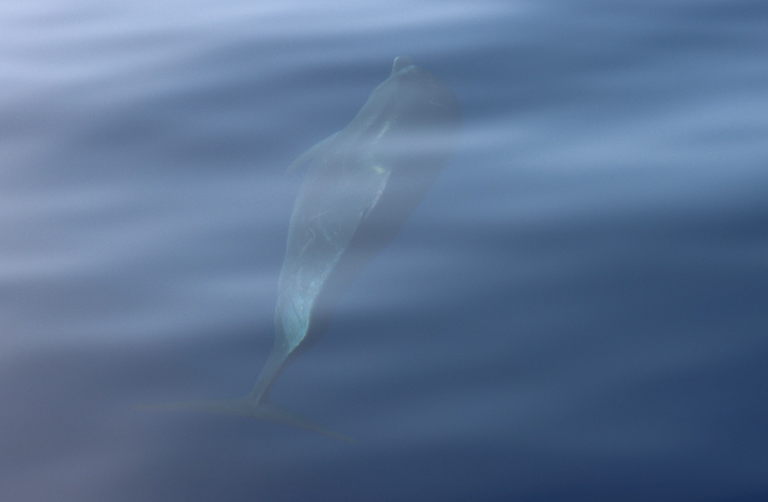
Photo: Echoes – CCMR (E. Pasanisi)