
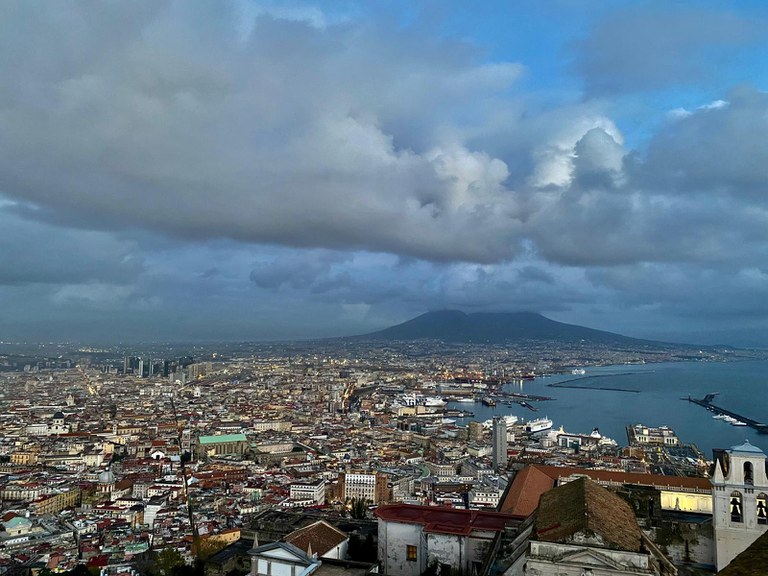
Cities: we now know how fragile the ground beneath them is
INTERNATIONAL DAY FOR DISASTER RISK REDUCTION 2026 – 13 OCTOBER
The “Geological Identity Card” of Urban Areas Is Launched
One single score measures geological and climatic pressures, as well as a city’s strengths.
How fragile is the ground beneath your city? From today, a single score provides an immediate answer. By analysing geological and climatic factors, as well as human activities, the Urban Geo-climate Footprint (UGF) measures the level of interaction between the geological and climatic context and the urban fabric.
Developed by ISPRA as part of a research project conducted in collaboration with the European network of geological surveys, EuroGeoSurveys, the new method synthesises information available in public databases and assigns a score ranging from 0 to 500 to express the potential impact of geological and climatic phenomena on urban areas. The more the geological and climatic context affects a city’s development and functioning, the higher the score.
Using this method, ISPRA has already analysed several European cities and all Italian regional capitals and capitals of autonomous provinces. The national results reveal significant differences, ranging from 94 points for Trento to 359 for Naples. Other cities with high scores include Genoa (304), Palermo (265), Bari (255) and Catanzaro (250), while lower scores were recorded for Bolzano (144), Milan (155), Aosta (160) and Trieste (162).
But there’s more. The same method makes it possible to create a genuine Geological Identity Card: the CITY GEO Factsheet (CGF). Like an identity card for people, it brings together the essential information — including positive features, not just potential problems — that defines an urban area’s geological and climatic profile. This ranges from the ground on which the city is built and its groundwater to climatic and human-induced pressures on the subsurface, as well as geological hazards. It also identifies the resources the area offers and the aspects requiring greater attention, providing a clear, accessible overview of the relationship between the territory and the urban fabric.
Maria Alessandra Gallone, President of ISPRA and SNPA, said: “Knowing what lies beneath our feet helps us decide what to do above ground. With the Urban Geo-climate Footprint — a tool closely related to the Geological Identity Card — a single glance is enough to understand the ground on which a city stands, its main critical issues and where action can be taken. This is the step we want to facilitate: turning scientific data and expertise into practical solutions for those who must make decisions, plan and take action. With this new tool, ISPRA puts knowledge at the service of prevention, because knowing in advance means being able to act more effectively and in time.”
The tool, its user guide, application examples and an explanatory documentary are available on the ISPRA portal.
Città Sotto Pressione - Documentary