
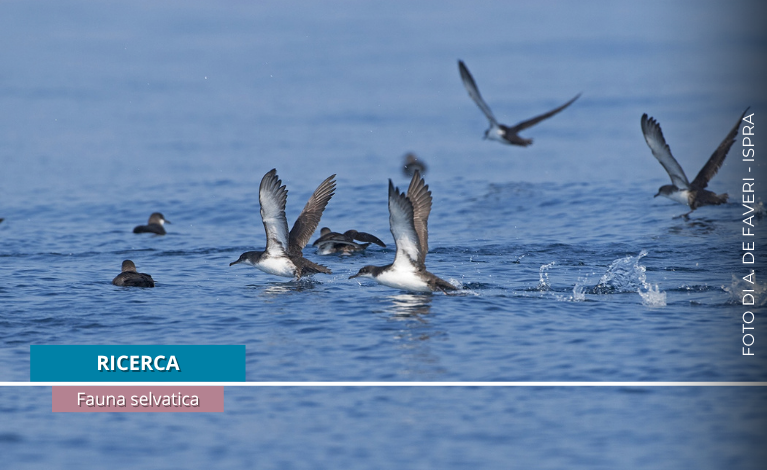
Following Seabird Routes for the Future of High Seas Protected Areas
A study of 13,000 seabirds in the Atlantic and Mediterranean provides scientific guidance for expanding protection to at least 30% of the planet’s marine surface by 2030
The expansion of Marine Protected Areas (MPAs) is one of the cornerstones of international efforts to halt the loss of biodiversity caused by human activities. The global Kunming-Montreal Agreement aims to protect at least 30% of the world’s marine surface by 2030, an objective incorporated at the European level into the EU Biodiversity Strategy for 2030 and into the National Biodiversity Strategy for 2030.
However, around 60% of the oceans consists of the High Seas: international waters extending beyond 200 nautical miles from the coast, which for a long time remained without effective shared protection. This gap was finally addressed with the entry into force, in early 2026, of the landmark UN High Seas Treaty (BBNJ Agreement), which finally provides a binding legal framework for establishing marine reserves in waters beyond national jurisdiction.
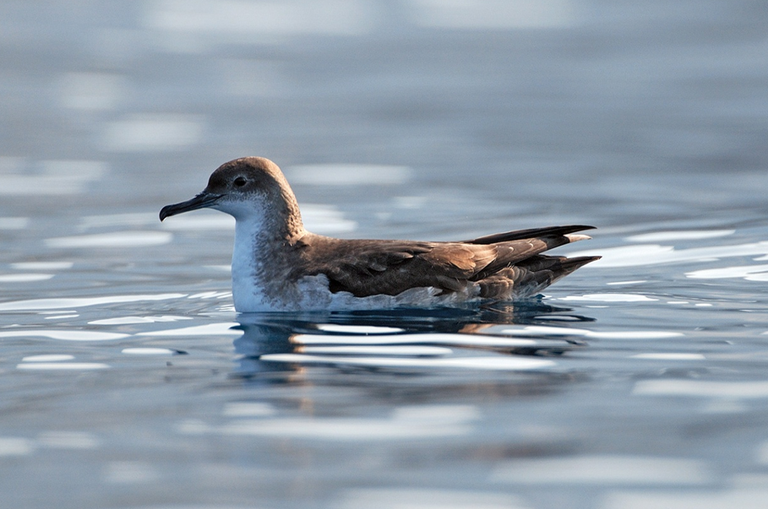
Berta minore Photo: A. De Faveri, ISPRA
Beyond Borders: What Seabirds Can Teach Us
Marine organisms do not recognize the geopolitical boundaries established by human conventions: pelagic seabirds (albatrosses, petrels, shearwaters and storm petrels), large cetaceans, sea turtles, pelagic sharks and large bony fish (tuna, swordfish) undertake migrations spanning tens of thousands of kilometres. Protecting a species within waters falling under the exclusive jurisdiction of a single coastal state (e.g. territorial waters, Exclusive Economic Zones (EEZs)) is ineffective if the same species is accidentally caught (bycatch), overexploited or disturbed as soon as it crosses these invisible boundaries, in areas where it often spends more than half of its life cycle feeding or overwintering.
A concrete response comes from a study published in the scientific journal Conservation Letters, involving researchers from ISPRA. By analysing satellite-tracking and geolocation data from more than 13,000 seabirds belonging to 44 species that regularly inhabit the Atlantic Ocean and the Mediterranean Sea, the researchers mapped migratory routes and marine areas that are vital for feeding. As apex species within marine food webs, seabirds are powerful bioindicators, but they are also among the vertebrates most threatened by accidental captures during fishing activities (bycatch), pollution and global warming.
The results show that the Atlantic and Mediterranean High Seas account for approximately 50% of the seasonal presence of these migratory species, comparable to coastal waters. Nevertheless, only 1.3% of international waters are currently protected, and the entire existing MPA network overlaps with less than 14% of the density of the species studied. Designing future MPAs around the actual movement patterns of seabirds, covering 30% of the ocean’s surface, could protect up to 70% of this pelagic biodiversity.
Conclusions
The findings of this study for the Atlantic Ocean and Mediterranean Sea provide a solid foundation for planning future protected areas within the region under consideration, while also representing a starting point for conducting similar analyses in other regions of the world and, specifically, in the Mediterranean basin, a sea with exceptionally high biodiversity but also highly vulnerable to human pressure.
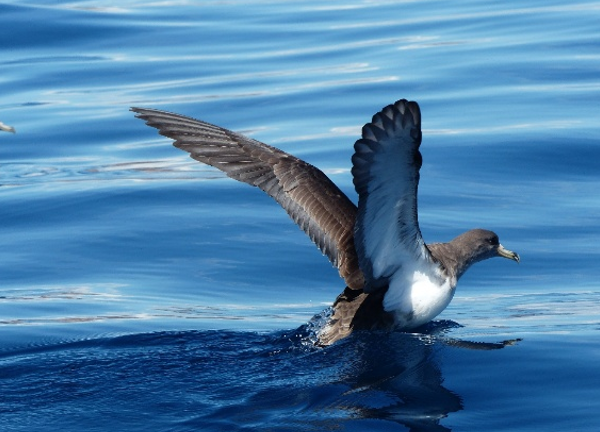
Berta maggiore photo M. Zenatello, ISPRA