
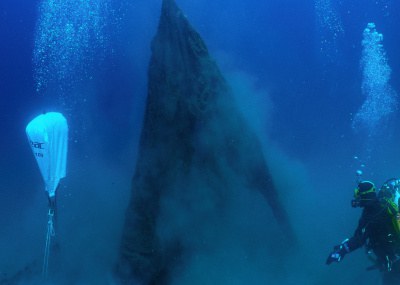
LIFE Strong Sea Project. A challenge won from the sea: over 22 tons of fishing gear recovered in 5 years
As told in the documentary “The Phantom Catch”
More than 180 reports of lost fishing gear, 24 recovery operations, 156 pieces of gear removed, and over 22 tons of fishing equipment recovered.
The interventions involved different types of fishing gear, including gillnets, trawl nets, traps, and longlines, identified at depths ranging from 8 to 40 meters.
Scientific analyses of the recovered gear made it possible to identify 89 species belonging to 50 groups of living organisms classified according to shared characteristics (taxa), with a predominance of crustaceans (30%), followed by algae and encrusting organisms.
This data demonstrates the process of progressive biological colonization affecting fishing gear lost at sea over time.
These are unprecedented achievements in the recovery of lost fishing gear from the sea and in the protection of marine habitats of high ecological value.
These are some of the results of the Strong SEA LIFE project, coordinated by ISPRA and funded by the European Union’s LIFE Nature and Biodiversity Programme. Launched in December 2021 and now in its fifth year of activity, the project’s main objective is to protect and improve the conservation status of priority marine habitats, namely Posidonia oceanica seagrass meadows and coralligenous habitats, both included in the Habitats Directive and in the European Natura 2000 network of protected sites.
Today, the documentary “The Phantom Catch – The Great Problem of Ghost Nets”, directed by Igor D’India, was previewed. In addition to presenting the results of the Strong SEA LIFE project, it tells the five-year journey of researchers and divers working to free the Mediterranean from over 22 tons of fishing gear lost at sea.
Maria Alessandra Gallone, President of ISPRA and SNPA, stated:
“The LIFE Strong Sea project demonstrates ISPRA’s concrete commitment to protecting marine biodiversity and promoting a culture of sustainability based on knowledge, research, and shared responsibility. The documentary we present today, through powerful images and engaging storytelling, represents not only a moment of great value for the scientific community, but also an incentive for younger generations to take care of the marine environment.
The presence of many students at the screening is an encouraging sign: it means they are not just spectators, but active protagonists of change, and that there is growing awareness of environmental challenges and a strong willingness to contribute to change. It is from this energy that we must begin in order to build a future in which protecting the sea becomes a shared priority.”
Project actions
Posidonia oceanica meadows represent one of the most important and vulnerable habitats in the Mediterranean. They are considered priority habitats—natural environments at risk of disappearing—for whose conservation the European Union has a special responsibility, as they play a fundamental role in marine biodiversity, seabed stability, and coastal protection.
Similarly, coralligenous habitats are among the most important coastal ecosystems in the Mediterranean Sea in terms of distribution, biomass, and role in the carbon cycle. They are true biodiversity hotspots: thanks to the structural complexity of their communities, these habitats host more species than any other benthic community in the Mediterranean.
A large part of the reports came directly from local fishermen, who chose to collaborate with the project by reporting lost gear either from their own activities or that they were aware of, demonstrating how essential cooperation with the fishing sector is in addressing the ghost nets problem.
The identification of lost gear was made possible through intensive seabed mapping activities: 90 transects carried out using Side Scan Sonar (SSS) and Multibeam systems, and over 250 hours of video recorded by divers and ROVs (Remotely Operated Vehicles).
Underwater operations directly involved ISPRA researchers with the support of State Police divers. In total, more than 50 dives were carried out, organized with rotating operational teams to ensure safety and precision.
Among the most demanding interventions was the removal of a large trawl net from the seabed of the Gulf of Asinara, a complex operation requiring several preliminary dives to prepare the net for removal, followed by additional dives dedicated to the recovery phases.
In addition to recoveries, the project also carried out several gear deactivation operations in cases where complete removal was not possible without damaging habitats. In these situations, the team cut and neutralized the gear, maximizing operational safety and ecosystem protection.
Continuous environmental monitoring is currently underway at all sites where gear was removed or deactivated, with particular attention to sensitive habitats.
Each year, around 15 monitoring dives are carried out at selected sites considered most representative for coralligenous habitats and Posidonia oceanica, in order to assess habitat conservation status after removal operations.
For the collection and storage of recovered materials, a container was placed in the Porto Torres area and was completely filled, reaching a total weight of more than 15 tons.
A second, smaller collection point was installed in the port of Golfo Aranci, at the direct request of local fishermen and the Coast Guard. So far, 7 tons of nets have been collected there.
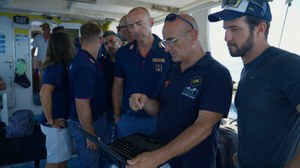
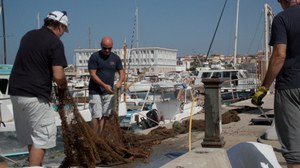
Photo "The Phantom catch" di Igor D' India per ISPRA