Research and the Local Community Come Together in Livorno
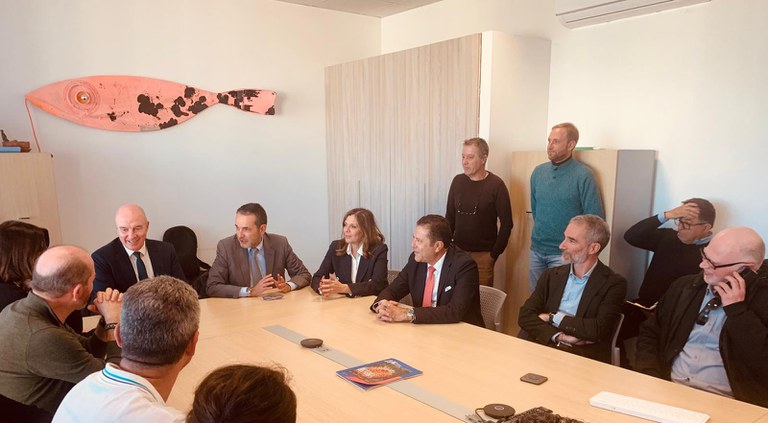
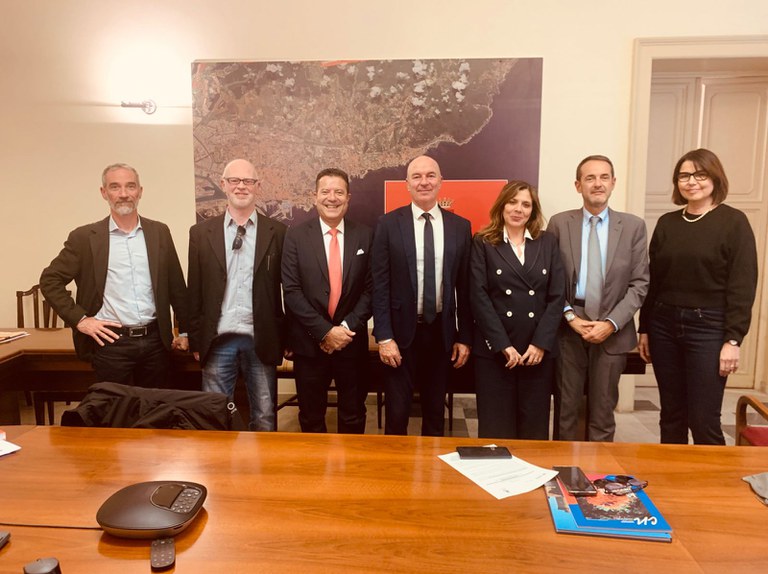
ISPRA and SNPA President Stefano Laporta and ISPRA Director General Maria Siclari met with the Mayor of Livorno, Luca Salvetti, at the Institute’s Livorno headquarters.
During the meeting, they presented the various technical and scientific activities carried out there by more than thirty specialists, focusing on environmental protection—particularly in marine and coastal environments—with the goal of strengthening collaboration with the Tuscan municipality.
Among the activities presented were those related to the assessment of contamination risks from both traditional and emerging pollutants, laboratory work dedicated to ecotoxicology and the treatment of marine sediments—conducted in cooperation with ports or port authorities—as monitoring is primarily carried out within port areas (for dredging) and coastal zones (industrial discharges).
To perform these monitoring activities, the Livorno facility uses remote data acquisition tools (such as aerial drones), as well as statistical analysis instruments and GIS software for the processing and presentation of environmental data.
- https://www.isprambiente.gov.it/en/news/research-and-the-local-community-come-together-in-livorno
- Research and the Local Community Come Together in Livorno
- 2025-11-10T00:00:00+01:00
- 2025-11-10T23:59:59+01:00
- ISPRA and SNPA President Stefano Laporta and ISPRA Director General Maria Siclari met with the Mayor of Livorno, Luca Salvetti, at the Institute’s Livorno headquarters. During the meeting, they presented the various technical and scientific activities carried out there by more than thirty specialists, focusing on environmental protection—particularly in marine and coastal environments—with the goal of strengthening collaboration with the Tuscan municipality. Among the activities presented were those related to the assessment of contamination risks from both traditional and emerging pollutants, laboratory work dedicated to ecotoxicology and the treatment of marine sediments—conducted in cooperation with ports or port authorities—as monitoring is primarily carried out within port areas (for dredging) and coastal zones (industrial discharges). To perform these monitoring activities, the Livorno facility uses remote data acquisition tools (such as aerial drones), as well as statistical analysis instruments and GIS software for the processing and presentation of environmental data.
- When Nov 10, 2025 (Europe/Berlin / UTC100)
- Where Livorno
-
Add event to calendar
 iCal
iCal
At the Livorno laboratories, researchers also study the effects of contaminants on marine organisms such as sea urchins, small crustaceans, mussels, algae, and bacteria.
ISPRA’s Livorno branch also provides technical and scientific support for the implementation of international conventions on the disposal or reuse of dredged materials, the management of sediment movements in ports, and the development of SNPA tools. This means not only theoretical research, but also concrete applications aimed at environmental protection, circular economy initiatives, and technical and regulatory support for public institutions.
On the same occasion, the issue of land use was revisited through a technical discussion between ISPRA and the Municipality of Livorno, which made it possible to examine in greater depth the methodology used and to analyze local data. Both parties expressed a shared intention to establish closer collaboration on this strategically important topic.
In particular, the need emerged to contextualize Earth observation satellite data with the soil regeneration and restoration projects that the Municipality of Livorno has promoted in recent years, in pursuit of a responsible and sustainable management of municipal territory—an approach that also emerges clearly from an in-depth and integrated reading of the data presented in the 2025 Report.