
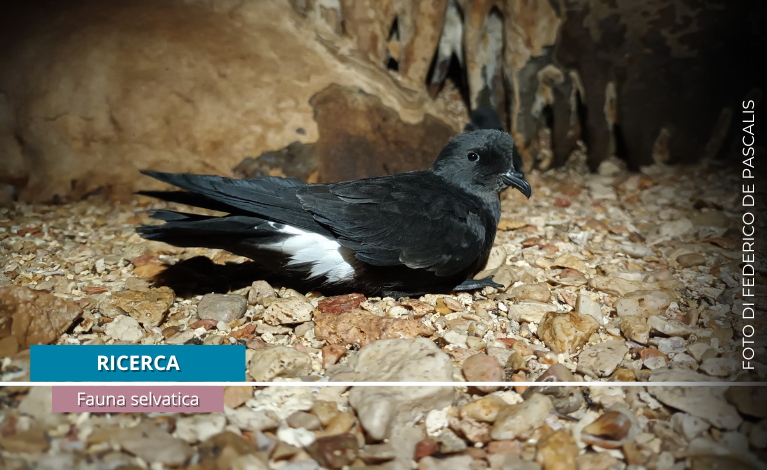
Storm Petrels and the Challenge of Crosswinds
An international study coordinated by ISPRA researchers has uncovered a remarkable flight strategy adopted by the Mediterranean storm petrel (Hydrobates pelagicus melitensis), the smallest seabird in the Mediterranean. During the breeding season, these tiny birds undertake long foraging trips over the open sea while their partners remain at the nest incubating the egg. As timing is crucial for reproductive success, finding food efficiently is essential.
By combining high-resolution GPS tracking with atmospheric data, researchers discovered that storm petrels actively select crosswinds rather than flying with tailwinds. Although this strategy reduces flight speed and requires greater energy expenditure, it allows the birds to maximize their ability to detect scent trails carried by the wind. Thanks to their highly developed sense of smell, storm petrels use these airborne chemical cues to locate prey and navigate across the seemingly featureless marine environment. The study provides the first evidence that a small flapping seabird deliberately sacrifices flight efficiency to enhance olfactory information, highlighting an important evolutionary trade-off.
These findings offer valuable insights into the ecology and behaviour of Mediterranean storm petrels and improve our understanding of how seabirds may respond to changing wind patterns associated with climate change. The research also contributes to conservation efforts under the European Biodiversa+ SEAGHOSTS project, of which ISPRA is a partner.