The ISPRA “Siren” Exploring the Seabed
In the Gulf of Naples and around Ischia, testing of the Hugin AUV: an underwater robot designed to observe submerged volcanoes and anticipate risks.
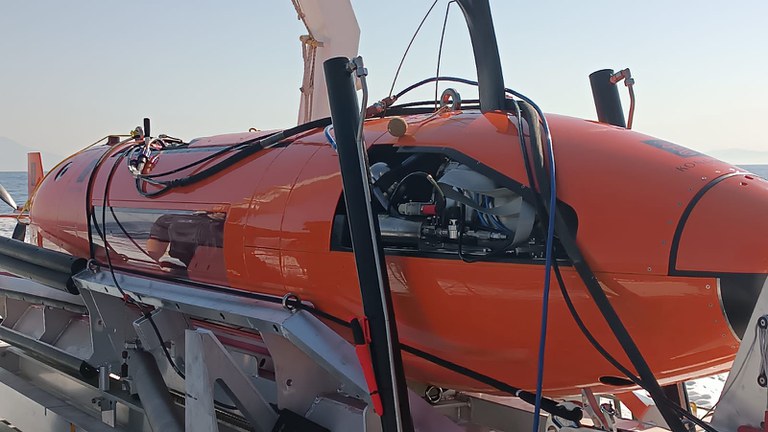
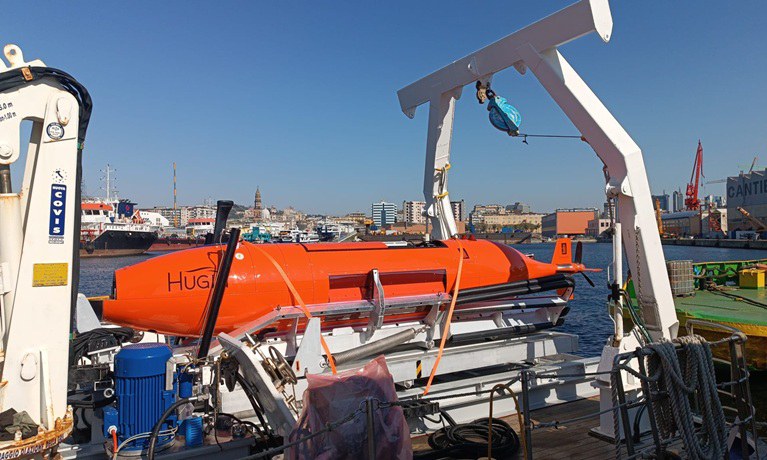
Like a modern Parthenope—silent and invisible—the “Siren” of science explores the seabed of the Gulf of Naples, speaks the language of the sea, reveals its signals, and understands its evolution. As part of the PNRR MER project (Marine Ecosystems Restoration), ISPRA has recently tested the Hugin AUV, an autonomous underwater vehicle capable of operating at depths of up to 3,000 meters, with the support of the vessel Astrea.
Maria Alessandra Gallone, President of ISPRA and SNPA:
“This activity represents a significant step forward in the use of autonomous technologies to monitor marine seabeds and acquire ultra-high-resolution data aimed at the morphological, geological, and environmental characterization of deep-sea areas. The Gulf of Naples is one of the most complex and sensitive environments in the Mediterranean Sea, making continuous monitoring essential to understand the evolution of natural processes and help reduce potential risks for populations and marine ecosystems.
The testing of the Hugin AUV in the Gulf of Naples and the Ischia area represents a concrete and strategic step in strengthening our country’s scientific and technological capabilities for understanding and protecting the marine environment. Thanks to the PNRR MER project, ISPRA is equipping itself with cutting-edge tools that allow us not only to gather fundamental data for research but also to develop increasingly accurate predictive models, contributing significantly to the prevention of natural risks and the safety of coastal communities, while confirming its role as a scientific reference supporting institutions, environmental protection, and citizens.”
Giordano Giorgi, Director of the ISPRA National Coastal Center and Coordinator of the PNRR MER Project:
“The use of autonomous technologies such as the Hugin AUV represents a strategic resource for studying marine seabeds and protecting highly vulnerable areas. A technological ‘siren’ that listens to the seabed, interprets signals—particularly those from submerged volcanoes—and transforms data into scientific knowledge for territorial safety and the protection of marine ecosystems is something truly innovative, dramatically expanding our monitoring and investigation capabilities of the seafloor.
During the campaign, also conducted along the southwestern coast of the island of Ischia, key environmental parameters were collected, including temperature, salinity, and concentrations of gases such as carbon dioxide and methane—elements useful for assessing environmental conditions and geological characteristics, as well as identifying possible underwater gas emission phenomena.”
The Hugin AUV (Autonomous Underwater Vehicle) is an unmanned submersible capable of operating independently even in complex environments, collecting ultra-high-resolution data and images. With this new technology, detailed mappings of the seabed have been carried out using advanced acoustic and optical systems, capable of providing images and information on sediment structure and any anomalies present. Operations included bathymetric and morphological surveys, acquisition of geophysical and environmental data, as well as the transfer and storage of information on onboard systems and ISPRA’s cloud infrastructure.