The sea in the laboratory: the mesocosm, a miniature ecosystem for producing plankton
At the Livorno Aquarium, the experimental phase of the “sea farm” project led by ISPRA is underway.
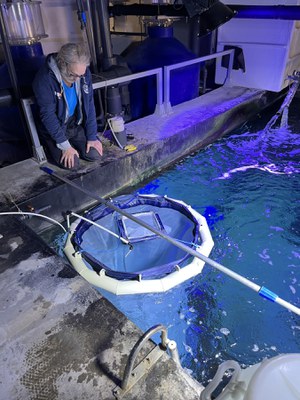
An advanced platform capable of simulating marine ecosystem conditions, the mesocosm has been installed inside one of the aquarium’s tanks. It is an experimental system enclosed by a fine-mesh net and used for the production of zooplankton in a controlled environment.
The mesocosm is one of the key components of the European project AQuaBioS – “The Sea Farm: for Organic and Sustainable Aquaculture” funded by the Interreg Italy-France Maritime Programme 2024–2027. The project is now entering its central operational phase with the launch of experimental activities dedicated to developing innovative models of sustainable aquaculture in the Mediterranean.
Coordinated by ISPRA, the project represents one of the most advanced initiatives in the Euro-Mediterranean area focused on the ecological transition of the fisheries sector and the promotion of a sustainable blue economy. With a total budget of approximately €1.8 million, the project aims to develop low environmental impact systems for breeding marine zooplankton, integrating scientific innovation, ecosystem protection, and the economic sustainability of the supply chain.
Maria Alessandra Gallone, President of ISPRA and SNPA, stated: “With the AQuaBioS project, the Institute renews and strengthens its commitment to promoting a development model capable of integrating scientific research, technological innovation, and environmental protection. Investing in sustainable aquaculture systems means not only fostering the resilience of marine ecosystems, but also supporting responsible economic growth that combines competitiveness, food security, and the preservation of the Mediterranean’s natural heritage. From this perspective, AQuaBioS represents a concrete step toward the spread of more efficient and sustainable production practices, aligned with the environmental and climate challenges of the future.”
AQuaBioS is part of the framework of the European Green Deal and the EU Biodiversity Strategy for 2030, with the goal of promoting more sustainable and resilient food systems. In this context, aquaculture plays a key role in food security, reducing pressure from intensive fishing, and supporting the economies of Mediterranean coastal areas.
The project develops innovative biological systems using plankton, microalgae, and copepods as natural feed for farmed marine species, with the aim of reducing the use of industrial feed with a high environmental impact.
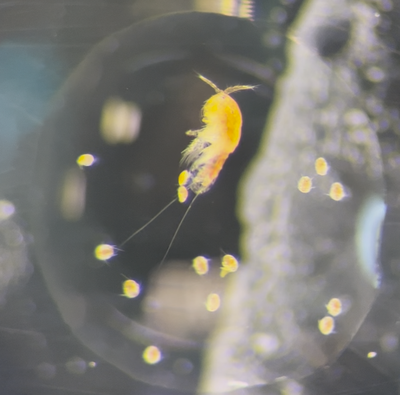
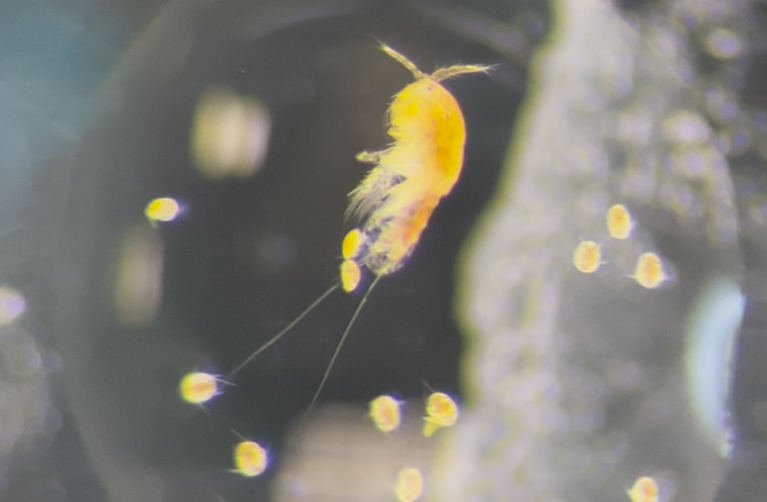
In addition to their high nutritional value, microalgae help improve water quality, absorb CO₂, and reduce organic waste in aquaculture facilities. For this reason, some species are cultivated in experimental systems to evaluate their effectiveness both on fish growth and on the biological balance of aquatic environments. Copepods — the group representing the largest source of protein found in oceans and inland waters — occupy a key position in aquatic ecosystems: they feed mainly on phytoplankton and transfer energy to higher levels of the food chain, serving as the natural prey of most larval forms and many marine organisms. Consequently, variations in their presence and abundance can affect the entire balance of the ecosystem.
Observing the response of copepods to changes in temperature, acidity, nutrient availability, or the presence of pollutants is essential for understanding the effects of environmental changes on these organisms and the possible repercussions on the food web and aquatic biodiversity.
The introduction of plankton into the diets of farmed marine organisms, replacing animal proteins derived from fishing products, makes it possible to develop sustainable protocols and helps reduce the ecological impact of the current fish production system (fishing and aquaculture) in the Mediterranean.
From a socioeconomic perspective, the project as a whole also aims to strengthen the competitiveness of small and medium-sized enterprises in the Mediterranean fisheries supply chain, supporting the transition toward more sustainable production models capable of meeting new European market demands in terms of environmental quality, traceability, and food safety.
The collaboration between the Livorno Aquarium and the Interreg IFM 21–27 AQuaBioS Project is both concrete and effective, thanks to the agreement between the aquarium and the ISPRA office in Livorno. Through its active role in the AQuaBioS project, the Livorno Aquarium supports the development of a sustainable blue economy, where innovation and environmental protection work side by side.
The initiative is supported by the Interreg Italy-France Maritime Programme, a strategic European Union instrument promoting cooperation among Italian and French coastal territories in the western Mediterranean. The project involves scientific and industrial partners from Sardinia, Tuscany, Liguria, Corsica, and the French Région Sud, creating an international network for research and experimentation in sustainable aquaculture.