
World Migratory Bird Day: “Every Sighting Counts”
Italy at the Heart of Migration Routes through Citizen Science and the AEWA Agreement
On the occasion of the autumn observance of World Migratory Bird Day, the Ministry of the Environment and Energy Security (MASE) and ISPRA invite citizens to become active participants in scientific research.
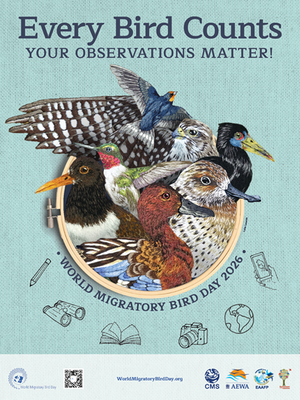
Saturday, October 10, 2026, marks the autumn observance of World Migratory Bird Day, the global campaign promoted by the United Nations environmental treaties CMS (Convention on Migratory Species) and AEWA (Agreement on the Conservation of African-Eurasian Migratory Waterbirds), together with Environment for the Americas (EFTA) and the East Asian-Australasian Flyway Partnership (EAAFP).
The official 2026 theme, “Every Bird Counts – Your Observations Matter!” (“Every Bird Counts – Your Observations Matter!”), highlights the invaluable contribution of Citizen Science (public participation in scientific research). From observations in urban parks to wetland monitoring, data collected by enthusiasts, volunteers and birdwatchers around the world are transformed into essential scientific tools for protecting global biodiversity.
Italy: A Strategic Bridge and Guardian of the Euro-African Flyway
Located at the heart of the Mediterranean and along one of the most important flyways (migration routes) connecting Eurasia and Africa, Italy plays a crucial role in protecting migratory birds. Every year, millions of birds cross the seas, mountains and wetlands of our country. However, threats are increasing: habitat loss, climate change, poaching, plastic pollution, and collisions with infrastructure or light pollution put the survival of many species at risk.
The Value of the AEWA Agreement and the 60th Anniversary of the International Waterbird Census
2026 also marks the 60th anniversary of the International Waterbird Census (IWC), the global waterbird census programme coordinated by Wetlands International, which has been active in Italy for more than 30 years under the scientific coordination of ISPRA.
International cooperation under the AEWA Agreement demonstrates how Citizen Science enables the monitoring of the health of waterbird populations across more than 110 countries in Africa and Eurasia. Reports of birds observed in the field submitted by citizens through dedicated platforms and apps (such as eBird, iNaturalist and Ornitho), as well as sightings of ringed birds identified from a distance (in Italy, reported via recoveries@isprambiente.it), enable researchers and policymakers to:
-
Identify threats and population declines at an early stage;
-
Protect stopover sites and promote sustainable wetland management;
-
Translate scientific data into concrete legislative action at national and international level.
This body of knowledge is further strengthened by the European Bird Migration Atlas, a leading scientific resource developed by EURING with funding provided by the Italian Ministry of the Environment in 2017. It brings together and analyses more than a century of ringing data to map the movements of around 300 species.
The initiative provides a concrete example of international scientific cooperation and demonstrates the strategic value of data collected by researchers, monitoring organizations and volunteers in supporting biodiversity conservation and sustainable management policies.
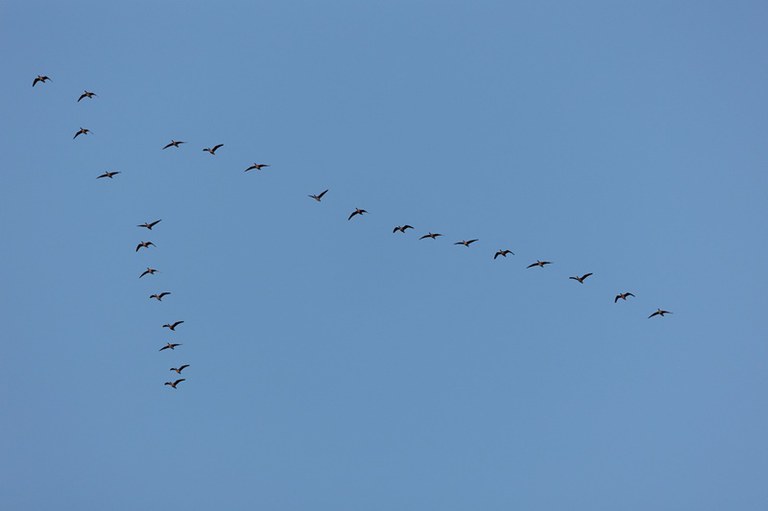
Greater White-fronted Geese in their classic V formation – Photo: Marco Basso
Join the Journey: Every Observation Counts
Recent international commitments made under CMS and AEWA confirm the need for coordinated, cross-border action. MASE and ISPRA reaffirm Italy’s commitment and invite everyone to take an active part not only on October 10, but throughout the year: with a pair of binoculars or simply a smartphone, and by recording their observations on dedicated platforms, anyone can help map migration routes and protect migratory birds.
For more information, please visit the official website: www.worldmigratorybirdday.org
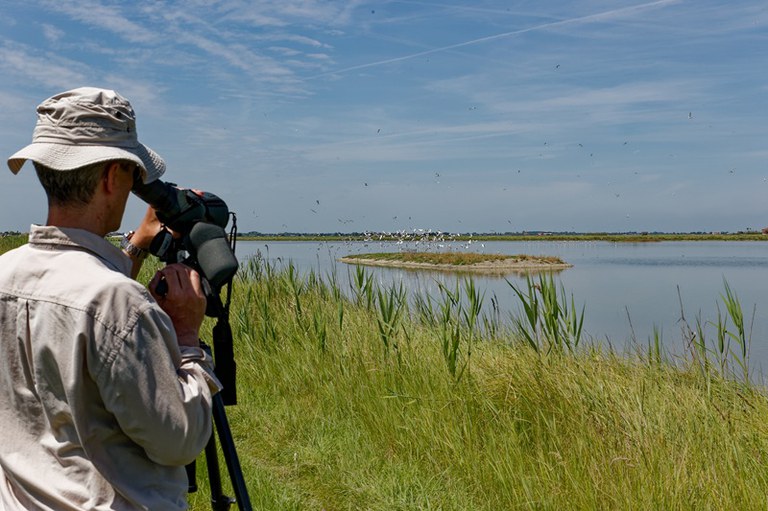
Birdwatching - Photo: Stefano Volponi