
Posidonia oceanica: 15 Recommendations for More Effective Restoration Efforts
Interreg Euro-MED ARTEMIS Project Report Published
The restoration of Posidonia oceanica meadows in the Mediterranean, and seagrass ecosystems more broadly, must move beyond fragmented pilot projects toward structured, long-term, large-scale interventions supported by effective governance and stable funding.
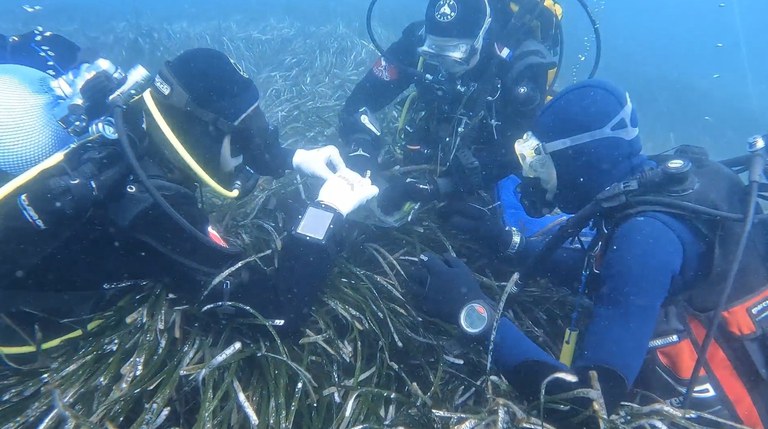
This is the central message of the new report published as part of the Interreg Euro-MED ARTEMIS project, in which Italy plays a leading role through two pilot sites: the Capo Testa–Punta Falcone Marine Protected Area in northern Sardinia and the Gulf of Panzano, in the Monfalcone area of the Friuli Venezia Giulia Region.
Among the Italian partners of the project are ISPRA, the MEDSEA Foundation, and the Municipality of Monfalcone. While ISPRA monitors one of the longest-running Posidonia oceanica transplantation sites in the Mediterranean—serving as a key scientific reference for new restoration initiatives—MEDSEA and the Municipality of Monfalcone lead two of the project's pilot sites dedicated to the restoration of Posidonia oceanica in Sardinia and Cymodocea nodosa in the Gulf of Panzano, respectively.
The newly published report, entitled "Accelerating Seagrass Restoration and Finance," examines the ecological, regulatory, and financial dimensions of restoring one of the Mediterranean's most valuable marine ecosystems, Posidonia oceanica seagrass meadows. It also sets out 15 practical recommendations aimed at translating policy objectives into concrete action.
Drawing on the experience gained at pilot sites in Italy, Greece, and Spain, where seagrass restoration activities have been carried out, the report identifies the main barriers currently limiting the restoration of Posidonia oceanica meadows. It highlights gaps in governance, permitting systems, and financing mechanisms, and proposes practical solutions to address them across four priority areas:
-
Strengthening governance and strategic planning;
-
Enhancing the capacity to implement restoration actions;
-
Securing stable, long-term public funding;
-
Developing credible private finance mechanisms to support restoration.
Among its key recommendations, the report calls on Mediterranean countries to develop ambitious, science-based restoration plans; establish dedicated regulatory frameworks for the recovery of Posidonia oceanica; strengthen maritime spatial planning and the role of marine protected areas; and integrate seagrass meadows into climate policies and blue carbon strategies. The report also emphasizes that the success of restoration efforts will depend on effective stakeholder engagement, robust scientific knowledge, and strengthened institutional capacity.
Finally, the report reiterates that public funding must remain the cornerstone of the European strategy for ecosystem restoration, including within the negotiations on the European Union's 2028–2034 Multiannual Financial Framework. At the same time, complementary private finance instruments can help mobilize additional resources, provided they are supported by clear rules, rigorous monitoring systems, and strong environmental integrity safeguards.
In this context, the ARTEMIS project has developed and tested a Posidonia Credit model, demonstrating how private finance can contribute to the restoration of seagrass meadows, provided that high standards of monitoring, verification, and environmental quality are ensured.
New ARTEMIS Policy Recommendations launched to support Mediterranean seagrass restoration
Video Monfalcone: Protecting Cymodocea nodosa in a busy coast