
Italian Eionet Network
The Italian Eionet network is structured as follows:
- National Focal Point (NFP) Team: Consists of four members, including the Primary Contact Point (PCP), who acts as a bridge between Italy and the European Environment Agency (EEA). The NFP team organises and develops the Italian Eionet network, nominates experts for Eionet groups and thematic groups, and facilitates and coordinates contacts, requests and information exchange at national and European level. It also ensures an effective connection with the National System for Environmental Protection (SNPA) and the academic and research sectors, and provides advisory support to EEA Board members. The national institution responsible for coordinating Eionet activities is the Institute for Environmental Protection and Research (ISPRA), specifically the DG-SINA service.
- National Data Flow Coordinator (NDFC): Appointed by the NFP team, the NDFC ensures a coherent and coordinated approach to data collection, comparison and exchange between Italy and the EEA in order to efficiently meet the needs of the Agency's work programme. This role has been established within the Eionet network to clearly separate data flow management from knowledge co-creation functions. The NDFC works closely with various members of the Italian Eionet network, as well as with national reporters and the EEA Data Flow Manager.
- Eionet Groups (EGs): There are 12 Eionet Groups, each focusing on a specific environmental topic. Each group is usually composed of 2 to 4 national experts appointed by the NFP team to represent Italy at the European Agency. Group leaders coordinate the involvement of their experts, facilitate links with other expert groups and support the NFP in managing the national Eionet network. These experts have professional backgrounds and competences related to the topic of their group and work closely with both EEA and national experts. The Eionet groups focus mainly on knowledge development and exchange, including data processing, information exchange, indicator development, co-creation activities, best practices and innovative solutions.
- Thematic Groups (TGs): There are 16 Thematic Groups, functioning as sub-groups within Eionet Groups, working on more specific topics. Each thematic group consists of several national experts, nominated by the NFP team, who share a professional background and expertise related to their topic. Their role is to develop and share knowledge through regular peer exchanges at both EEA and national level. The members of the thematic groups are the official representatives of Italy at the European Agency.
- Eionet Working Groups (WGs): Currently, there are three Working Groups that focus on emerging topics and aim to develop concrete results such as joint notes, indicator proposals, guidelines, new methodologies, and harmonization initiatives. Working Groups can be initiated by the EEA or by a group of interested countries and are established on a voluntary and time-limited basis. Members are appointed by the NFP Team and represent Italy during various scheduled meetings. Working groups can be set up within an Eionet group, link two or more Eionet groups or address a new topic not linked to any existing group; this is the case of the 3 working groups of the Italian Eionet network, namely “Just Transition”, “Copernicus” and “Planetary Boundaries”. Depending on the topic and the motivation for the existence of the group, its leadership may be entrusted to the EEA and/or to the country representatives.
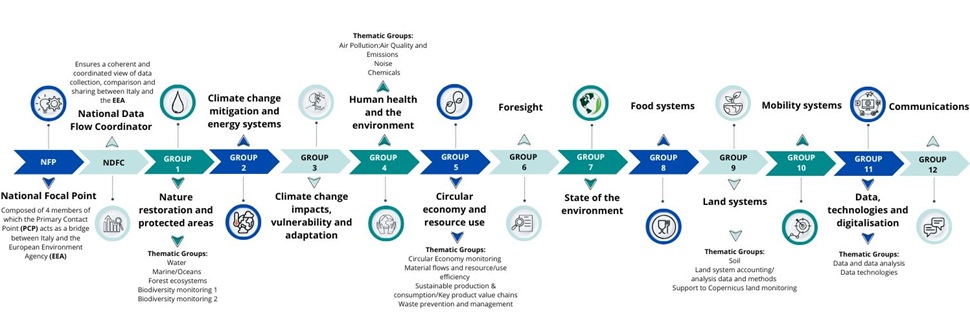
Fig.4 Structure of the Italian Eionet network
Based on this structure, the Italian Eionet network contributes to the activities of the EEA-Eionet system by facilitating cooperation between the EEA and Italy, ensuring a two-way exchange of knowledge and information through regular interactions, and supporting the implementation of the EEA-Eionet Strategy 2021-2030.
In particular, the Italian Eionet network actively participates in workshops, webinars, co-creation projects, and, where appropriate, Eionet expert meetings to share best practices, national perspectives, expert contributions, and knowledge. It also provides concrete technical input for specific projects and co-creation activities, such as developing new indicator assessment methodologies, Eionet reports, innovative uses of data and digitalization technologies, and feedback on selected EEA products.
Additionally, it contributes to cross-cutting processes, including the implementation of the 8th Environmental Action Programme (8EAP), the European Green Deal, monitoring agreements and foresight frameworks, INSPIRE, and Copernicus, as well as enhancing knowledge of national environmental information systems and, where applicable, national monitoring and observation systems.
At the national level, the Italian Eionet network collaborates with relevant organizations and networks, including the Environmental Protection Agencies network (EPA network), Ministries, research Institutions, and Universities.