Istituto Superiore per la Protezione
e la Ricerca Ambientale

Cerca
The ISPRA “Siren” Exploring the Seabed
May 05, 2026

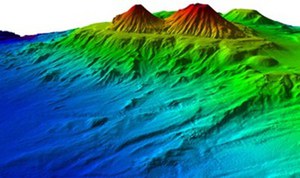
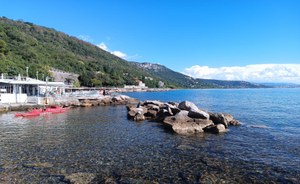
In the Gulf of Naples and around Ischia, testing of the Hugin AUV: an underwater robot designed to observe submerged volcanoes and anticipate risks.

Like a modern Parthenope—silent and invisible—the “Siren” of science explores the seabed of the Gulf of Naples, speaks the language of the sea, reveals its signals, and understands its evolution. As part of the PNRR MER project (Marine Ecosystems Restoration), ISPRA has recently tested the Hugin AUV, an autonomous underwater vehicle capable of operating at depths of up to 3,000 meters, with the support of the vessel Astrea.

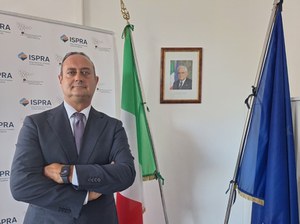
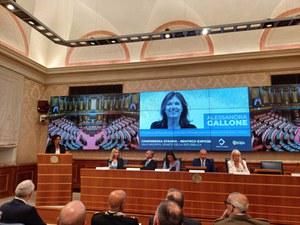
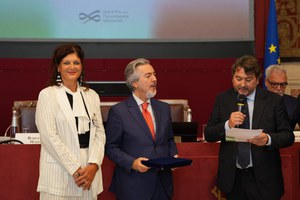
Maria Alessandra Gallone, President of ISPRA and SNPA:
“This activity represents a significant step forward in the use of autonomous technologies to monitor marine seabeds and acquire ultra-high-resolution data aimed at the morphological, geological, and environmental characterization of deep-sea areas. The Gulf of Naples is one of the most complex and sensitive environments in the Mediterranean Sea, making continuous monitoring essential to understand the evolution of natural processes and help reduce potential risks for populations and marine ecosystems.

The testing of the Hugin AUV in the Gulf of Naples and the Ischia area represents a concrete and strategic step in strengthening our country’s scientific and technological capabilities for understanding and protecting the marine environment. Thanks to the PNRR MER project, ISPRA is equipping itself with cutting-edge tools that allow us not only to gather fundamental data for research but also to develop increasingly accurate predictive models, contributing significantly to the prevention of natural risks and the safety of coastal communities, while confirming its role as a scientific reference supporting institutions, environmental protection, and citizens.”

Highlight

Topics in evidence

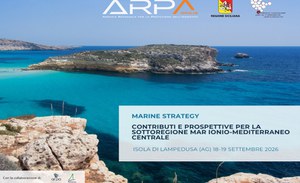
Public Consultation 2026 on the Marine Strategy Monitoring Programs (Article 19 of Directive 2008/56/EC)
May 05, 2026

On May 5, 2026, pursuant to Article 16 of Legislative Decree 190/2010, the Public Consultation on the Marine Strategy Monitoring Programs, prepared by the Ministry of the Environment and Energy Security with the technical and scientific support of ISPRA, opened.
The documents submitted for consultation, already discussed by the Technical Committee pursuant to Article 5 of Legislative Decree 190/2010, refer to the 2027-2032 Marine Strategy Monitoring Programs for each of the 11 Descriptors and can be found on the page Public Consultation 2026 – Marine Strategy.

continue
Protection of pollinators, tools and practices: what actions are possible?
May 06, 2026 10:00 AM — May 06, 2026 01:00 PM Webinar

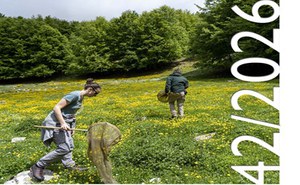
The initiative, through the involvement of representatives from institutional, production, environmental, and research sectors, aims—starting from the results of LIFE BEEadapt and the instruments of the Common Agricultural Policy (CAP) currently in place to support pollinators—to foster debate on the dissemination of good practices and on the synergies that can be developed to implement actions of interest for the protection of pollinators.

continue
Wolf, ISPRA and SNPA President Gallone: “An alliance is urgently needed to stop illegality and conflicts”
May 03, 2026

ISPRA and SNPA President Maria Alessandra Gallone:
“As already reiterated in recent days, the reckless act of indiscriminately killing animals such as the wolf — a symbolic species of Italian biodiversity — risks undermining the results achieved over the past decades in terms of its protection and conservation.

It is necessary to establish as soon as possible a discussion forum that represents a concrete alliance with all stakeholders who live and work in these areas, responsibly and fairly supporting primary production while ensuring the safety of areas of extraordinary ecological value. This path will be essential to reduce existing conflicts and decisively combat illegality, which threatens not only a protected species but the entire wildlife heritage of these territories, including grazing livestock activities.”
continue
All ISPRA Events All News