Environment and Research: ISPRA and Sapienza Renew Their Framework Agreement
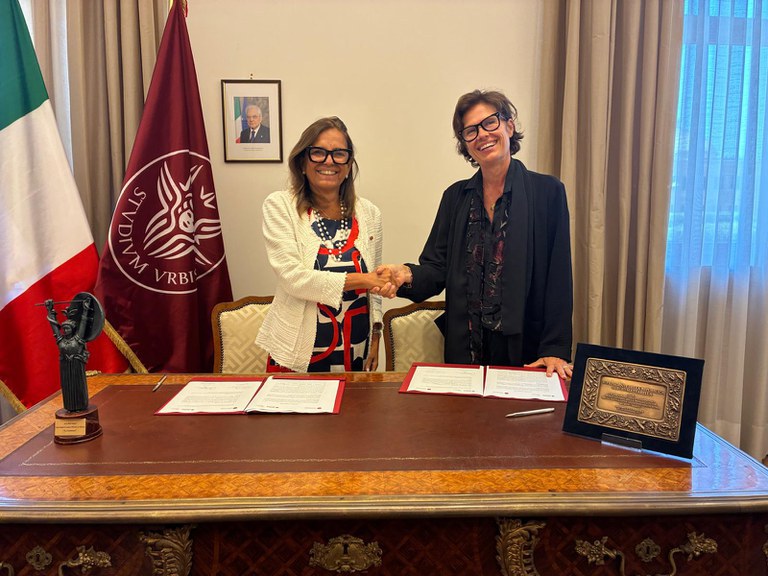
Jul 29, 2026 — Jul 29, 2026 RomeThe President of ISPRA and the National System for Environmental Protection (SNPA), Maria Alessandra Gallone, and the Rector of Sapienza University of Rome, Professor Antonella Polimeni, have renewed their framework agreement on scientific and educational cooperation for an additional three years. The agreement aims to strengthen the synergies between the two institutions on key issues for the country's future and to foster collaboration on joint projects in the fields of environmental sustainability, biodiversity conservation, soil and land protection, the circular economy, environmental law and economics, climate change, and Earth observation.
The renewal builds on the significant achievements of the previous three-year period, during which Sapienza and ISPRA collaborated on a wide range of research topics, including geological mapping, legal aspects related to combating environmental crime and the Emissions Trading System (ETS), biodiversity and habitat monitoring within protected areas, and environmental law.
A cornerstone of the renewed agreement will continue to be advanced training. The collaboration will enable Sapienza PhD candidates to undertake research placements at ISPRA under the supervision and mentorship of the Institute's researchers and technologists.