30 Years of AEWA: A Milestone of Cooperation for the Protection of Migratory Waterbirds
Three decades of joint efforts between countries, institutions, and the scientific community to protect waterbirds along the African-Eurasian flyway
The Agreement on the Conservation of African-Eurasian Migratory Waterbirds (AEWA) turns 30. This international agreement, signed in 1995 in The Hague, aims to protect migratory waterbirds and their habitats along one of the planet's most important migratory flyways: the African-Eurasian flyway.
Over three decades of activity, AEWA has become a global reference point for international cooperation in biodiversity conservation. Today, it brings together 85 countries across Africa and Eurasia (including the European Union), committed to protecting over 550 populations of 255 species that depend on wetlands for part of their life cycle.
Italy ratified the Agreement in 2006, strengthening its commitment to the protection of migratory waterbirds. In Italy, ISPRA provides technical support to the Ministry of the Environment and Energy Security (MASE) for the implementation of the AEWA measures and for monitoring and reporting activities, contributing to the definition of conservation policies and actions at the international level.
Italy ratified the Agreement in 2006, strengthening its commitment to the protection of migratory waterbirds. In Italy, ISPRA provides technical support to the Ministry of the Environment and Energy Security (MASE) for the implementation of the AEWA measures and for monitoring and reporting activities, contributing to the definition of conservation policies and actions at the international level.
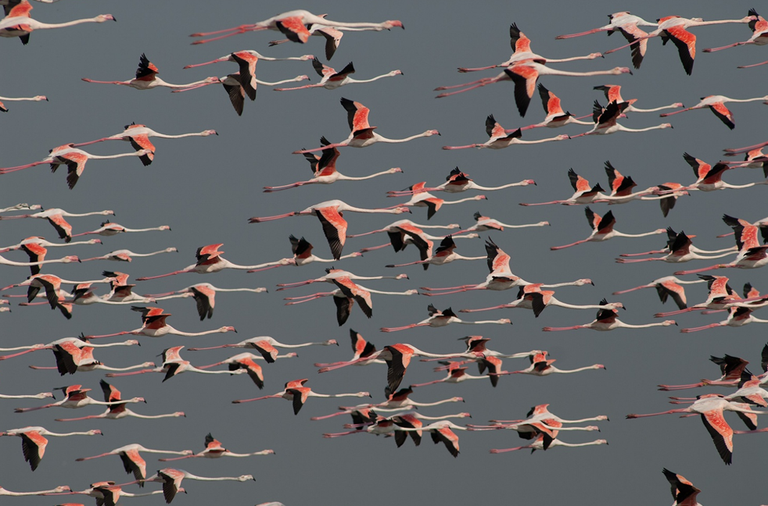 Fenicotteri (Phoenicopterus roseus) in volo. Foto A. De Faveri ISPRA
“For thirty years, AEWA has been a beacon of innovation and cooperation among countries,” said Jacques Trouvilliez, Executive Secretary of the Agreement. “From developing species action plans to combating threats such as habitat loss and lead poisoning, AEWA has built a solid foundation for coordinated conservation along the African-Eurasian flyway.”
Among the most significant achievements are the African Initiative, the European Goose Management Platform, and World Migratory Bird Day: initiatives that have strengthened cooperation among countries and increased awareness of the importance of protecting migratory birds and the wetlands they depend on.
To celebrate its thirtieth anniversary, the AEWA Secretariat has created a dedicated webpage showcasing the highlights of these thirty years and illustrating the challenges faced through three new animations.
As a tribute, the United Nations Postal Administration has issued three special stamps—the African penguin (Spheniscus demersus), the grey crowned crane (Balearica regulorum), and the white-headed duck (Oxyura leucocephala)—as part of the “Endangered Species 2025” series.