
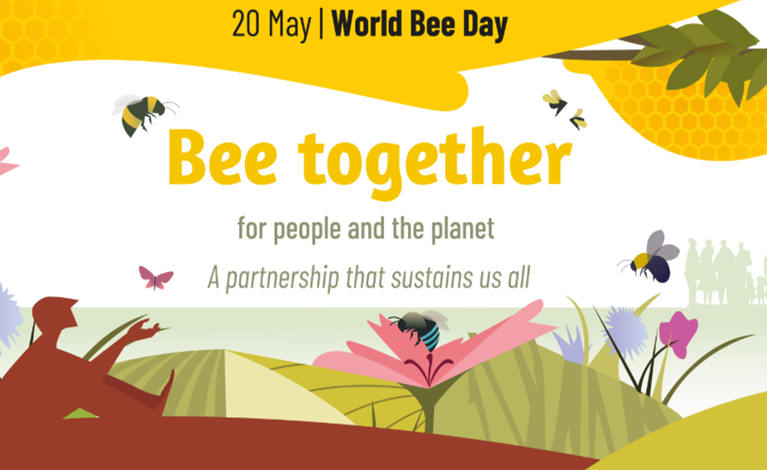
World Bee Day 2026
Pollinating insects play vital ecological roles that support global biodiversity, food security, and ecosystem balance. About 90% of the world’s wild flowering plants depend on insects for pollination in order to reproduce. It is also estimated that 75% of major global crops—including vegetables, fruits, nuts, and forage—benefit from insect pollination. Beyond agriculture, pollinators indirectly contribute to climate change mitigation by supporting the health of forests and natural ecosystems, which are essential for CO₂ absorption.
The status of pollinator populations in Italy is considered critical, reflecting the broader negative trend across Europe.
- Species at risk: around 22% of the 151 assessed native bee species are threatened with extinction.
- Main causes: habitat fragmentation, intensive agriculture, widespread pesticide use, and increasing pressure from climate change.
We all depend on pollinators. Monitoring their decline and taking action to halt biodiversity loss is essential—not only for protecting ecosystems, but also for safeguarding food systems and environmental stability.
- https://www.isprambiente.gov.it/en/news/world-bee-day-2026
- World Bee Day 2026
- 2026-05-20T00:00:00+02:00
- 2026-05-20T23:59:59+02:00
- Pollinating insects play vital ecological roles that support global biodiversity, food security, and ecosystem balance. About 90% of the world’s wild flowering plants depend on insects for pollination in order to reproduce. It is also estimated that 75% of major global crops—including vegetables, fruits, nuts, and forage—benefit from insect pollination. Beyond agriculture, pollinators indirectly contribute to climate change mitigation by supporting the health of forests and natural ecosystems, which are essential for CO₂ absorption. The status of pollinator populations in Italy is considered critical, reflecting the broader negative trend across Europe. Species at risk: around 22% of the 151 assessed native bee species are threatened with extinction. Main causes: habitat fragmentation, intensive agriculture, widespread pesticide use, and increasing pressure from climate change. We all depend on pollinators. Monitoring their decline and taking action to halt biodiversity loss is essential—not only for protecting ecosystems, but also for safeguarding food systems and environmental stability.
- When May 20, 2026 (Europe/Berlin / UTC200)
-
Add event to calendar
 iCal
iCal
To raise awareness of these threats, the United Nations established World Bee Day. This year’s theme, “Bee united for people and planet,” celebrates the long-standing relationship between humans and bees, promoting innovative and sustainable beekeeping practices that support both the environment and community livelihoods.
Since 2015, ISPRA has been publishing and updating the indicator “Bee mortality due to pesticide use” within its Environmental Data Yearbook. Analyses conducted over the past decade reveal frequent improper use of plant protection products. In 2024 as well, pyrethroids—used both in agriculture and in urban mosquito control—are among the substances most frequently detected in samples.
For at least two decades, ISPRA has been actively engaged in initiatives and projects to monitor the environment and pollinator populations, including honey bees. Among the current projects:
- Apincittà: A study carried out in collaboration with CUFAA to monitor the status of bees and bee-friendly flora in urban environments.
- Project VeBS: Focused on the “good use of green and blue spaces,” this project promotes human health and well-being through the protection of ecosystem services, with particular attention to pollination carried out by bees.
- PolliNetwork: A project aimed at increasing areas of habitats suitable for pollinators, based on the direct involvement of key stakeholders in developing and implementing concrete conservation strategies