
Silent Plains: 2025 data released on bird populations associated with agricultural environments
The recent 2025 update on the “Common Birds of Agricultural Areas in Italy” produced within the framework of the National CAP Network with the support of Lipu, provides a crucial and concerning snapshot of the health of our countryside. At the center of the study is the Farmland Bird Index (FBI), an aggregated indicator that monitors trends in the populations of species closely associated with agricultural environments.
The Data on the Collapse (2000–2025)
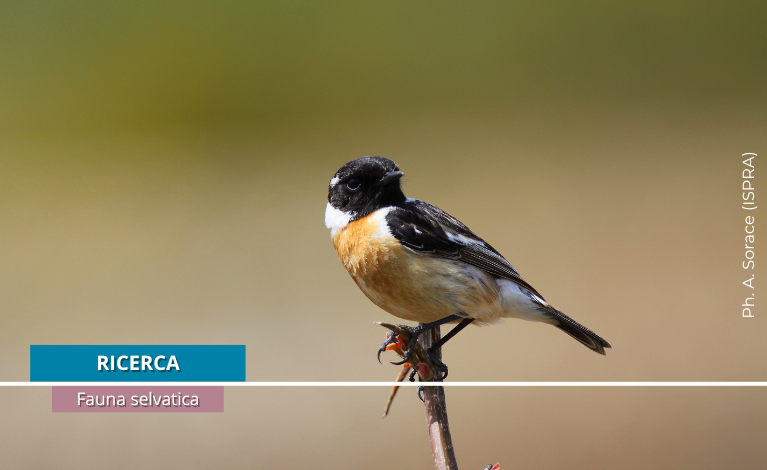
The figures in the latest report confirm a dramatic trend: over the past 26 years, Italy has lost 33% of its farmland bird populations. The situation becomes critical in lowland areas (such as the Po Valley), where the decline reaches peaks of -50% due to intensive agriculture and the disappearance of hedgerows and tree lines. Of the 28 species monitored, 71% are in significant decline; among the most severe losses are the Wryneck (-76%), the Calandra Lark (-73%), and the Stonechat (-71%), species that were once common and are now disappearing from our landscapes.
These results represent a sort of environmental “barometer”: the collapse of these species directly reflects ecosystem degradation and the reduction of food resources they depend on, starting with insects. The Farmland Bird Index (FBI) could therefore take on a strategic scientific role within the National Restoration Plan, which represents the key operational instrument through which Italy will implement EU Regulation (2024/1991) on nature restoration.
Looking ahead, the challenge will be to translate these data into concrete actions in the field, promoting an agricultural model that integrates production and biodiversity. Only through the effective restoration of rural habitats can we hope to reverse the curve of decline, ensuring the survival of these sentinel species and, with them, the long-term resilience of our food systems.
|
Brochure "Uccelli comuni delle zone agricole in Italia" (IT) - 18 MB |