ISPRA and Sapienza University of Rome together on the oceanographic vessel NG SURVEYOR of NextGeosolution, to study the underwater seamounts of the Italian seas
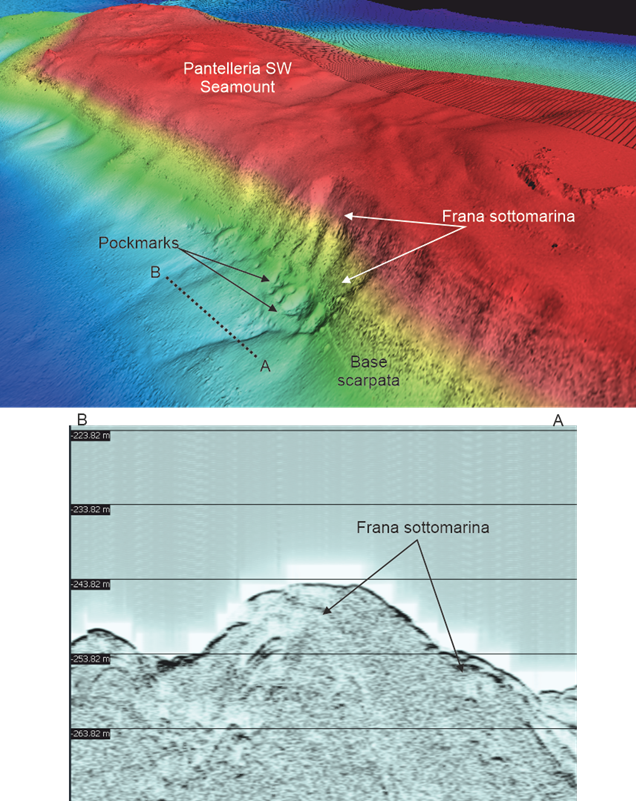
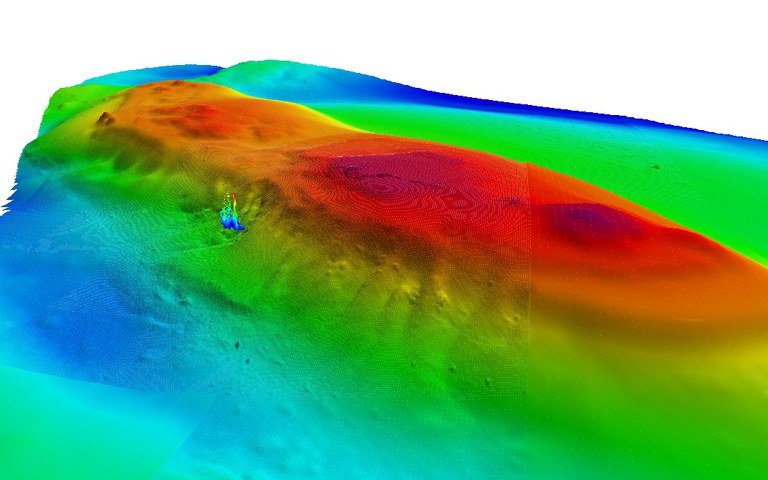
The recent geophysical campaign conducted by ISPRA within the PNRR-MER project, SEAMOUNT Intervention (A14) has revealed the presence of unique morphological structures off the coast of Pantelleria, in the Strait of Sicily. The geophysical surveys, conducted using advanced technologies such as the multibeam echo sounder and the sub-bottom profiler, have allowed to identify "pockmarks", sub-circular depressions that extend for about 1 km at the base of the seamount "Pantelleria SW", at a depth of about 300 meters
These structures, with depths of up to 15 meters and diameters of up to 100 meters, are associated with significant emission of fluids from the seabed. The analysis of seismic-acoustic anomalies has confirmed the presence of gas or fluid bubbles that alter the propagation of the sound emitted by the multibeam echo sounder, creating gas columns, called flares, that rise up to 200 meters above the seabed. Pockmarks, in fact, generally form rapidly through the sudden release of gas-fluids that are under pressure in the seabed, but many of these structures continue to emit gas or fluids from the subsoil at an increasingly slow rate until they become dormant.
Bathymetric surveys have also shown that these depressions located at the base of the seamount "Pantelleria SW", are located in correspondence with a submarine landslide, with the detachment niche located at about 150 meters of depth.
This finding suggests an interaction between fluid expulsions from the subsurface and submarine landslide phenomena affecting the seamount.
These results open new perspectives for studying the dynamics that influence the morphology of the seabed related to deep geological processes and the risks associated with them.