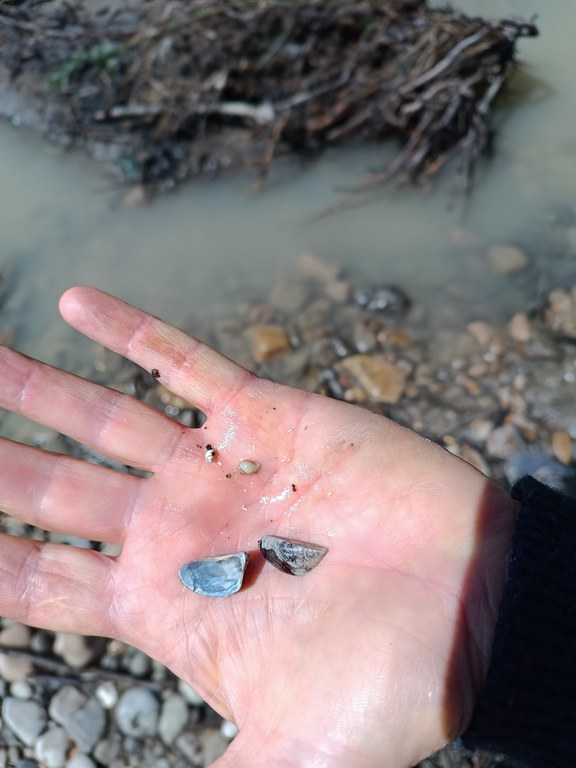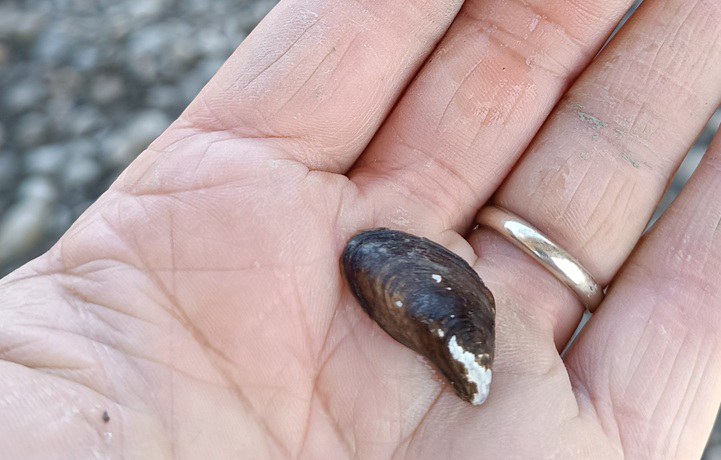
Alien species Dreissena polymorpha identified on the Tevere River
As part of the citizen science project “Tevere molluschi fantastici” (Tiber Fantastic Molluscs), coordinated by researchers from ISPRA, several specimens of the bivalve mollusc Dreissena polymorpha—commonly known as the zebra mussel—were discovered in Umbria, in the middle Tiber Valley near Alviano (TR). Although the species has a distinctive and easily recognizable appearance, its identification was confirmed by two expert malacologists involved in the project.
Previously reported in the Tiber River only near Rome a few years ago, the zebra mussel has been present in Italy since 1971. While its distribution remains localized, it is found in various freshwater systems across the country. This species is considered invasive and was listed in a 2017 scientific study among the 100 most invasive species in Europe. In countries where it has become highly invasive and widespread —such as Spain—it causes not only serious harm to biodiversity but also significant economic damage. The mussels tend to colonize pipes and aquatic infrastructure, resulting in high costs for maintenance, control, and restoration.
At present, the species is not expanding in Italy, but its spread should be carefully monitored and controlled to limit the risk of further diffusion. Many species, in fact, go through a 'latency' period before expanding and becoming invasive, eventually posing a threat to the ecosystem.
The discovery has been recorded in the web-GIS platform of the National Biodiversity Network (NBB), as well as in other relevant databases, as notification or warning issued to inform the public, scientists, conservationists, or authorities about the presence, spread, or risk in the riverine system were the species was found. A scientific report will also be prepared by the project coordinators to document and disseminate the finding.
The report has been inserted into the web-gis of the National Biodiversity Network and other repositories in such a way as to bring the news to the attention of the various conservation bodies involved; a scientific note will also be produced by the project coordinators.