Istituto Superiore per la Protezione
e la Ricerca Ambientale

Cerca
Wildfires Leave Their Mark on Forest Ecosystems
Aug 03, 2026

According to ISPRA's monitoring data updated to 28 July 2026, the 2026 wildfire season has intensified significantly across both Europe and Italy. During the second half of July, the area affected by wildfires increased rapidly, particularly in Spain, France and Italy, anticipating the period that is traditionally considered the peak of the fire season between late July and early August. The largest ongoing fires are located in the Spanish provinces of Ávila (more than 440 km²) and Guadalajara (around 330 km²), while in France a major wildfire in the Gironde has already burned more than 400 km² of land.

In Italy, from 1 January to 28 July 2026, satellite monitoring detected more than 1,070 large wildfires, affecting approximately 741 km² of land, an area comparable to the entire Province of Lodi. About 14% of the burned area consists of forest ecosystems, while the remaining burned land is mainly permanent grasslands (61%) and agricultural areas (16%). The regions most severely affected are Sicily, Calabria and Apulia, which together account for 73% of the total area burned nationwide. Sicily alone recorded more than 510 km² of burned land, with the most significant event occurring in the Province of Agrigento, where several fire outbreaks affected approximately 67 km².

During July, major wildfires also affected protected areas, including Gran Paradiso National Park, where approximately 2.4 km² burned, and Pollino National Park, where a fire affected around 14 km², primarily damaging grasslands, with more limited impacts on forests and Mediterranean shrubland.

Highlight

Topics in evidence

How Many Marsican Brown Bears Are There in Italy?
Aug 03, 2026

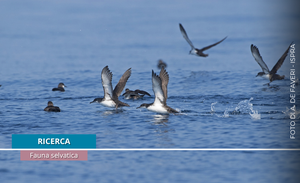
This video presents the results of the most extensive and comprehensive genetic monitoring survey ever conducted on the Marsican brown bear, an endemic subspecies that is critically endangered.

Carried out as part of the DigitAP project, funded under Italy’s National Recovery and Resilience Plan (PNRR), the monitoring confirms the stability of the species’ historic core population while documenting a gradual expansion into surrounding peripheral areas.

continue
GeoSciences IR Among the National Research Infrastructures Selected by the Ministry of University and Research (MUR) to Train Researchers from Kenya
Aug 03, 2026

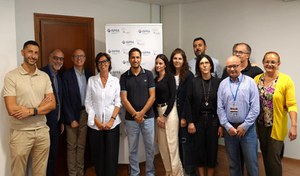
Three researchers from Kenya will come to Italy to receive advanced training in geosciences through GeoSciences IR, Italy’s first national research infrastructure entirely dedicated to geosciences. Developed under the National Recovery and Resilience Plan (PNRR) by ISPRA, in collaboration with the National Research Council (CNR), the National Institute of Oceanography and Applied Geophysics (OGS), and 13 Italian universities, GeoSciences IR provides users with cutting-edge expertise, technologies and research platforms for the study and management of the territory.
continue
Photography Contest: "From land consumption to urban and territorial regeneration"

Jun 18, 2026

A photograph to tell the story of change

ISPRA and SNPA are renewing their photography contest initiative to engage professionals, amateurs of landscape and street photography, and anyone interested in documenting urban and regional regeneration in Italy. The goal is to foster positive change: documenting environmental redevelopment projects, resurfacing projects, and the ecological recovery of previously degraded or artificially developed areas, to provide a comprehensive and scientific view of territorial dynamics.

continue