
News

Taormina hosts the SD-WISHEES event dedicated to protecting cultural and environmental heritage from climate-related risks
Oct 01, 2026 — Oct 02, 20261–2 October 2026 | Taormina, Italy | Hybrid event
How can we protect our cultural and environmental heritage in the face of the increasing frequency and intensity of hydroclimatic extreme events?
This question will be at the heart of the event “Protecting Cultural & Environmental Heritage from Hydroclimatic Extremes”, taking place in Taormina on 1 and 2 October 2026. The event is organised within the framework of the European Horizon project SD-WISHEES-Supporting and Developing WIdening Strategies to tackle Hydroclimatic Extreme Events: impacts and Sustainable solutions for cultural heritage, by ISPRA and the project partners.
Over two days, researchers, academics, institutional representatives, funding organisations and representatives of local communities from Europe, the Balkans and Africa will come together to discuss strategies and solutions aimed at strengthening the resilience of cultural and environmental heritage in the face of climate change and hydroclimatic extreme events.
The initiative will focus on the Water–Climate–Cultural Heritage (WCCH) Nexus, promoting an integrated and multidisciplinary approach that connects water, climate, the environment and cultural heritage.
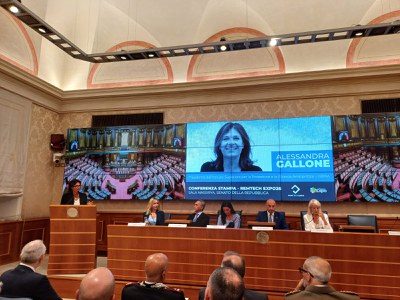
RemTech Expo 2026: the voices of the XX edition
Sep 08, 2026 — Sep 08, 2026 RomeRemediation and regeneration: vision, progress and competitiveness across the environment, infrastructure, territories and health
Today in Rome, at the Nassirya Hall of the Senate of the Republic, the 20th edition of RemTech was presented. The event is scheduled to take place in Ferrara from September 16 to 18.
The press conference was attended by ISPRA President Maria Alessandra Gallone and Director General Fabrizio Penna.
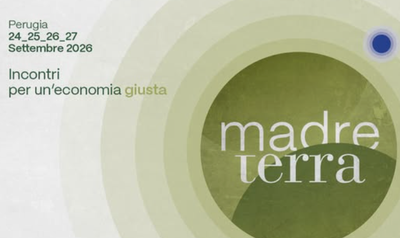
Eco Sanfra
Sep 24, 2026 — Sep 27, 2026 PerugiaEco Sanfra is a festival dedicated to economic, environmental and social sustainability.
Following “Sister Water” and “Brother Sun”, the festival’s journey continues through the Canticle of the Creatures, with “Mother Earth” serving as the cultural compass for its third edition
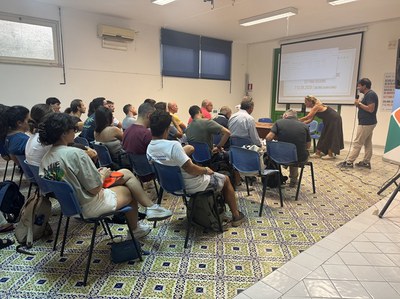
The 7th Summer School on Marine and Coastal Geology, Ecology and Biology takes place on Salina
Sep 07, 2026 — Sep 07, 2026 SalinaA week of training, research and field activities for students, researchers and technical professionals. At the heart of the programme is the study and protection of marine and coastal environments.
The 7th Summer School on Marine and Coastal Geology, Ecology and Biology in Island Environments began on September 7 on Salina. The initiative is dedicated to advanced training and scientific professional development for Master's students, PhD candidates, researchers and technical professionals.
Now in its seventh edition, the Summer School aims to bring together different areas of expertise and disciplines to deepen knowledge of marine and coastal environments. These are particularly sensitive systems where geological processes, marine dynamics, biodiversity, human activities and climate change interact.
29th International Conference on Bear Research and Management
Sep 20, 2026 — Sep 25, 2026 PescasseroliConnecting science, practice and community engagement for human–bear coexistence
The 29th International Conference on Bear Research and Management will be held in Pescasseroli from 20 to 25 September 2026. This leading international event will take place in the heart of the Central Apennines, home to the Marsican brown bear, a critically endangered species.
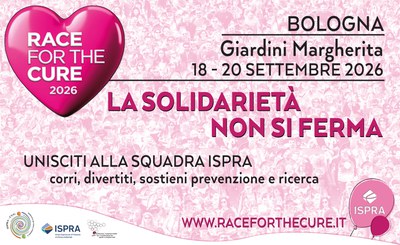
Race for the cure 2026 - XX edition
Sep 18, 2026 — Sep 20, 2026 Bologna, Giardini MargheritaRACE FOR THE CURE is the Komen Italia’s flagship event and the largest initiative dedicated to the fight against breast cancer. The ISPRA team will continue its journey in Bologna from 18 to 20 September at the Giardini Margherita.
Open to everyone, the event celebrates the PINK WOMEN — women who are currently facing or have faced breast cancer — while raising public awareness of the importance of prevention.
Soil Monitoring in the Anthropocene
Sep 21, 2026 — Sep 21, 2026 Rome, Palazzetto Mattei in Villa Celimontana Via della Navicella n. 12A law that describes the issue and find the solution
Directive is the European Union’s first binding instrument dedicated exclusively to soil. It is also the result of a compromise: no restoration targets, no deadlines, and no land-take neutrality. What remains are harmonised indicators, a definition of “healthy soil”, and reporting obligations. Everything else is left to the Member States.
The centre of gravity therefore shifts from legislation to implementation: from 2026 to 2029, when the first national programmes will be introduced. Those four years will determine whether Europe develops a genuine soil policy or merely a sophisticated system for monitoring its own degradation.
The conference opens up this debate, addressing key issues such as multi-level governance, who will pay for restoration, the thresholds defining “healthy soil”, the spatial justice of land consumption, local knowledge and European standards, industrial site remediation, and urban soil sealing.
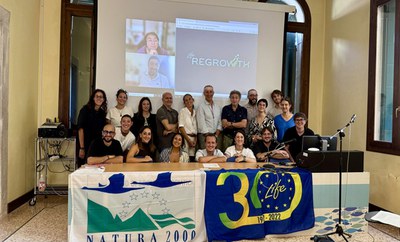
The LIFE REGROWTH Project Gets Underway to Restore the Venice Lagoon Ecosystem
Aug 31, 2026 — Aug 31, 2026 ChioggiaThe European LIFE REGROWTH project (Restoration of Habitat 1150 through the reintroduction of aquatic angiosperms in choked shallow waters of the central-southern basins of the Venice Lagoon) has officially launched. This major ecosystem restoration initiative aims to restore biodiversity and strengthen the resilience of the central-southern areas of the Venice Lagoon.*
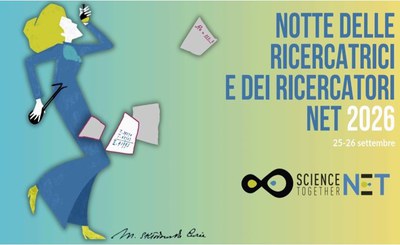
European Researchers’ Night 2026
Sep 25, 2026 — Sep 26, 2026 Rome, Città dell'Altra EconomiaOnce again this year, ISPRA is taking part in the European Researchers’ Night, together with other public research institutions and universities.
The initiative, which will take place across Europe on 25 and 26 September, will provide an opportunity to bring citizens closer to the world of scientific research and to discover the activities and results of public research on today’s most relevant issues.
Rome will become the capital of science with the NET Village. From 6:30 p.m., at the Città dell’Altra Economia in the Testaccio district, visitors will have the opportunity to meet researchers, talk with them, and take part in interactive workshops and talks. It will be an opportunity to discover, in an informal and engaging way, the work that thousands of scientists carry out every day for the benefit and progress of society as a whole.
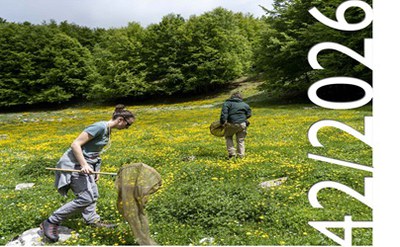
Issue 42 of RETICULA is now online
Sep 02, 2026Issue 42 of RETICULA is now available online, the ISPRA technical and scientific journal dedicated to ecological connectivity, green infrastructure, and spatial and landscape planning.
The editorial opens with a reflection on wind power repowering and the upgrading of already developed sites, identified as important steps in the energy transition process.
This issue also features an in-depth look at the path towards the National Ecological Network: from the 2003 APAT Guidelines on Ecological Networks in Italy’s Regions and Autonomous Provinces to ISPRA Report 423/2025, the article explores the evolution of ecological networks and their role in implementing the National Biodiversity Strategy to 2030.
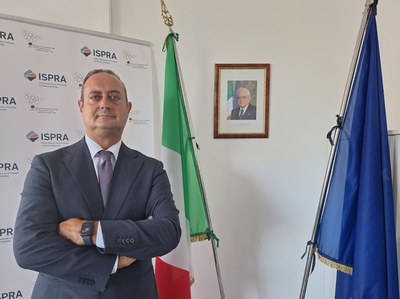
Fabrizio Penna is the new Director General of ISPRA: official inauguration today
Sep 01, 2026Following his appointment on 30 July, unanimously approved by the Board of Directors upon the proposal of President Maria Alessandra Gallone, Fabrizio Penna officially takes office today as the new Director General of ISPRA, succeeding Maria Siclari.
His term begins at a significant moment in the Institute’s efforts to strengthen its action in support of environmental protection policies, scientific research, sustainable development and territorial monitoring, with the aim of enhancing ISPRA’s role as a technical and scientific reference point for the country, within the European and international context.
Fabrizio Penna leaves his position as Head of Department of the PNRR Mission Unit at the Ministry of Environment and Energy Security. Previously, among other roles, he served as an administrative executive at the National Inspectorate for Nuclear Safety and Radiation Protection (ISIN), held various positions at the former Ministry of the Environment and Protection of Land and Sea (MATTM), acted as MATTM’s Permanent Representative to the Technical Coordination Structure of the Interministerial Committee for Policies Related to Space and Aerospace Research at the Presidency of the Council of Ministers, and worked as a Senior Legal and Economic Expert at SOGESID S.p.A.
Maria Alessandra Gallone, President of ISPRA and SNPA: “As I thank Maria Siclari for her commitment and professionalism, I would like to extend my best wishes to the new Director General as he takes up his duties, confident that his experience and expertise will help strengthen ISPRA’s ability to address the major environmental challenges of the present and the future”.
Fabrizio Penna, Director General of ISPRA: “I would like to thank the President and the Board of Directors for the unanimous confidence they have placed in me. The constitutional protection of the environment is an issue that, today more than ever, requires vision, innovation, collaboration and a sense of responsibility. I will place my passion and experience at the service of the Institute in order to strengthen its administrative and organisational capacity, while enhancing the value of all the professionals who work every day with expertise and dedication. Our commitment will be to consolidate the Institute’s human capital, promote increasingly effective processes and support, with transparency and a practical approach, the technical and scientific mission of the Institute in the service of the country and its institutions”.
Facciamo Circolare Wins the 2026 Grand Prix for Institutional Communication
Sep 15, 2026 11:00 AM — Sep 15, 2026 12:00 PM Rome, Sala della Regina della Camera dei Deputati, Piazza di Montecitorio 1On 15 September, at the Sala della Regina in Palazzo Montecitorio, home to the Chamber of Deputies, ISPRA’s "Facciamo circolare" campaign will receive the 2026 Grand Prix for Institutional Communication in the “Integrated and Multichannel Projects” category.
"Facciamo circolare" is a platform and communication campaign dedicated to circular economy issues, with a particular focus on reducing food waste and promoting separate waste collection. The initiative was developed in collaboration with, and funded by, the Ministry of Enterprises and Made in Italy.
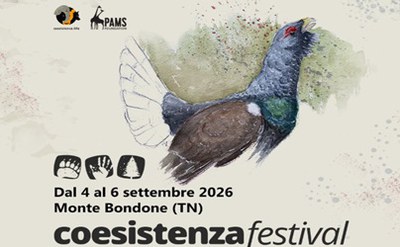
Coesistenza Festival 2026
Sep 04, 2026 — Sep 06, 2026 Monte Bondone, TrentoFrom 4 to 6 September 2026, the Coesistenza Festival will take place: three days of talks, performances, excursions, film screenings and workshops dedicated to coexistence between humans and nature.
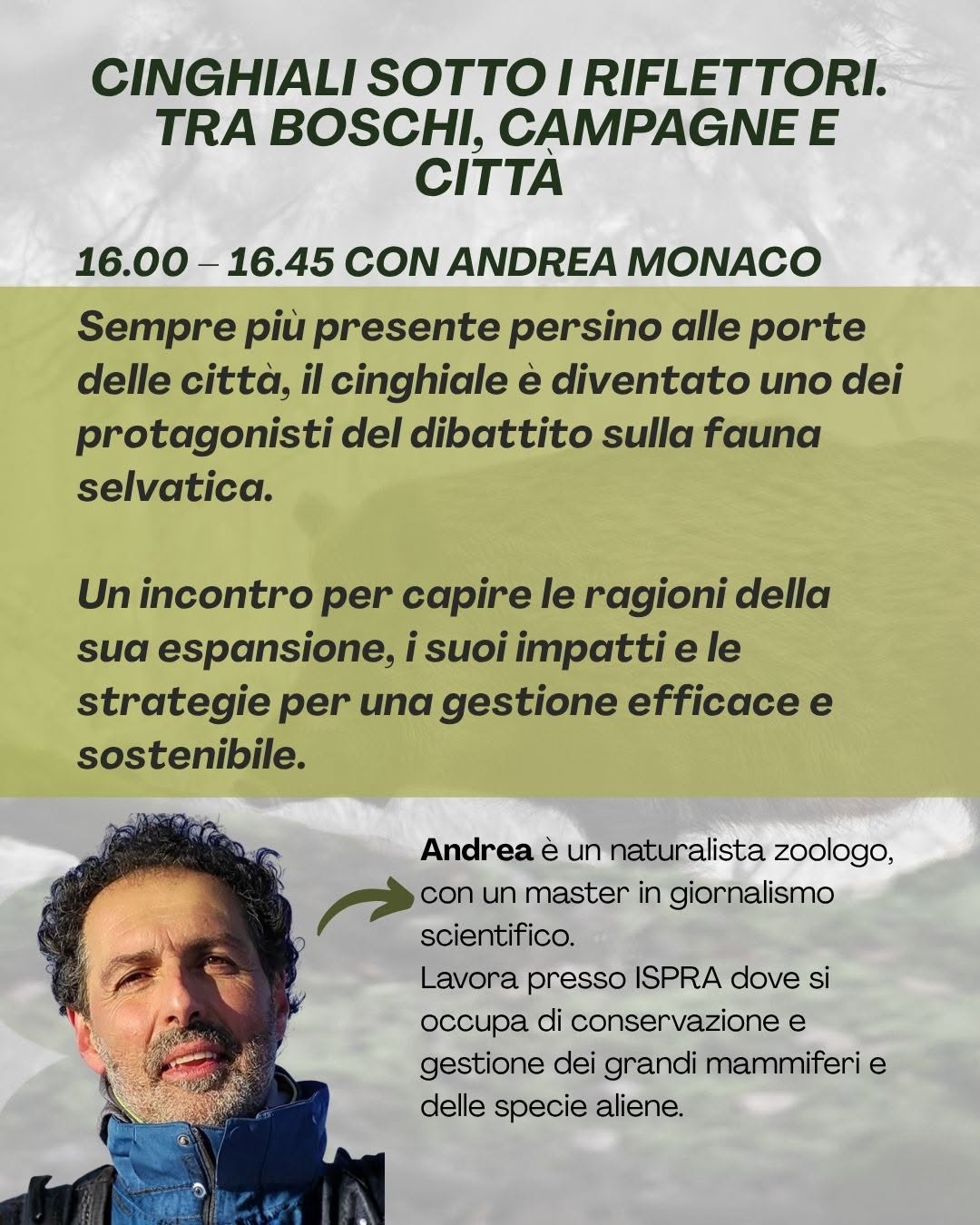
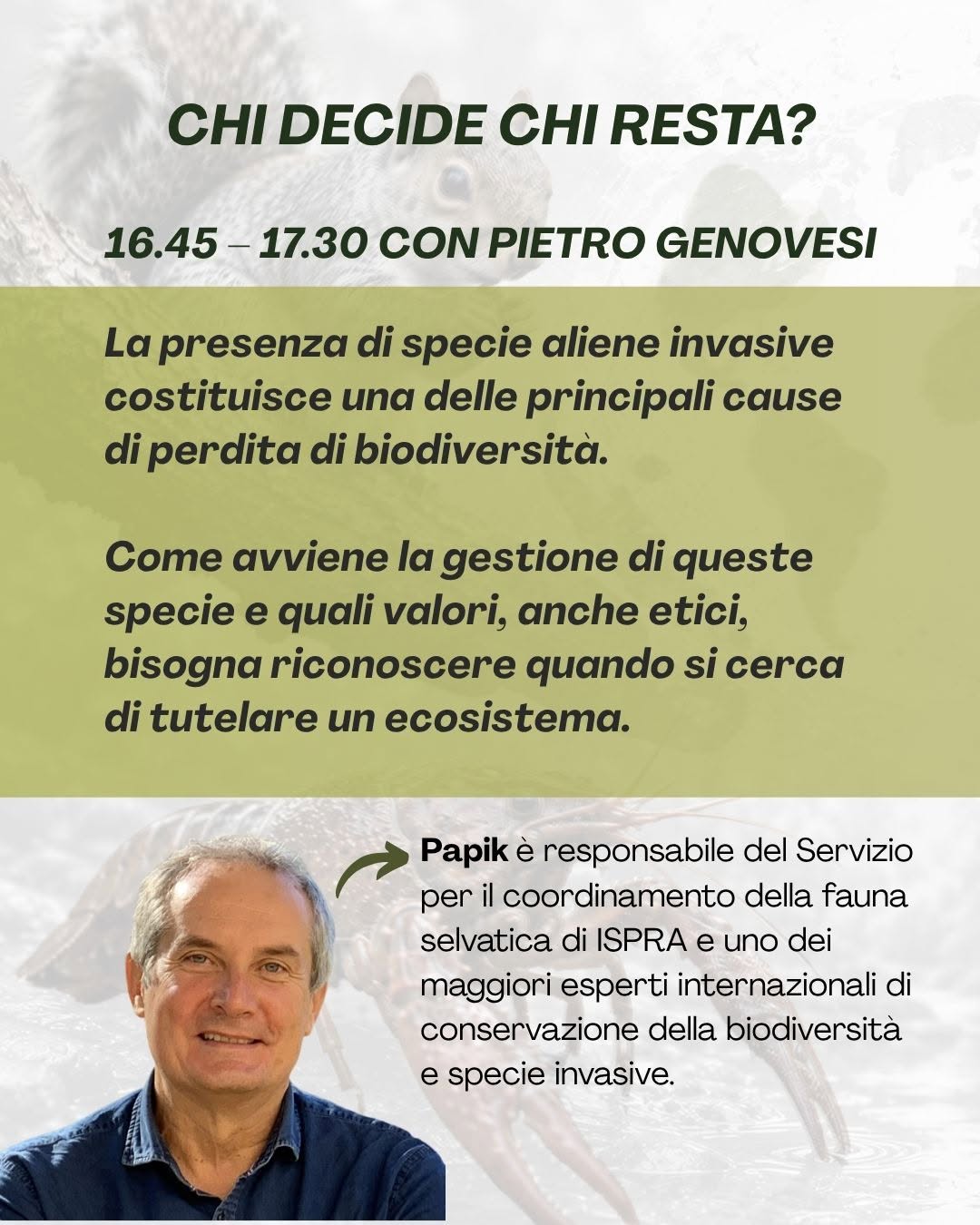
On 4 September, ISPRA researchers Piero Genovesi and Andrea Monaco will take part in the scientific talks:
Wild Boars in the Spotlight: Between Forests, Countryside and Cities
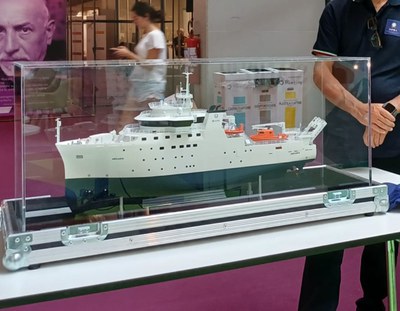
At Rimini, Arcadia is unveiled to the public: a scale model of ISPRA’s new oceanographic research vessel “arrives” at the Meeting
Aug 25, 2026A floating laboratory for understanding and protecting the Mediterranean
The sea will be one of the key themes of the SNPA exhibition space and talks from 21 to 26 August at the Meeting for Friendship Among Peoples, taking place at the Rimini Exhibition Centre. On 25 August at 11:00 a.m., the round table “A dive where the sea is bluest: people and actions to safeguard our marine ecosystems” will be held, with the participation of ISPRA and SNPA President Maria Alessandra Gallone. The discussion will focus on the health of the Mediterranean, the blue economy, marine biodiversity protection, bathing waters, and the monitoring and control of marine ecosystems.
COP17 of the United Nations Convention to Combat Desertification
Aug 17, 2026 — Aug 28, 2026 MongoliaCOP17 of the United Nations Convention to Combat Desertification (UNCCD) is taking place in Ulaanbaatar, Mongolia, from August 17 to 28, 2026. The summit is titled "Restoring Land, Restoring Hope" and focuses on drought resilience, land degradation, and the protection of rangelands.
For COP17, the Italian Pavilion is hosting a schedule of events dedicated to key global challenges related to desertification, land degradation, and drought.
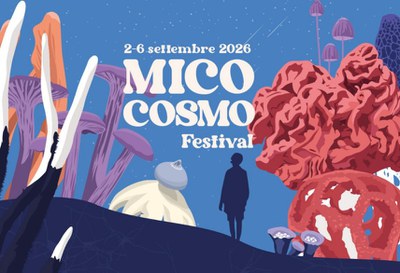
MicoCosmo Festival 2026
Sep 02, 2026 — Sep 06, 2026 Cevo (BS)The third edition of the MicoCosmo Festival—an Italian mycology event dedicated to giving a voice to the diverse facets of this world—will take place in Cevo (Brescia) from September 2 to 6.
The Meet Fungi project, of which ISPRA is a partner, will participate in the event to showcase its activities and objectives, promoting the monitoring of fungal biodiversity, the collection and sharing of mycological data, and the value of fungi for forest ecosystem conservation.

ISPRA in Ecomondo 2026
Nov 03, 2026 — Nov 06, 2026 Rimini ExhibitionEcomondo is the leading international event in Europe and the Mediterranean basin for technologies, services, and industrial solutions in the green and circular economy sectors.
It is a premier annual trade fair that serves as a meeting point and forum for dialogue among industries, stakeholders, policymakers, opinion leaders, local authorities, the research community, and institutions.
As a hub for research and innovation, it fosters the exchange of information and ideas through an extensive program of conferences, seminars, and events, featuring a Technical-Scientific Committee composed of scientists, technical experts, executives, and representatives from national and international institutions.
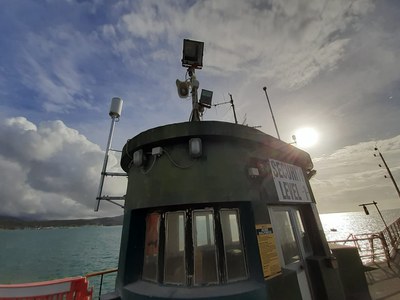
MEDJICARP Spring School on Multi-Technology Marine Monitoring
Apr 06, 2027 — Apr 08, 2027 PalermoAs part of the INTERREG NEXTMED MEDJICARP project, the University of Palermo (Department of Engineering) and ISPRA are organizing the Spring School on Multi-Technology Marine Monitoring, which will be held in Palermo from 6 to 8 April 2027.
The Spring School offers an interdisciplinary training programme aimed at university students, PhD candidates, and early-career researchers, focusing on integrated observation systems for the marine and coastal environment.
Over the three-day training programme, participants will explore advanced marine monitoring technologies, with a specific focus on High-Frequency (HF) radar, FerryBox systems, and quality assurance and quality control (QA/QC) procedures for oceanographic data. The programme will also examine key operational applications, including oil spill response, search and rescue operations, water quality monitoring, and the management of Marine Protected Areas.
14th Edition of Earth Planet Week
Sep 27, 2026 — Oct 04, 2026Earth Planet Week is a science festival that, since 2012, has annually transformed Italy into a stage for science and nature, aiming to spread knowledge of the geosciences and raise public awareness regarding the value of our geological, environmental, and cultural heritage.
The 14th edition of Earth Planet Week will take place from September 27 to October 4; on October 3, the event will see ISPRA researchers engaging in science outreach activities at the Selva del Lamone Nature Reserve.
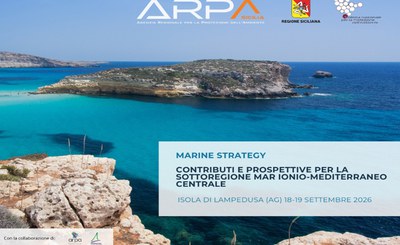
Marine Strategy: contributions and perspectives for the Ionian Sea–Central Mediterranean Sub-region
Sep 18, 2026 — Sep 19, 2026 LampedusaOn 18 and 19 September 2026, the island of Lampedusa will host the scientific meeting "Marine Strategy: Contributions and Perspectives for the Ionian Sea–Central Mediterranean Sub-region," promoted and organized by ARPA Sicilia in collaboration with ARPA Basilicata and ARPA Campania. The event represents a strategic opportunity to discuss the methods and activities of the 2021–2026 cycle.
The event will focus on several scientific themes aimed at addressing operational challenges that have emerged in recent years.
The morning of September 18 will open with a presentation by ISPRA regarding the new Marine Strategy monitoring programs. This will be followed by an analysis of the critical issues identified concerning *Posidonia oceanica* habitats (Descriptor 1), featuring contributions from experts from ISPRA and the ARPA agencies of Sicily and Basilicata.

SNPA contributes to the implementation of the National Climate Change Adaptation Plan
Aug 07, 2026The National System for Environmental Protection (SNPA) has selected the experts who will join the National Observatory on Climate Adaptation. Established under the Ministry of the Environment and Energy Security, the Observatory is tasked with providing multi-level guidance and coordination for the implementation of the National Climate Change Adaptation Plan (PNACC), as well as defining intervention priorities, updating actions, and identifying funding sources.
Participants in the work include technical experts and researchers from the various components of the SNPA, ranging from ISPRA to the regional environmental protection agencies (ARPAs).
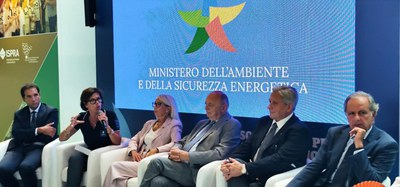
ISPRA and SNPA at the Rimini Meeting 2026
Aug 21, 2026 — Aug 26, 2026 RiminiThis year, from 21 to 26 August, ISPRA and the National System for Environmental Protection (SNPA) will take part in the Meeting for Friendship Among Peoples, to be held at the Rimini Exhibition Centre. SNPA will be present with an exhibition area within the institutional space of the Italian Ministry of the Environment and Energy Security (MASE), offering meetings, information materials and in-depth insights on environmental protection, environmental monitoring and inspection activities, and scientific research aimed at safeguarding the country's natural environment.
On Monday, 24 August, at the MASE Talk Area, ISPRA/SNPA President Maria Alessandra Gallone took part in the round table “Humanising Energy: The Public and Social Value of Renewable Energy Communities.”
The President highlighted how “ISPRA is well placed to address the theme of ‘humanising energy’, because its role is not to produce or sell energy, but to measure its effects on people, the environment and territories. In its 2026 Report on the electricity sector, ISPRA found that between 1990 and 2025, CO₂ emissions from electricity generation fell by 48.8%, while renewables accounted for 48% of national electricity generation in 2025. But the transition cannot be measured solely in terms of MW installed or CO₂ avoided: we must ask ourselves where these facilities are being installed, what consequences they have for the landscape and biodiversity, what benefits remain in the local area, and above all whether citizens are spectators or protagonists.”
“This is where Renewable Energy Communities (RECs) come in. ISPRA has already identified them as a model capable of generating local economic and social benefits. With RECs, citizens are no longer simply recipients of an energy bill; they become producers, consumers and co-responsible stakeholders. Humanising energy means moving from energy as infrastructure to energy as community.”
“For me, humanising the transition means putting people back at the centre: technology is a tool, while the ultimate goal is quality of life. An REC does not simply produce clean energy; it creates communities: it reduces costs, combats energy vulnerability, empowers citizens and strengthens local areas. This is where ISPRA’s scientific expertise meets the social dimension of the transition, measuring not only the energy produced, but also the quality of life and the quality of the territory that we build through it.”
At 4:00 p.m., Gallone also took part in the round table “Public Energy Companies at the Service of Citizens,” together with MASE Minister Hon. Gilberto Pichetto Fratin.
On 25 August at 11:00 a.m., the roundtable discussion “A Dive into the Bluer Sea: People and Actions to Safeguard Our Marine Ecosystems” will take place, featuring Maria Alessandra Gallone, President of ISPRA/SNPA, Donato Ramunno, Vice President of SNPA, and other leading representatives of the National System for Environmental Protection.
The discussion will focus on the state of health of the Mediterranean Sea, the blue economy, the protection of marine biodiversity, bathing water quality, and the monitoring and control of marine ecosystems.
More detailed information and the full roundtable programme will be available soon.
Information on how to access the event is available on the Meeting for Friendship Among Peoples website.
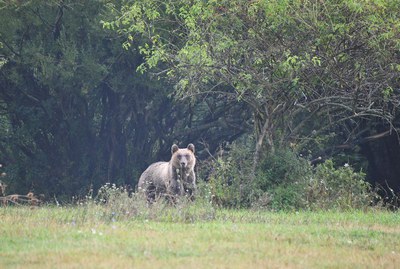
How Many Marsican Brown Bears Are There in Italy?
Aug 03, 2026This video presents the results of the most extensive and comprehensive genetic monitoring survey ever conducted on the Marsican brown bear, an endemic subspecies that is critically endangered.
Carried out as part of the DigitAP project, funded under Italy’s National Recovery and Resilience Plan (PNRR), the monitoring confirms the stability of the species’ historic core population while documenting a gradual expansion into surrounding peripheral areas.
GeoSciences IR Among the National Research Infrastructures Selected by the Ministry of University and Research (MUR) to Train Researchers from Kenya
Aug 03, 2026Three researchers from Kenya will come to Italy to receive advanced training in geosciences through GeoSciences IR, Italy’s first national research infrastructure entirely dedicated to geosciences. Developed under the National Recovery and Resilience Plan (PNRR) by ISPRA, in collaboration with the National Research Council (CNR), the National Institute of Oceanography and Applied Geophysics (OGS), and 13 Italian universities, GeoSciences IR provides users with cutting-edge expertise, technologies and research platforms for the study and management of the territory.
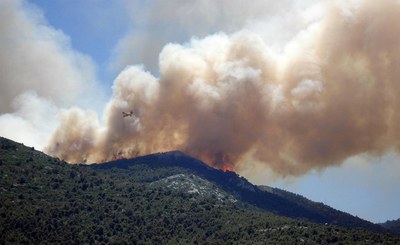
Wildfires Leave Their Mark on Forest Ecosystems
Aug 03, 2026According to ISPRA's monitoring data updated to 28 July 2026, the 2026 wildfire season has intensified significantly across both Europe and Italy. During the second half of July, the area affected by wildfires increased rapidly, particularly in Spain, France and Italy, anticipating the period that is traditionally considered the peak of the fire season between late July and early August. The largest ongoing fires are located in the Spanish provinces of Ávila (more than 440 km²) and Guadalajara (around 330 km²), while in France a major wildfire in the Gironde has already burned more than 400 km² of land.
In Italy, from 1 January to 28 July 2026, satellite monitoring detected more than 1,070 large wildfires, affecting approximately 741 km² of land, an area comparable to the entire Province of Lodi. About 14% of the burned area consists of forest ecosystems, while the remaining burned land is mainly permanent grasslands (61%) and agricultural areas (16%). The regions most severely affected are Sicily, Calabria and Apulia, which together account for 73% of the total area burned nationwide. Sicily alone recorded more than 510 km² of burned land, with the most significant event occurring in the Province of Agrigento, where several fire outbreaks affected approximately 67 km².
During July, major wildfires also affected protected areas, including Gran Paradiso National Park, where approximately 2.4 km² burned, and Pollino National Park, where a fire affected around 14 km², primarily damaging grasslands, with more limited impacts on forests and Mediterranean shrubland.
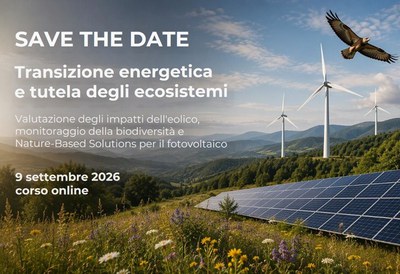
Energy Transition and Ecosystem Protection: Assessing the Impacts of Wind Energy, Biodiversity Monitoring, and Nature-Based Solutions for Solar Photovoltaics
Sep 09, 2026 — Sep 09, 2026 WebinarThe course, organized by the Emilia-Romagna Region – Protected Areas, Forests and Mountain Areas Development Department as part of the European LIFE NatConnect2030 project, is aimed at technical and administrative staff of public authorities, managers of protected areas and Natura 2000 sites, environmental professionals and consultants, and researchers.
The initiative will explore the application of the Appropriate Assessment (AA) procedure to wind energy projects, biodiversity monitoring, and the role of Nature-Based Solutions (NbS) in the design and management of ground-mounted photovoltaic systems. Particular attention will be given to ecosystem conservation and the protection of the Natura 2000 network.
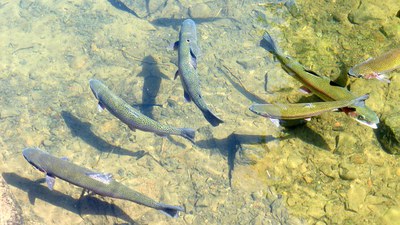
Environmental training course: "Protect habitats and river species"
Sep 15, 2026 — Oct 15, 2026The training program, developed and implemented as part of the LIFE STREAMS project, aims to disseminate and promote a common, shared understanding regarding the proper management and conservation of Mediterranean trout populations and habitats, based on the guidelines developed within the project itself.
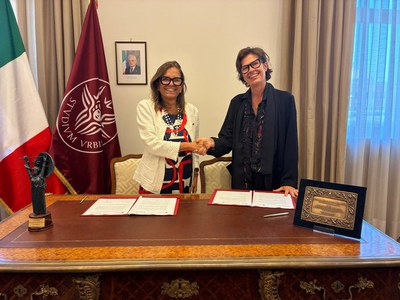
Environment and Research: ISPRA and Sapienza Renew Their Framework Agreement
Jul 29, 2026 — Jul 29, 2026 RomeThe President of ISPRA and the National System for Environmental Protection (SNPA), Maria Alessandra Gallone, and the Rector of Sapienza University of Rome, Professor Antonella Polimeni, have renewed their framework agreement on scientific and educational cooperation for an additional three years. The agreement aims to strengthen the synergies between the two institutions on key issues for the country's future and to foster collaboration on joint projects in the fields of environmental sustainability, biodiversity conservation, soil and land protection, the circular economy, environmental law and economics, climate change, and Earth observation.
The renewal builds on the significant achievements of the previous three-year period, during which Sapienza and ISPRA collaborated on a wide range of research topics, including geological mapping, legal aspects related to combating environmental crime and the Emissions Trading System (ETS), biodiversity and habitat monitoring within protected areas, and environmental law.
A cornerstone of the renewed agreement will continue to be advanced training. The collaboration will enable Sapienza PhD candidates to undertake research placements at ISPRA under the supervision and mentorship of the Institute's researchers and technologists.
Learning from the Sea with ACeS: Water, Environment and Health – Citizens and Researchers in Dialogue
Aug 06, 2026 07:00 PM — Aug 06, 2026 10:00 PM OrtonaThrough the contribution of the ACeS project partners, citizens will have the opportunity to gain first-hand insight into the project's activities and understand the importance of water protection and prevention through interactive spaces and educational activities designed to encourage direct dialogue between scientific research and local communities.
Through interactive activities and opportunities for discussion, the ACeS project brings research beyond the laboratory, showing how water quality, the marine environment and human health are closely interconnected.
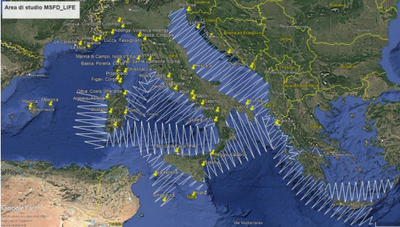
ISPRA Conducts Cetacean Monitoring under the Marine Strategy Framework Directive and the LIFE MareNatura Project
Jul 27, 2026The first survey session of ISPRA’s aerial monitoring activities carried out under the Marine Strategy Framework Directive (MSFD) and the LIFE MareNatura project has been successfully completed. These aerial surveys are aimed at estimating the population size of cetacean species inhabiting the seas surrounding Italy and the Ionian Sea.
The monitoring activities conducted by ISPRA under the MSFD constitute Italy’s official national cetacean monitoring programme. Together with the activities carried out within the LIFE MareNatura project, they represent Italy’s contribution to the international commitments undertaken within the framework of ACCOBAMS (the Agreement on the Conservation of Cetaceans of the Black Sea, Mediterranean Sea and Contiguous Atlantic Area), while also contributing to the broader ACCOBAMS Survey Initiative (ASI).