“Towards a Global Strategy for Environmental Data: Results from the 3rd UNSPBF Meeting in Frascati and UNEP Implementation Plan”
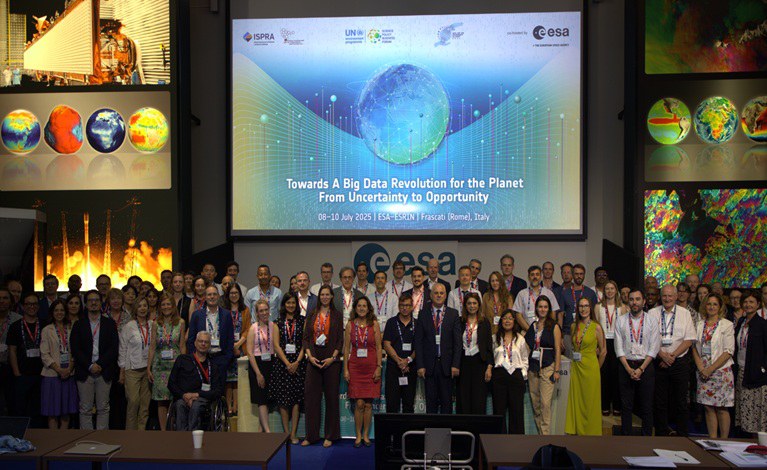
A few months after the third High-Level Expert Group Meeting on Big Data of the United Nations Science-Policy-Business Forum on the Environment (UNSPBF – Frascati, July 8–10), organized by ISPRA in collaboration with the European Space Agency, UNEP presented the second version of the Global Environmental Data Strategy (GEDS) and its implementation plan during the annual meeting of the UNEP Annual Subcommittee of the Committee of Permanent Representatives (ASC), held in Nairobi on September 2.
The implementation plan is structured in three phases and is based on an inclusive consultation process that, between 2023 and 2025, involved over 500 stakeholders, including NGOs, citizens, Indigenous communities, and academic and research institutions, including ISPRA. Key points include the creation of a guiding framework for environmental data governance by 2035, the adoption of shared standards and global mechanisms to ensure data quality, and the integration of participatory approaches, such as citizen science and data from Indigenous communities, at the core of data collection and sharing strategies.
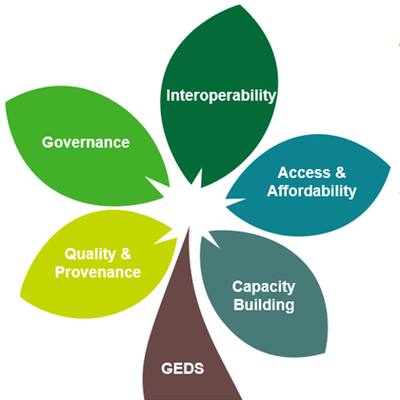
The GEDS developed by UNEP aims to strengthen the global environmental data ecosystem. The outcomes produced by UNSPBF, which saw the active contribution of ISPRA and INFO-RAC—a central hub for data governance in the Mediterranean—reflect a shared vision born from the need for strong synergy between public institutions and international bodies. This synergy is essential for a global digital infrastructure of environmental data that is open, interoperable, and inclusive.
The main purpose of the “Frascati Principles” document, produced at the UNSPBF July meeting, and its related Final Report, is to provide insight into ongoing efforts to improve global environmental data governance by addressing critical issues and gaps regarding data availability, accessibility, quality, and interoperability. The goal is to ensure timely and reliable data to support decision-making. However, the global environmental data landscape remains highly fragmented, uncoordinated, and increasingly misaligned with the needs of decision-makers. While the availability of environmental data is expanding, the system that produces, manages, and disseminates it often lacks interoperability, consistency, and governance.
The Frascati Principles document contributes to the review of GEDS. The principles it contains provide a foundation for further technical and institutional developments and represent an effort to articulate a vision for global environmental data governance capable of responding to continuous geopolitical changes, including the growing emphasis on national data sovereignty and the limitations of consensus-based processes.
The solutions proposed by the various working groups on Governance, Finance, Science, Geospatial Data, and Civil Society fed into the work of the High-Level Expert Group, substantially contributing to the definition of the GEDS strategy. The suggested implementation pathways are not to be understood as formal recommendations but as starting points for further elaboration by experts and future collaborations.