
Publications
Bulletin on research funding
Commission adopts measures to limit intentionally added microplastics
Guidelines for the assessment of the long term trend analysis of the priority substances that tend to accumulate in sediment and/or biota
On MASE’s request ISPRA has elaborated a guideline in order to define criteria to assess long term trend analysis of those priority substances that tend to accumulate in sediment and/or biota.
ITALY and ENVIRONMENT: Status, Prospects and Scenarios
The new ISPRA report offers citizens, technicians, researchers, observers, and policy makers an accurate analysis of the state of the environment in Italy, considering the main European economic-environmental strategies (Green Deal, 8 th EAP).
Guidelines for the census and monitoring of macromycetes in Italy
These "Guidelines for the census and monitoring of macromycetes in Italy" are the result of the commitment and involvement of the many participants in the Open Science initiative of the Network for the study of mycological diversity (NMD).
Reticula n.33/2023
Bulletin on research funding
G7 Science and Technology for the ocean
Atlas of Environmental Data. 2023 edition
The Atlas of environmental data, a volume that ISPRA publishes for the first time, offers an overview of the main environmental data. It provides cartographic representations showing the spatial distribution of the main environmental information which, together with graphs, tables and texts, illustrate the state of the entire national territory.
Reticula n. 32/2023
Environment in Italy: an overview. Environmental Data Yearbook 2022
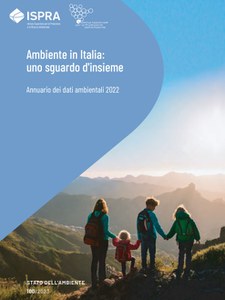
Environment in Italy: an overview. Environmental Data Yearbook 2022 is a statistical report produced by ISPRA with the aim of providing policy makers, public administrators, technicians and citizens with official information on the state of the environment in our country.
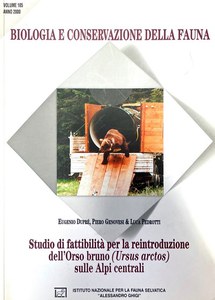
Feasibility study for the reintroduction of the brown bear (Ursus arctos) in the Central Alps
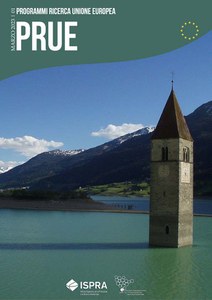
Bulletin on research funding
COP15: historical global deal for nature and people
Application of isotopic analysis for the proportioning of organic matter: study of an artificial reservoir
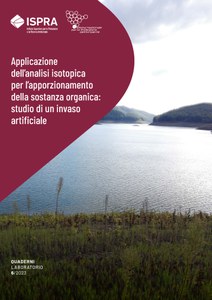
With the study of the stable isotopes of carbon and nitrogen it is possible to quantify the contribution to the total organic substance deriving either from the natural transformation of the biotic component or from anthropic sources such as, for example, urban and/or industrial waste. Recent research has demonstrated the effectiveness of such investigations in the identification and evaluation of contributions to organic matter deriving from multiple sources, in fact the stable isotopes of carbon and nitrogen show an isotopic composition characteristic of the source from which they originate.
Monitoring potentially toxic Ostreopsis cf. ovata along the italian coasts. Year 2021. Working Programme ISPRA/ARPA: Ostreopsis cf. ovata blooms along the italian coasts
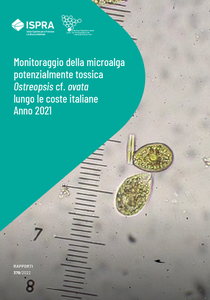
The presence of the potentially toxic dinoflagellate Ostreopsis ovata (Fukuyo) has been observed along the Italian coast since the ‘90s. From then, intense and recurrent blooms of this seaweed alga occurred in several locations of the Tyrrhenian Sea and Adriatic Sea.
Crimes against wild birds. A thematic focus for an effective law enforcement
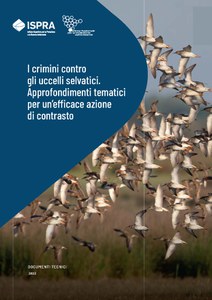
The purpose of this document is to contribute towards the implementation of the National Action Plan on Illegal Killing, Taking, and Trade of Wild Birds (IKB). Namely, Action 2.1.2 aims to “promote greater awareness among prosecutors and judges of wildlife crime, with particular reference to the various illegal practices and the repercussions they may have on the state of conservation of the ornithological species involved”.
RETICULA n. 31/2022 Monographic Number
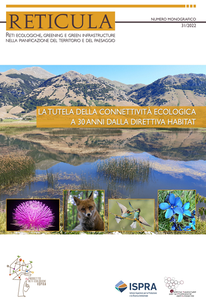
The protection of ecological connectivity after 30 years of Habitats Directive
The invasion of an alien jellyfish in an Italian touristic port
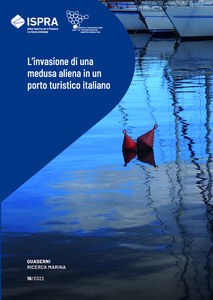
Alien species are animal and plant organisms introduced accidentally or intentionally by humans outside their origin area. Maritime traffic is one of the species’ pathways of introduction, therefore, studying the alien populations that invaded port environments can help to fill the knowledge gaps on their invasion routes and impacts on local biodiversity and ecosystems.
Sampling manual of biological samples for genetic analyses on species concerning the Washington convention (CITES)
One of the main activities of the Conservation Genetic Department, in ISPRA, consists in enforcing the rules of the Convention on International Trade in Endangered Species of Wild Fauna and Flora (CITES) with the aim of identifying any illicit trades of endangered species. The genetic analyses are the basic stone in verifying whether specimens are legally owned by authorised breeders or if there are inconsistencies with the birth declarations and/or any suspected illegal collection of specimens from the wild. For these reasons, a correct biological sample collection protocol is pivotal in ensuring the reliability of the results and requires trained personnel.
The Yearbook in figures
Environmental Data Yearbook 2021
Guidelines for the management of non-native plant species
These guidelines present a collection of recommendations and best practices to be used for preventing and controlling the spread of some of the most common invasive plant species in Mediterranean islands and coastal areas. Along with operational guidance, they provide an overview of the basic concepts of plant invasion biology, regulatory references, and management techniques, to disseminate knowledge and share good practices.
Reticula n. 30/2022
Black rat (Rattus rattus) eradication from Mediterranean islands: guidelines, best practice, case studies
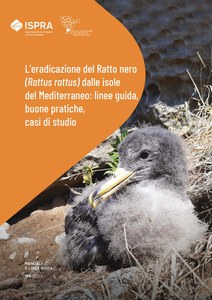
The Black rat (Rattus rattus) is one of the most globally widespread invasive species, having successfully colonized all continents thanks to human transportation. The species is known for its significant impact on human activities, public health and ecosystems, and it is included in the IUCN's list of the “100 of the World's Worst Invasive Alien Species”.
Walking through the environment
Reticula n. 29/2022
Intercomparison on the taxonomy of freshwater benthic diatoms (2020-2021)
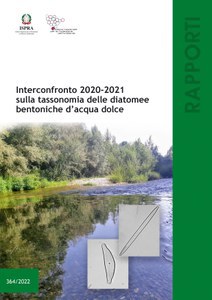
In the continuation of a collaboration between the Environmental Agencies of Friuli Venezia Giulia and Lombardy, the University of Turin and ISPRA (Italian Institute for Environmental Protection), this report contains the results of an interlaboratory comparison aimed at assessing the performance of the participating laboratories in the taxonomic identification of benthic diatoms in surface water bodies
Application of the NISECI index: guideline for the proposal of reference fish communities related to a detailed river zonation.
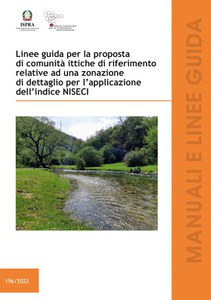
This Manual explains the criteria and methods for carrying out the detailed zonation process in river water bodies, and provides indications for the correct definition of the expected local fish communities and alien species to be used in the NISECI calculation.
Reticula n.28/2021. Monographic number
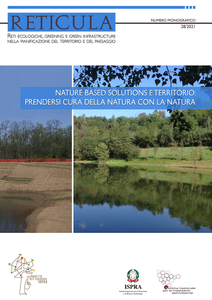
Nature-Based Solutions and territory: take care of Nature with Nature
Open Ecological Transition
Methodological aspects for the application of bioassays included in the technical annex to the Environment Ministry Decree 173/16: protocol for the preparation of elutriate.
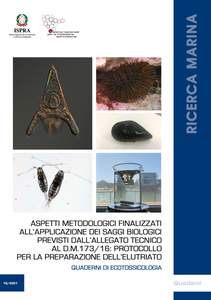
This booklet describes the methodological protocol to be used in the preparation of elutriates for the execution of bioassays on coastal marine sediments to be managed. The main aim is to minimize possible interference related to the techniques and methodologies used in the various public and private laboratories, as well as the need to comply with adequate chemical-physical conditions of the matrix to be tested that are closer to the field of application, in particular for those chronic/long term bioassays referred as "third type" in the Technical Annex of the Environment Ministry Decree 173/2016.
Carta della Natura (Map of Nature) of the Emilia-Romagna Region: habitat cartography and assessment at 1:25,000 scale
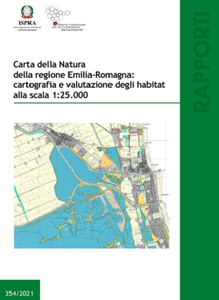
This report describes the activities and methodologies that led to the creation of the 1:25,000 scale Map of Nature of the Emilia-Romagna region, which is now published.
Plants and insect pollination: an alliance for biodiversity
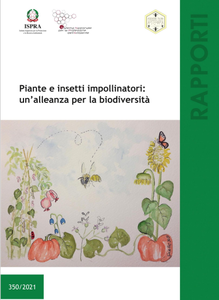
The pollination of flowering plants by animals represents an ecosystem service of great value for humanity, both from an economic point of view and for the benefit of spontaneous and cultivated plants.