A delegation from Montenegro in ISPRA for a TAIEX Study Visit (24-26 March 2026)
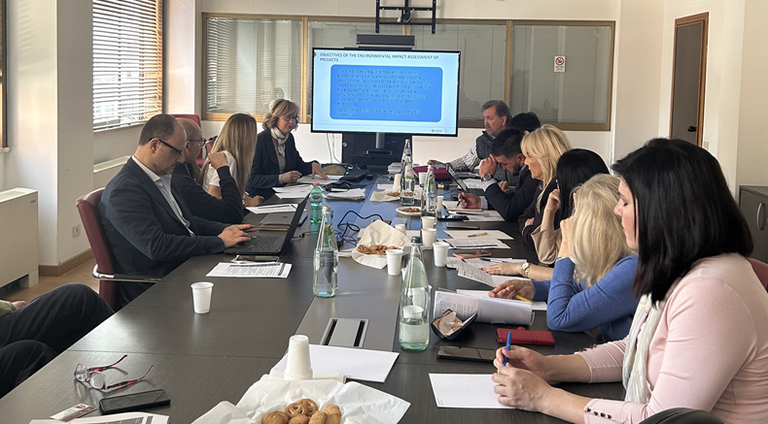
A three-day study visit concluded on March 26 for a delegation from Montenegro composed of officials and environmental inspectors from the Ministry of Ecology, Sustainable Development, and Northern Region Development of Montenegro, as well as the Environmental Protection Agency.
The meeting was organized within the framework of the European Commission's TAIEX technical assistance financing instrument. The focus of Montenegro's study visit is on issues related to the Environmental Liability Directive (ELD) and the prevention and remediation of environmental damage, with particular emphasis on inspection activities and relevant Italian experiences.
- https://www.isprambiente.gov.it/en/news/a-delegation-from-montenegro-in-ispra-for-a-taiex-study-visit-24-26-march-2026
- A delegation from Montenegro in ISPRA for a TAIEX Study Visit (24-26 March 2026)
- 2026-03-24T00:00:00+01:00
- 2026-03-26T23:59:59+01:00
- A three-day study visit concluded on March 26 for a delegation from Montenegro composed of officials and environmental inspectors from the Ministry of Ecology, Sustainable Development, and Northern Region Development of Montenegro, as well as the Environmental Protection Agency. The meeting was organized within the framework of the European Commission's TAIEX technical assistance financing instrument. The focus of Montenegro's study visit is on issues related to the Environmental Liability Directive (ELD) and the prevention and remediation of environmental damage, with particular emphasis on inspection activities and relevant Italian experiences.
- When Mar 24, 2026 to Mar 26, 2026 (Europe/Berlin / UTC100)
-
Add event to calendar
 iCal
iCal
During the proceedings, the discussions and key consultations with the Montenegrin delegation were initiated not only by ISPRA experts from the National Centre for Environmental Crises and Emergencies and Damage and the Department for Environmental Assessment, Control and Sustainability, but also by officials from the Ministry of the Environment and Energy Security representing the Directorate General for Circular Economy and Remediation.
The main objective of this study visit is to enhance the capacity of environmental inspectors in Montenegro to effectively implement and enforce the Environmental Liability Directive (2004/35/EC), with a particular focus on addressing environmental damage caused by negligence. Through this technical assistance participants aim to gain practical insights into how EU Member States apply the ELD in real-life cases, including methodologies for identifying environmental damage, conducting inspections, initiating remediation measures, and ensuring the "polluter pays" principle is upheld.
The visit will also support Montenegro’s alignment with EU environmental acquis in the context of Chapter 27 – Environment and Climate Change, by improving knowledge and skills necessary for transposing and applying the ELD, including institutional cooperation and judicial follow-up in environmental liability cases.
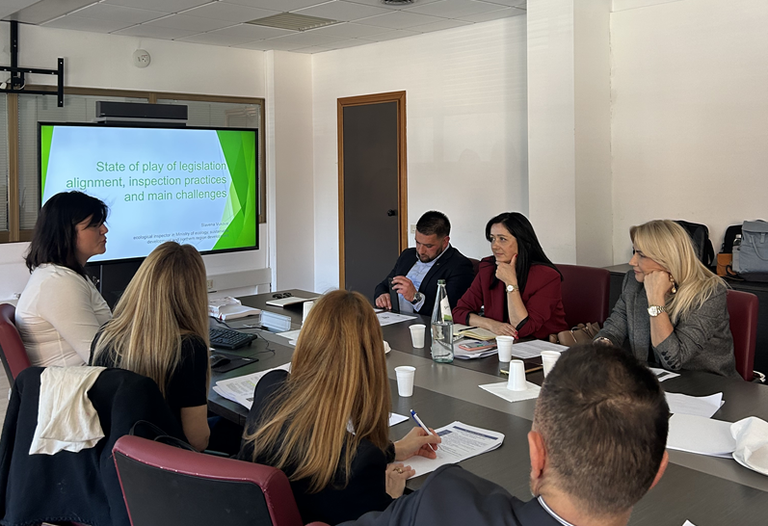
At the opening, Montenegro presented the state of the art of its legislative alignment, inspection practices, and the key challenges facing the country which is currently drafting a proposal to amend the Law on Liability for Environmental Damage, aiming for full alignment with the ELD Directive. Harmonization with EU environmental legislation is an integral part of Montenegro's accession process to the European Union.
Experts from the Italian Institute for Environmental Protection and Research and the Italian Ministry of Environment and Energy Security presented Italy's institutional and operational framework for the implementation of the EU environmental acquis. They illustrated how European directives, once transposed into national law, are operationalized within a complex multi-level administrative structure. In this system, the distinction between inspection activities and environmental damage management reflects the current distribution of competencies among the State, Regions, and other institutional actors, highlighting the need to ensure compliance with sector-specific implementing legislation. In this context, the coordination role of the National Network System for Environmental Protection (SNPA) was highlighted, aimed at promoting the harmonization of operational practices and ensuring consistent application throughout the national territory.
During the visit, in addition to the reference regulatory framework and its implementation tools—with practical examples regarding the planning and execution of inspections and post-accident site visits—the technical-scientific support in the fields of IPPC-IED, Seveso, and EIA was illustrated. Case studies of Italian experiences and major accidents including integrated ones with joint interventions between damage assessment and inspections were presented as in the case of major accidents, the case of the former ILVA, now Acciaierie d’Italia was also presented.
The study visit was organized around effective discussions aimed at showing how the objectives established by EU directives translate into concrete implementation. It provided useful elements for the Montenegro Delegation to define a reference framework in line with the acquis Communautaire and it resulted to be an interesting exchange between the two countries.