News
Galileo Festival of Science and Innovation
May 08, 2026 — May 10, 2026 PadovaThe Galileo Festival of Science and Innovation is now in its fourteenth edition, featuring a rich program of meetings, round tables, and thematic discussions ranging from artificial intelligence to the space economy, from life sciences to energy technologies.
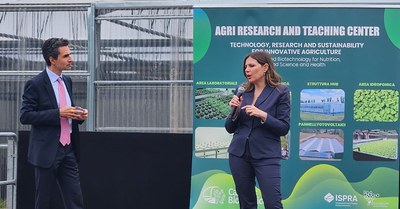
Inauguration of the Agri Research and Teaching Center
May 08, 2026 — May 08, 2026Today, Campus Bio-Medico inaugurated the Agri Research and Teaching Center, an agro-biotech hub and integral part of the Applied Technology Park within the Social Green Masterplan, conceived as an advanced ecosystem integrating research, healthcare, education, and environmental sustainability.
The hub is designed as a high-tech multifunctional infrastructure, offering the opportunity for an integrated pathway relevant to various fields of research. It aligns with the bio-innovation sector in terms of sustainable sourcing and the enhancement of biological resources, further optimized through engineering and AI applications.
The multifunctional greenhouse, together with its experimental laboratory, has been conceived as an open hub based on the principles of energy security — a space where universities, research centers, and companies can meet and build concrete synergies.
Land Management and Urban Planning
May 26, 2026 — May 26, 2026 WebinarAs part of the IRIDELab project, dedicated to training Italian public administrations in the use of satellite data, the online workshop "Land Management and Urban Planning" will be held on May 26th.
Michele Munafò of ISPRA will participate with a presentation on "Land Management in Light of the Objectives of Halting Land Consumption and Restoring Nature".
National Conference on the Circular Economy 2026
May 14, 2026 — May 14, 2026 Roma, Biblioteca nazionale centrale, Viale Castro Pretorio 105The Circular Economy Network is organizing the National Conference on the Circular Economy 2026, now in its eighth year, on May 14th in Rome, under the patronage of the European Commission, the Ministry of the Environment and Energy Security, and the Ministry of Business and Made in Italy. The conference will take place at the National Central Library.

Fire on Monte Faeta: Impacts on Forest Ecosystems. First 2026 Data on Wildfires in Italy
May 07, 2026In the Province of Pisa, in the municipality of San Giuliano Terme, and in the Province of Lucca, in the municipalities of Lucca and Capannori, approximately 500 hectares of land were affected by wildfire between April 28 and May 2, of which 370 hectares were forest cover.
The statistics were processed by ISPRA on the basis of high-resolution satellite mapping and through the use of artificial intelligence applications to identify the forest ecosystems affected by the fires.
The area is characterized by an interface landscape between natural ecosystems and agriculturally oriented areas, with a significant presence of forested land. The burned area falls within the Special Area of Conservation “Monte Pisano,” a site belonging to the Natura 2000 Network.
According to ISPRA estimates, the forest ecosystem most severely affected by the fire was conifer woodland, with around 200 hectares burned. Holm oak forests were also affected over approximately 100 hectares, along with oak and chestnut forests covering an area of around 70 hectares.
Maria Alessandra Gallone, President of ISPRA and SNPA, stated: “Our forests constitute a natural capital of inestimable value, as they protect biodiversity, contribute to climate regulation, and provide essential ecosystem services for the community. Their protection requires continuous commitment, based on knowledge, innovation, and cooperation among institutions. The fire that affected Monte Faeta strongly draws attention to the strategic importance of environmental surveillance and the protection of our forest heritage. Fire prevention and management cannot be separated from a solid technical and scientific foundation; the work carried out by ISPRA makes it possible to continuously monitor the condition of ecosystems, providing reliable and timely data to support institutional decision-making. In this context, environmental surveillance represents not only a monitoring tool, but also an essential driver for the sustainable management of forest areas, helping to build a culture of prevention and greater territorial resilience. This is a responsibility that concerns us all, and one that ISPRA will continue to uphold with the utmost scientific and institutional rigor”.
Short Film “Wild Diary”
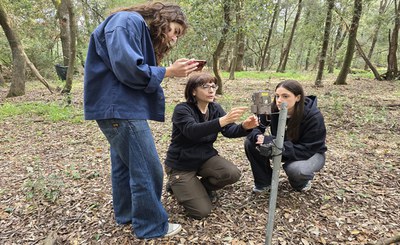
May 07, 2026The short film “Wild Diary” produced at the Presidential Estate of Castelporziano during the residential workshop organized by the Pianeta Mare Film Festival, with the scientific support of ISPRA, received two special jury awards: the Institut Français Award and the Lago Film Festival Award. The video, created by the two young filmmakers Angelica Brachetti and Paola Cainiello, aimed to portray the behind-the-scenes activities of wildlife monitoring carried out by ISPRA on behalf of the Estate, providing the scientific data necessary for wildlife management, with particular reference to ungulates.
Prenestini Bioblitz – Mapping the Biodiversity of the Monte Guadagnolo SAC
Jun 06, 2026 — Jun 07, 2026 Guadagnolo (Roma)As part of the initiative “25 Years Together for Biodiversity” promoted by the Museo Civico Naturalistico dei Monti Prenestini on the occasion of the 25th anniversary of its activities, the bioblitz “Discovering the Biodiversity of the Monti Prenestini” will begin on June 6, 2026, at 6:00 p.m. and will conclude at 6:00 p.m. on the following day.
16th Edition of the Sustainable Development Award 2026
May 07, 2026The Foundation for Sustainable Development and Ecomondo – Italian Exhibition Group announce the 16th edition of the Award for the year 2026. The Award is addressed to Italian companies, startups, local administrations, multiutilities, and publicly owned companies operating also within the Italian territory that have particularly distinguished themselves through eco-innovation, the effectiveness of their environmental and economic results, and the potential replicability of their initiatives.
For 2026, the Sustainable Development Award is divided into three sectors: Circular Economy, Resilience and Adaptation to Climate Change, and Circularity of Urban Areas.
Reading Territories Through the Multidimensionality of Rural Tourism
May 20, 2026 10:00 AM — May 20, 2026 01:00 PM WebinarISPRA is taking part in the webinar series on rural tourism promoted by CREA Policies and Bioeconomy, within the framework of the CAP Network activities. The initiative, dedicated to the “data ecosystem in rural tourism,” aims to strengthen the use of statistical sources, big data, and indicators to improve knowledge of territories and support sustainability-oriented policies.
On 20 May 2026, from 10:00 a.m. to 1:00 p.m., the third online workshop, entitled “Reading Territories Through the Multidimensionality of Rural Tourism" will take place, concluding the series of meetings. The event focuses on measuring rural tourism and its application in planning and design, with reference to three dimensions: farms, food and wine offerings, and the environment.

World Migratory Bird Day 2026
May 09, 2026 — May 09, 2026Saturday, May 9th, is World Migratory Bird Day. The theme for 2026, "Every Bird Counts – Your Observations Matter!", emphasizes the importance of citizen science for migratory bird conservation.
Focusing on individual contributions, citizen science, and public bird monitoring initiatives, the 2026 campaign will celebrate the millions of bird enthusiasts worldwide who, through every recorded observation, contribute to the collection of data and knowledge critical to policy decisions and bird conservation.
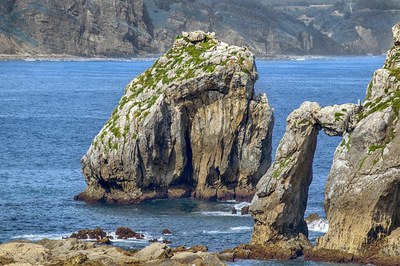
Summer School 2026 – Geological Surveying and CARG Mapping
Sep 08, 2026 — Sep 08, 2026 Finale Ligure (SV)September 8 (online) and Finale Ligure (SV), September 20–26, 2026
The Summer School aims to promote methodologies and criteria for geological surveying and mapping, as well as the conceptual organization of data and digital archiving systems, in accordance with the standards of the CARG Program.
The Summer School includes: one day of synchronous online training, field survey activities carried out in small groups under expert supervision, lectures, and practical exercises.
The program is intended for Master’s graduates, PhD candidates, and PhD holders in Geological Sciences with experience in geological surveying who are interested in deepening their knowledge of field data collection methodologies and geological data archiving, in line with the standards established for the Geological Map of Italy – CARG Program.
Students close to completing their Master’s degree, whose thesis work involves geological field surveying, may also apply; their applications will be considered subject to availability of places.
World Biodiversity Day 2026
May 22, 2026 — May 22, 2026May 22 is World Biodiversity Day, established by the United Nations to celebrate biodiversity—the richness of life at the level of ecosystems, species, and genes—on our planet.
The date of May 22 was chosen by the United Nations in 2000 to commemorate the official adoption of the text of the Convention on Biological Diversity, which took place in Nairobi on May 22, 1992.
The Convention on Biological Diversity pursues three main objectives: the conservation of biological diversity; the sustainable use of its components; and the fair and equitable sharing of the benefits arising from the use of these genetic resources, especially in cases of economic exploitation.
The ISPRA “Siren” Exploring the Seabed
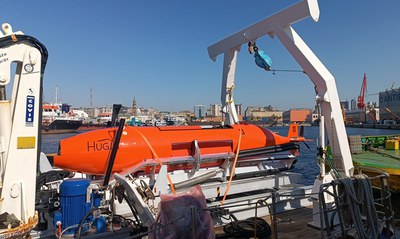
May 05, 2026In the Gulf of Naples and around Ischia, testing of the Hugin AUV: an underwater robot designed to observe submerged volcanoes and anticipate risks.
Like a modern Parthenope—silent and invisible—the “Siren” of science explores the seabed of the Gulf of Naples, speaks the language of the sea, reveals its signals, and understands its evolution. As part of the PNRR MER project (Marine Ecosystems Restoration), ISPRA has recently tested the Hugin AUV, an autonomous underwater vehicle capable of operating at depths of up to 3,000 meters, with the support of the vessel Astrea.
Maria Alessandra Gallone, President of ISPRA and SNPA:
“This activity represents a significant step forward in the use of autonomous technologies to monitor marine seabeds and acquire ultra-high-resolution data aimed at the morphological, geological, and environmental characterization of deep-sea areas. The Gulf of Naples is one of the most complex and sensitive environments in the Mediterranean Sea, making continuous monitoring essential to understand the evolution of natural processes and help reduce potential risks for populations and marine ecosystems.
The testing of the Hugin AUV in the Gulf of Naples and the Ischia area represents a concrete and strategic step in strengthening our country’s scientific and technological capabilities for understanding and protecting the marine environment. Thanks to the PNRR MER project, ISPRA is equipping itself with cutting-edge tools that allow us not only to gather fundamental data for research but also to develop increasingly accurate predictive models, contributing significantly to the prevention of natural risks and the safety of coastal communities, while confirming its role as a scientific reference supporting institutions, environmental protection, and citizens.”

Public Consultation 2026 on the Marine Strategy Monitoring Programs (Article 19 of Directive 2008/56/EC)
May 05, 2026On May 5, 2026, pursuant to Article 16 of Legislative Decree 190/2010, the Public Consultation on the Marine Strategy Monitoring Programs, prepared by the Ministry of the Environment and Energy Security with the technical and scientific support of ISPRA, opened.
The documents submitted for consultation, already discussed by the Technical Committee pursuant to Article 5 of Legislative Decree 190/2010, refer to the 2027-2032 Marine Strategy Monitoring Programs for each of the 11 Descriptors and can be found on the page Public Consultation 2026 – Marine Strategy.
World Bee Day 2026
May 20, 2026 — May 20, 2026Pollinating insects play vital ecological roles that support global biodiversity, food security, and ecosystem balance. About 90% of the world’s wild flowering plants depend on insects for pollination in order to reproduce. It is also estimated that 75% of major global crops—including vegetables, fruits, nuts, and forage—benefit from insect pollination. Beyond agriculture, pollinators indirectly contribute to climate change mitigation by supporting the health of forests and natural ecosystems, which are essential for CO₂ absorption.
The status of pollinator populations in Italy is considered critical, reflecting the broader negative trend across Europe.
- Species at risk: around 22% of the 151 assessed native bee species are threatened with extinction.
- Main causes: habitat fragmentation, intensive agriculture, widespread pesticide use, and increasing pressure from climate change.
We all depend on pollinators. Monitoring their decline and taking action to halt biodiversity loss is essential—not only for protecting ecosystems, but also for safeguarding food systems and environmental stability.
Protection of pollinators, tools and practices: what actions are possible?
May 06, 2026 10:00 AM — May 06, 2026 01:00 PM WebinarThe initiative, through the involvement of representatives from institutional, production, environmental, and research sectors, aims—starting from the results of LIFE BEEadapt and the instruments of the Common Agricultural Policy (CAP) currently in place to support pollinators—to foster debate on the dissemination of good practices and on the synergies that can be developed to implement actions of interest for the protection of pollinators.
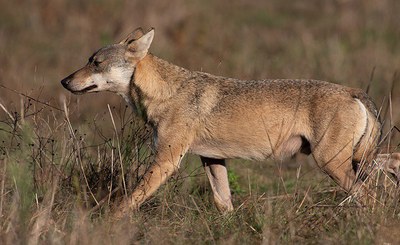
Wolf, ISPRA and SNPA President Gallone: “An alliance is urgently needed to stop illegality and conflicts”
May 03, 2026ISPRA and SNPA President Maria Alessandra Gallone:
“As already reiterated in recent days, the reckless act of indiscriminately killing animals such as the wolf — a symbolic species of Italian biodiversity — risks undermining the results achieved over the past decades in terms of its protection and conservation.
It is necessary to establish as soon as possible a discussion forum that represents a concrete alliance with all stakeholders who live and work in these areas, responsibly and fairly supporting primary production while ensuring the safety of areas of extraordinary ecological value. This path will be essential to reduce existing conflicts and decisively combat illegality, which threatens not only a protected species but the entire wildlife heritage of these territories, including grazing livestock activities.”
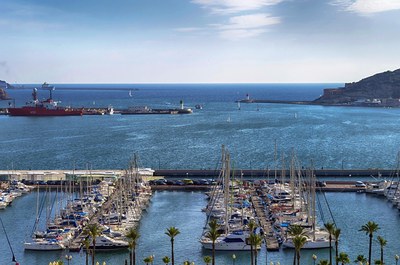
Geodata in Ports: the New ISPRA Mapping of Italian Port Infrastructure
Apr 29, 2026ISPRA Publishes Two New GeoDBs
Ports already occupied about 260 km of coastline in 2006, representing 5% of Italy’s entire low-lying coastline; by 2020, this figure had increased by 15 km, marking a 5% rise compared to 2006. The perspective changes when considering linear development—the total length of structures, piers, quays, and jetties of all port facilities—which reached 2,510 km in 2020, 20% more than what was recorded in 2006.
“We know what we can measure,” wrote Galileo Galilei, introducing the scientific method as we know it today. In response to pressing and continuous coastal erosion phenomena, as well as extraordinary events such as the recent Cyclone Harry, the agencies and institutions responsible for the safety and general management of coastal areas are taking action to monitor and measure the transformations occurring along the coastline, whether caused by natural processes or as a consequence of human activities.
For years, ISPRA has been developing and publishing national information layers with high-definition mapping of all the natural and artificial elements that characterize coastal systems. Starting from these maps—developed and integrated with sector publications, other historical cartographic references, and scientific surveys—two new GeoDBs are now being presented:
- Maritime Works Framework (AOM – Assetto Opere Marittime): including the digitization and characterization of all structures that can be defined, even partially, as port works, with their specific types, functions, usage conditions, historical development, ISTAT references, ownership by territorial authorities or public administrations, and declared or estimated berths.
- Port Transformation Areas (ATP – Aree di Trasformazione Portuali): including the digitization and characterization of polygons of Obstruction (occupation of seabed areas), Excavation (occupation of coastal land), and Alteration (modification of natural conditions within basins) for all coastal port works compared to their pre-construction state.
Third National Day for the Prevention and Mitigation of Hydrogeological Risk
May 12, 2026 — May 12, 2026 Rome, Acquario RomanoForecasts and Experiences for Effective Governance of Land Protection Policies
Italy is characterized by an almost permanent emergency related to severe landslides and floods, exacerbated by the ongoing climate changes affecting the Mediterranean area. Effective prevention and mitigation measures for hydrogeological risk can be implemented through a broader understanding of risk forecasting models and new intervention techniques.
Science and technology, however, are only two of the fundamental pillars for effective land protection; a third pillar is represented by public prevention policies and by the ability of local administrations to manage, in a coordinated way, both countermeasures and mitigation works. Despite the availability of considerable financial resources to address land instability issues, the weak link risks being the difficulty local authorities face in managing construction sites and intervention projects.
The Third National Day for the Prevention and Mitigation of Hydrogeological Risk therefore aims to identify, through the participation of numerous institutional stakeholders and experts, a better governance model for policies aimed at safeguarding the country’s environmental and urban heritage.

Public Consultation Launched on the National Nature Restoration Plan
Apr 23, 2026From April 23 to June 9, 2026, it will be possible to participate in the public consultation on the National Nature Restoration Plan.
The initiative, promoted by the Ministero dell'Ambiente e della Sicurezza Energetica (MASE), in collaboration with the Ministero dell'Agricoltura, della Sovranità Alimentare e delle Foreste (MASAF), aims to actively involve citizens, trade associations, and stakeholders in defining strategies to restore Italian ecosystems.
The Plan represents the tool through which Italy will implement the Nature Restoration Regulation: restoring terrestrial, freshwater, marine, urban, river, agricultural, and forest ecosystems, as well as pollinator populations, means protecting ourselves from hydrogeological instability and climate change, improving the quality of the air we breathe, ensuring food security, and safeguarding ecosystems and biodiversity.
This is not only about environmental protection, but also a long-term strategy that, up to 2050, will set the course for a more resilient country.
All comments received will be reviewed by MASE, ensuring that the final Plan is participatory and widely shared.
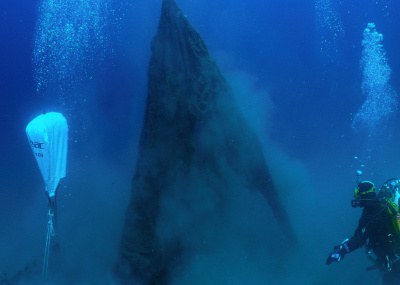
LIFE Strong Sea Project. A challenge won from the sea: over 22 tons of fishing gear recovered in 5 years
Apr 23, 2026As told in the documentary “The Phantom Catch”
More than 180 reports of lost fishing gear, 24 recovery operations, 156 pieces of gear removed, and over 22 tons of fishing equipment recovered.
The interventions involved different types of fishing gear, including gillnets, trawl nets, traps, and longlines, identified at depths ranging from 8 to 40 meters.
Scientific analyses of the recovered gear made it possible to identify 89 species belonging to 50 groups of living organisms classified according to shared characteristics (taxa), with a predominance of crustaceans (30%), followed by algae and encrusting organisms.
This data demonstrates the process of progressive biological colonization affecting fishing gear lost at sea over time.
These are unprecedented achievements in the recovery of lost fishing gear from the sea and in the protection of marine habitats of high ecological value.
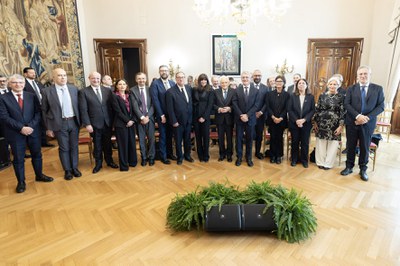
Received by the President of the Republic the Presidents of the Research Institutions
Apr 22, 2026 — Apr 22, 2026The President of the Republic, Sergio Mattarella, received at the Quirinale a delegation of the Presidents of the Research Institutions, led by the Minister of University and Research, Anna Maria Bernini, and by the President of the Council of Presidents of the Research Institutions, Antonio Zoccoli.
President Mattarella emphasized the role of research for the future of our country and as a means of collaboration and peace.
Also attending the meeting was the President of ISPRA and SNPA, Alessandra Gallone.
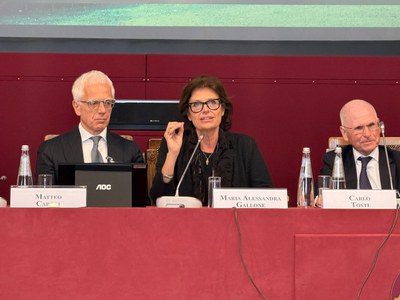
The social value of cities. Vital suburbs: the new frontier of urban living
Apr 23, 2026 — Apr 23, 2026 Rome, Palazzo Montecitorio, Sala della Regina3rd One Health Report of the Campus Bio-medico
“There is enormous work to be done in suburban areas, because these are particularly delicate contexts. The social value of the city is crucial: when you move away from the city center and toward the outskirts, the entire vision of the urban system changes.
It is precisely there that the new spaces for social development are located, because the most authentic life is often found at the margins of the urban fabric. There is no sustainability without territorial justice, which can only be achieved by working together with a shared perspective. It is precisely from the economic system that momentum for change can come, leading to the regeneration of territories". This was stated by Maria Alessandra Gallone, President of ISPRA, speaking at the Chamber of Deputies during the presentation of the 3rd One Health Report, “The Social Value of Cities. Vibrant Suburbs: The New Frontier of Urban Living”, produced by Campus Bio-Medico di Roma in collaboration with the Istituto Piepoli, with the support of ISPRA, and alongside the Facciamo Circolare campaign carried out by ISPRA in collaboration with and funded by the Ministero delle Imprese e del Made in Italy (MIMIT).
The research analyzes development prospects for Italian urban areas, focusing on the comparison between suburbs and city centers, the need for urban regeneration, and the protection of the social fabric.
These themes are addressed through the One Health model, an integrated approach that considers human, animal, and ecosystem health within a comprehensive vision aimed at rethinking cities and places in a sustainable and interdisciplinary way.

World Earth Day 2026
Apr 22, 2026 — Apr 22, 2026Dedicated events, outreach initiatives, educational campaigns: ISPRA is at the forefront of World Earth Day. President M. Alessandra Gallone said: "The Earth is not just the space we inhabit; it is the living system that supports us, protects us, and demands responsibility. On this World Earth Day, we must remember that every choice—public and private—has an impact on our future."
ISPRA and the National System for Environmental Protection (SNPA) are providing data, monitoring, and knowledge to support the work of institutions and local communities.
"We need a new awareness to transform sustainability into concrete action, taking care of ourselves and future generations."
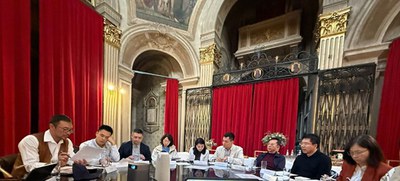
ISPRA meets with a Chinese delegation from the Land Consolidation and Rehabilitation Center
Apr 21, 2026On April 20, at the headquarters of ECCO—an independent Italian think tank on climate and energy transition—ISPRA met with a Chinese delegation from the Land Consolidation and Rehabilitation Center (LCRC), an institute of the Chinese Ministry of Natural Resources that focuses on land reclamation, redevelopment, and soil management.

Former wild animals in the city
Apr 22, 2026 03:00 PM — Apr 22, 2026 05:00 PM WebinarWe are increasingly hearing about the presence—often described as “invasions”—of wild animals in urban areas, both non-native and native species. Even animals that once lived undisturbed in their natural ecosystems have begun to move deeper into and settle within cities, driven by the reduction of available natural habitats and changes in behavior related to food searching. We have invited experts in the field who will offer insights and points for reflection on this phenomenon.
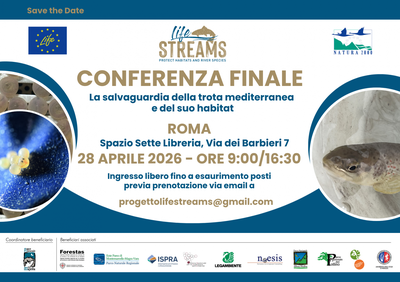
Final conference “LIFE STREAMS Project: Safeguarding the Mediterranean trout and its habitat”
Apr 28, 2026 09:00 AM — Apr 28, 2026 04:30 PM Rome, Spazio Sette Libreria - Via dei Barbieri 7The Mediterranean trout, a native species at critical risk of extinction, is a symbol of freshwater conservation in the Apennines and Sardinia. Its protection is essential for biodiversity, which is threatened by climate change and hybridization with non-native trout.
The LIFE STREAMS project has worked on the recovery and conservation of native populations through monitoring and management, strengthening their numbers and genetic integrity. It also represents a key component of the APE – Appennino Parco d’Europa strategy, launched in the 1990s to support the then-emerging network of protected areas.
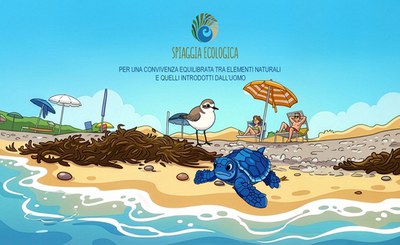
Ecological beach for a balanced coexistence between natural elements and those introduced by humans
Apr 20, 2026The videos document a four-year collaboration between ISPRA and the Posidonia Beach Club: a project dedicated to the sustainable management of coastlines. The research focused on how to combine tourism use with environmental protection (the “ecological beach” model), addressing crucial issues such as coastal erosion—driven by climate change and human activities—and the development of new forms of environmental communication aimed at schools and professionals.
Attention was also given to the problem of marine litter (plastics and microplastics) and the connection between human and environmental health, in line with the One Health perspective. Through the questions of a young protagonist, the narrative clearly conveys four years of information, education, and events aimed at promoting a more respectful relationship with the environment.