

The granite-migmatite connection in Variscan northern Sardinia
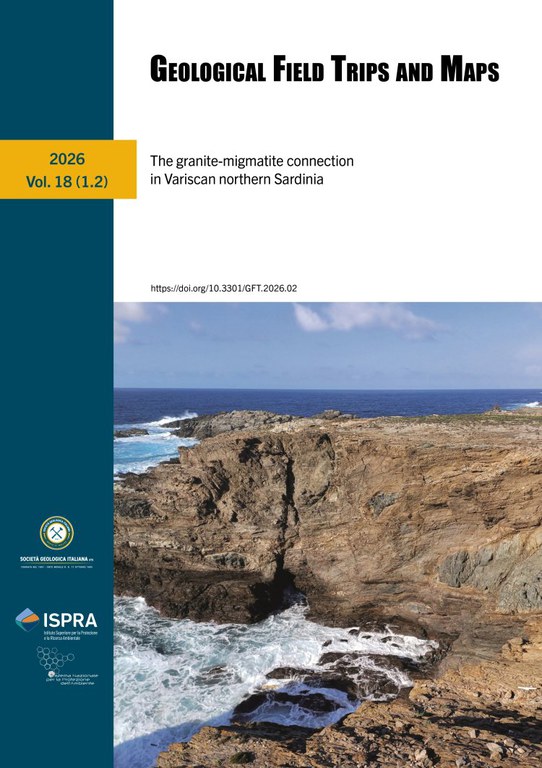
Northern Sardinia exposes a remarkably continuous section of Palaeozoic continental crust minimally affected by post-Variscan tectonics. The Variscan crust includes lower crustal migmatites with relic of high-pressure – high-temperature granulitic assemblages (P=1.2–2.2 GPa, T>800°C), middle crustal metapelite, amphibolite, and calc-alkaline orthogneiss derived from reworking of a thick Ordovician magmatic arc. These metamorphic rocks are intruded by the late Palaeozoic (Carboniferous-Permian ~340-280 Ma) Corsica-Sardinia Batholith, a roughly 500 km-long, 50 km-wide composite magmatic province formed incrementally by emplacement of several plutons during post-orogenic extension and tectonic reorganisation of major lithospheric blocks related to shearing of Pangaea. In this 5-days field trip, we will explore the migmatite-granite transition zone and four plutons emplaced at different depths, focusing on the relative contribution of crustal reworking and mantle melting for the evolution of the continental crust. More technical topics about the emplacement mechanisms, length scales and timescales of magmatism, and the competition between different chemical and physical processes during the assembly of granitic plutons will also be discussed in relation to specific structures and rock compositions.
Pubblicazione disponibile solo in formato elettronico