
News
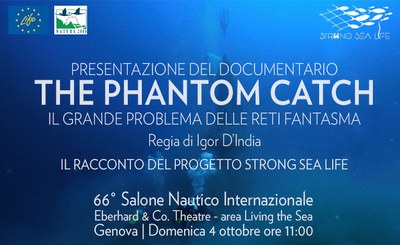
LIFE STRONG SEA project
Oct 02, 2026The Sea We Can Save: The Story Told by the Documentary “The Phantom Catch”
ISPRA at the Genoa International Boat Show with the recovery of ghost fishing gear
4 October 2026 – 11:00 a.m. – Eberhard & Co. Theatre – Living the Sea Area
More than 180 reports, 24 recovery operations, 156 pieces of fishing gear removed, and over 22 tonnes recovered. These are the unprecedented achievements of the LIFE STRONG SEA Project, coordinated by ISPRA and funded by the European Union’s LIFE Nature and Biodiversity Programme. The project will be presented at the Genoa International Boat Show through the documentary “The Phantom Catch – The Great Problem of Ghost Fishing Gear”, directed by Igor D’India. In addition to presenting the project’s results, the documentary retraces a five-year journey involving researchers and divers working to free the Mediterranean from fishing gear lost at sea.
The main objective of the Project is to protect and improve the conservation status of priority marine habitats, including Posidonia oceanica seagrass meadows and coralligenous habitats, both of which are protected under the Habitats Directive and included in the European Natura 2000 network of protected sites.
The recovery operations involved different types of fishing gear, including gillnets, trawl nets, traps and longlines, found at depths ranging from 8 to 40 metres. Scientific analyses of the recovered gear identified 89 species belonging to 50 groups of living organisms classified according to shared characteristics (taxa), with crustaceans accounting for the largest share (30%), followed by algae and encrusting organisms. This finding provides evidence of the progressive biological colonisation process that affects fishing gear lost at sea over time.
Maria Alessandra Gallone, President of ISPRA and SNPA: “It is particularly meaningful for us to present the Strong Sea Life project and the documentary that tells the story of its results here, where the sea—our country’s natural heritage and an essential resource—is at the heart of the event. The Boat Show is also one of the places where the different dimensions of our country’s relationship with the sea come together most clearly: boating, industry, research, innovation, tourism, culture and employment.
Removing a ghost net means doing much more than simply removing waste from the sea; it means reducing a source of pressure on marine ecosystems, recovering materials, preventing further damage and raising awareness of the importance of prevention.
The documentary helps bring to light what often remains hidden, making complex issues more accessible to the public and, above all, fostering greater awareness. Protecting the sea is not only the responsibility of institutions or experts; it is a collective challenge that concerns each and every one of us, through the choices we make every day”.

Circular Intelligence 2026
Oct 01, 2026 — Oct 01, 2026Circular Intelligence is the international event organized by EconomiaCircolare.com and ISIA Roma Design dedicated to the ecological and digital transition. This year, in Rome, it brings together institutions, businesses, universities and research centres to discuss European policies—from the Ecodesign Regulation to the Circular Economy Act—and showcase concrete examples of eco-innovation, following the common thread that connects ecodesign, emerging technologies, and the transformation of the economy, value chains and consumption models.
International Day for Disaster Risk Reduction
Oct 13, 2026 — Oct 13, 2026The International Day for Disaster Risk Reduction, known worldwide as the International Day for Disaster Risk Reduction, is observed on October 13.
The day was established by the United Nations General Assembly in 1989.
The purpose of this international observance is to send an important message to governments around the world, as well as to international organizations and the global population, encouraging reflection on the increasing frequency and severity of natural disasters.
The United Nations Office for Disaster Risk Reduction has chosen “Resilience Starts at Home” as the theme for the 2026 International Day.
Tevere Day
Oct 02, 2026 — Oct 11, 2026 Rome, Floating Hub Marevivo Lungotevere Arnaldo da Brescia - Scalo de PinedoFrom October 2 to 11, the historic Scalo de Pinedo transforms into the Teverevivo Environmental Village—a space open to the city dedicated to learning about and protecting the Tiber River, biodiversity, and the urban environment.
The program features science, education, art, culture, and sustainability, offering nature walks, workshops, discussions, creative activities, science outreach, and performances.
Activities will take place across two sites of significant scientific and natural interest in the heart of Rome: the River and Urban Biodiversity Center and the Riverfront Park (Oasi Naturalistica Lungotevere delle Navi).
The Village will also host RIscARTI—the Artistic Recycling Festival—featuring exhibitions, workshops, and discussions focused on the relationship between art, recycling, and sustainability.
National Nature Restoration Plan. ISPRA: New Opportunities for Territories, Communities and the Economy
Sep 28, 2026“Not a Plan of Restrictions, but a major project for the country. Nature conservation must go hand in hand with development, supported by science, participation, and a strong alliance among institutions, local communities, businesses and citizens".
With these words, Maria Alessandra Gallone, President of ISPRA and the SNPA, expresses, on behalf of the Institute, her satisfaction at the Ministry of Environment and Energy Security (MASE) giving the green light for the draft National Nature Restoration Plan to be submitted to the European Commission. ISPRA provided extensive technical and scientific support in preparing the Plan, working closely with MASE and the Ministry of Agriculture, Food Sovereignty and Forestry (MASAF), and in cooperation with the Council for Agricultural Research and Analysis of Agricultural Economics (CREA).
This was a complex and wide-ranging team effort, launched in September 2025, involving the entire Institute. It supported the development of the Plan through scientific analyses, assessment of measures, identification of knowledge gaps, support for central and regional administrations, and dialogue with European institutions. The draft prepared for submission to the European Commission now includes 2,078 restoration measures, the outcome of a process that has been progressively strengthened through public consultation and dialogue with stakeholders.
“The National Nature Restoration Plan,” President Gallone continues, “represents a major opportunity for Italy. We must explain it and, above all, implement it for what it can genuinely become: not a set of restrictions imposed without consultation, but a project to regenerate our natural heritage and, at the same time, our territories, economies and communities. Restoring nature means investing in the future. Sustainability is meaningful when it integrates environmental, economic and social dimensions, placing people and their needs at the centre. The extensive work carried out by the Institute so far is certainly not an end point, but an ongoing process that continues today and into the future.”
For ISPRA, it will be essential for the implementation phase to continue following the same approach of dialogue and participation that accompanied the preparation of the Plan. The public consultation was followed by meetings with environmental organisations, representatives of the fisheries, agricultural and forestry sectors, hunting associations, stakeholders working in urban environments, and the National Association of Italian Municipalities (ANCI).
“This,” Gallone continues, “is the approach we must continue to follow: a strong alliance for nature and sustainable development. The State, Regions, Municipalities, the National System for Environmental Protection, the scientific and research community, businesses, farmers, fishermen, associations and citizens must all play an active role in a shared process. The transition works when no one is left on the sidelines and when scientific knowledge becomes a practical tool to support decision-making".
This vision is further reinforced by the words of President of the Republic Sergio Mattarella on the occasion of Terra Madre, when he referred to biodiversity as an asset that protects human health and as a responsibility requiring public participation and institutional action. “President Mattarella’s words,” President Gallone concludes, “once again point us in a clear direction: the environment, biodiversity, people and development do not belong to separate worlds. They are all part of the same future. Nature restoration must not mean bringing territories to a standstill, but helping them evolve in a better way – making them safer, more attractive and capable of generating new economic opportunities and employment.”
ISPRA will continue to make its scientific expertise, data, platforms and knowledge of the territory available to MASE, MASAF and the institutional system as a whole, supporting the subsequent phases of the Plan within the scope of its responsibilities".
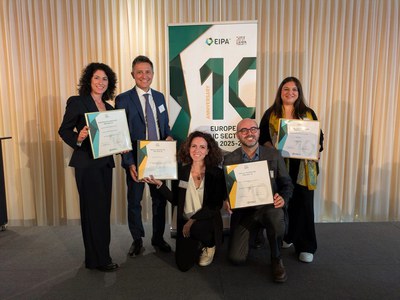
Europe honors IdroGEO: the ISPRA platform that is evolving and engaging with citizens
Sep 25, 2026Special recognition at the European Public Sector Award 2025–2026 for the national platform on hydrogeological instability
IdroGEO—ISPRA’s national platform for monitoring hydrogeological instability—was honored this afternoon at the European Public Sector Award (EPSA) 2025–2026. Thanks in part to Artificial Intelligence, the platform now engages directly with citizens and provides immediate access to information about the territory. The award recognizes the platform’s ongoing updates, the development of new features, and its ability to deliver innovative, accessible, and sustainable digital public services over time.
Public, free, open, and interoperable, IdroGEO makes data accessible at any time, including via smartphone. It offers direct access to scientific and technical information, helping to improve understanding of territorial risks and fostering a stronger culture of prevention.
Approval of the enabling bill on sustainable nuclear energy
Sep 24, 2026Maria Alessandra Gallone: “ISPRA is ready to play its part”
“We welcome with great interest the final approval of the enabling bill on sustainable nuclear energy; this brings Italy back to investing in the research and development of new technologies within a sector that is strategic for the country’s energy future.”
This statement was made by Maria Alessandra Gallone, President of ISPRA and the SNPA, commenting on Parliament’s final green light for the measure—a key initiative championed by the Minister of the Environment and Energy Security, Gilberto Pichetto Fratin.
“The energy transition and decarbonization goals require an energy mix that is increasingly safe, sustainable, and diversified. Future decisions will be based on the quality and reliability of data and on assessments of sustainability conditions”.
“It is important,” President Gallone continues, “for our country to once again play a leading role in nuclear research and next-generation technologies, in order to provide institutions with the best available scientific evidence".

School-to-work training programs (formerly PCTO) – 2026/2027 school year
Sep 23, 2026School-to-work training programs for the 2026/2027 school year have been published, available in both in-person and e-learning formats.
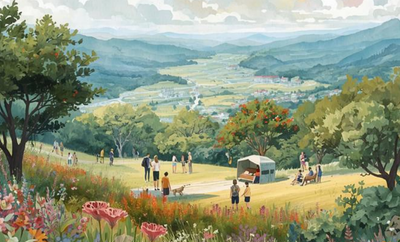
Geoparks, Parks, Territories, Communities
Oct 06, 2026 — Oct 06, 2026 Rome, Palazzetto Mattei in Villa Celimontana e onlineOn October 6, marking the UNESCO International Day of Geodiversity, the Italian Federation of UNESCO Clubs and Associations (FICLU), the Italian Society of Environmental Geology (SIGEA), and the Italian Geographical Society (SGI) are organizing a conference titled "Geoparks, Parks, Territories, Communities."
Today, geoparks and parks represent an asset of extraordinary value: they are not merely areas for environmental protection but true sustainability laboratories for and with local communities, aiming to enhance landscapes, geological history, and cultural elements through a systemic approach. The conference therefore seeks to highlight the role of geoparks and parks as tools for education, research, and responsible tourism, showcasing best practices, successful experiences, and future prospects.
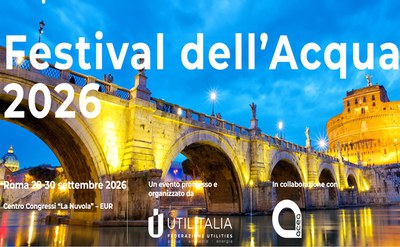
Water Festival 2026
Sep 28, 2026 — Sep 30, 2026 RomeFrom September 28 to 30, Rome will host the 9th edition of the Festival dell’Acqua, one of Italy’s leading events dedicated to water services and water management.
This year, thanks to a collaboration between Utilitalia and One Water, the event—which brings together thousands of experts and professionals from across Italy—will take place in conjunction and simultaneously with the Euro-Mediterranean Water Forum (September 29–October 2), offering a programme of debates and workshops on water-related issues, with a particular focus on the national context and the perspective of the European strategy for water resilience.
Following the opening event on September 28, which will be attended by ISPRA President Alessandra Gallone, the programme will continue with two further days of discussion and in-depth sessions at the “La Nuvola” Convention Centre. On September 29 and 30, plenary and technical sessions will bring together representatives of public institutions, as well as national and international professionals and experts in the sector.
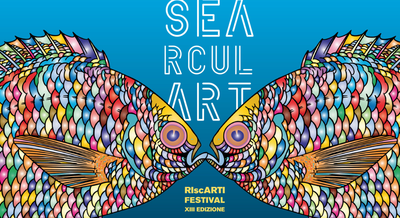
RIscARTI FESTIVAL
Oct 02, 2026 — Oct 11, 2026 Roma, Marevivo Floating Hub13th Edition
Art, Sustainability and Cultural Transformation
RIscARTI, the Artistic Recycling Festival, is a multidisciplinary cultural project dedicated to environmental sustainability, creative recycling, and contemporary art as a tool for social transformation.
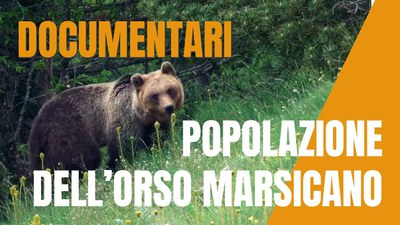
Documentary: "Marsican Brown Bear Population Estimate"
Sep 22, 2026This documentary shines a spotlight on one of the rarest and most fascinating animals in Italy: the Marsican brown bear, a unique subspecies found nowhere else in the world and now at risk of extinction.
Through exclusive footage and first-hand testimonies from the field, we explore the life of this extraordinary bear, which has found its last refuge among the mountains of the central Apennines.
This is not merely the story of a species, but also a profound reflection on the delicate balance between humans and wildlife.
Pianeta Terra Festival 2026
Oct 08, 2026 — Oct 11, 2026 LuccaForms of Intelligence
The fifth edition of the Pianeta Terra Festival will take place in Lucca from October 8 to 11. The event is aimed at anyone wishing to explore planet Earth and reflect on ways to preserve it and inhabit it sustainably. The theme chosen for the 2026 edition is "Forms of Intelligence."
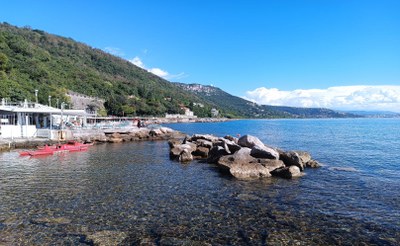
Environment: ISPRA Summer School on Marine-Coastal Ecosystems and Climate Change Held in Trieste
Sep 14, 2026 — Sep 18, 2026 Trieste - Istituto Nazionale di Oceanografia e di Geofisica Sperimentale (OGS)Five days of lectures, workshops and field visits, held from 14 to 18 September 2026, bringing academia closer to applied research and fostering new professional opportunities for young scientists.
The Summer School on “Marine-Coastal Ecosystems and Climate Change: Chains of Connections and Resilience” was held in Trieste. The event was organized by ISPRA (Italian Institute for Environmental Protection and Research) as part of its School of Specialization in Environmental Disciplines.
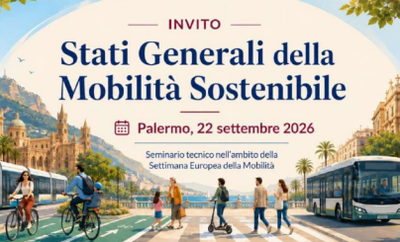
Sustainable Mobility Summit
Sep 22, 2026 09:00 AM — Sep 22, 2026 01:30 PM Palermo - Aula Capitò ed.7 di Viale delle ScienzeIn the occasion of the European Sustainable Mobility Week, ISPRA has chosen Palermo as the venue to bring together all the key players from the transport and environmental protection sectors.
The event unites the scientific research and monitoring capabilities of ISPRA and ARPA Sicilia, the drive for innovation from the University of Palermo, and the institutional leadership of the Municipality, alongside all local transport operators: AMAT (urban mobility), Trenitalia (rail transport), the Western Sicily Port System Authority (maritime transport), and the Cotras Consortium (regional road transport network).
ISPRA receives the SIGEA-APS National Award for Environmental and Territorial Protection
Sep 17, 2026 — Sep 17, 2026 Ferrara ExpoThe National Award for Environmental and Territorial Protection was presented today to ISPRA as part of the RemTech event.
Now in its sixth edition, the National Award promoted by the Italian Society of Environmental Geology (SIGEA-APS) recognizes commitment to protecting the natural and human-altered environment, responsible land management, and the mitigation of natural hazards. This year, the award was presented to Maria Teresa Lettieri, Head of ISPRA’s Structural and Marine Geology Service, and Felice Vito Uricchio, Research Director at the National Research Council (CNR).
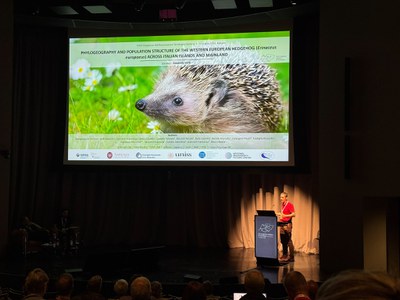
New Study on the Genetic Diversity of the European Hedgehog in Italy
Sep 17, 2026A new study published in the journal Mammalian Biology analyzes the genetic structure and evolutionary history of the European hedgehog (Erinaceus europaeus) in Italy, integrating for the first time data from populations distributed across the entire Italian Peninsula, northeastern Italy, and the country’s main islands.
The research, coordinated by ISPRA researchers and conducted in collaboration with the National Research Council (CNR), IZS Sicilia, the NBCF in Palermo, the Universities of Rome La Sapienza and Sassari, and the Tuscan Archipelago National Park, examined more than 200 samples, using genetic analysis to reconstruct the genetic relationships among the different populations.
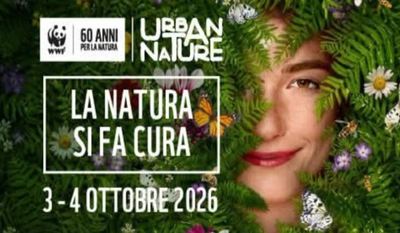
Citizen Science at the Aniene Valley Nature Reserve
Oct 03, 2026 09:30 AM — Oct 03, 2026 12:30 PMAs part of the 2026 edition of Urban Nature, an initiative promoted by WWF to raise awareness of the importance, value and care of nature in urban areas, the National Biodiversity Network of ISPRA, in collaboration with the Insieme per l’Aniene Association, is organizing a meeting between experts and citizens on 3 October at the Aniene Valley Nature Reserve.
The initiative includes an approximately three-hour walk to discover the flora and fauna of the protected area, with particular attention to the characteristics of its ecosystems, including the riparian vegetation along the course of the Aniene River
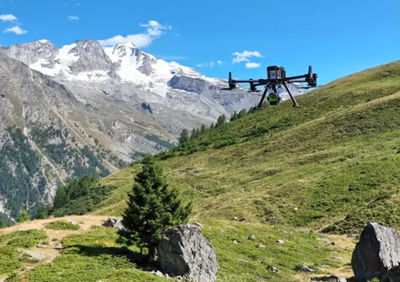
ISPRA’s first documentary series on biodiversity monitoring
Sep 12, 2026Technology meets nature in the first documentary series on biodiversity monitoring that ISPRA will release on its YouTube channel. This initiative was developed as part of the DigitAP project—Digitization of Protected Areas—promoted and implemented by MASE with support from ISPRA and funded by the European Union (NextGenerationEU).
Terrestrial laser scanners, drones, camera traps, bioacoustics, genomics, and eDNA: we take you into the field to show you up close how we monitor our country's biodiversity.
Watch the preview trailer!
On September 21, ISPRA has published the first documentary in the series dedicated to estimating the Marsican brown bear population.

The Selva del Lamone Nature Reserve: An Ecosystem Shaped by Volcanism
Oct 03, 2026 10:30 AM — Oct 03, 2026 04:30 PM Riserva Naturale Regionale Selva del Lamone, Località Roppozzo, Farnese (VT)The excursion is organized by ISPRA as part of the 14th edition of Earth Science Week
This 6.5-km circular trail runs through the Selva del Lamone Regional Nature Reserve, following mule tracks that border volcanic outcrops colonized by vegetation.
The Reserve is an important biotope established on a basaltic lava flow belonging to the Vulsini Volcanic Complex, which was emplaced approximately 100,000 years ago, followed by cooling and subsequent fragmentation. This process gave rise to the frasfuni, a chaotic expanse of basaltic blocks, the most famous of which is known as Rosa Crepante.

Urban Green, Environment and Landscape: Governance and Territory
Oct 07, 2026 — Oct 07, 2026 NovaraThe conference, promoted by the Association of Architects, Planners, Landscape Architects and Conservationists (PPC) of the Provinces of Novara and VCO, together with its Environment and Landscape Commission, under the patronage of ISPRA, addresses the role of green spaces and landscape as strategic infrastructure for environmental, climate and urban quality. The event will explore the European and Italian regulatory framework, spatial planning tools, and policies for the management of public green spaces. The conference is structured in two sessions:
• the first session focuses on the European and national macro-scale, addressing the Nature Restoration Law, Nature-Based Solutions (NBS), and the National Restoration Plan;
• the second session focuses on municipal planning, urban green space management, and local regulations.

The Nature of the Democratic City
Sep 21, 2026 09:30 AM — Sep 21, 2026 06:30 PM Rome, Villa Mirafiori, via Carlo Fea, 2 and onlineThe meeting "The Nature of the Democratic City" will take place on Monday, September 21, 2026, at 9:30 AM in Room VI of the Department of Philosophy at Sapienza University.
The event will provide an opportunity to develop an interdisciplinary reflection—spanning ecology, urban planning, and philosophy—on the relationships between humans, non-humans, and the environment within urban life in the Anthropocene.
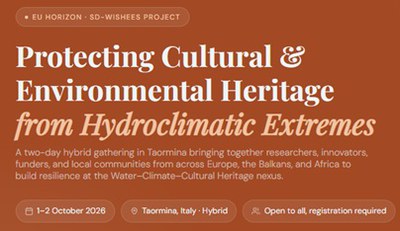
Taormina hosts the SD-WISHEES event dedicated to protecting cultural and environmental heritage from climate-related risks
Oct 01, 2026 — Oct 02, 20261–2 October 2026 | Taormina, Italy | Hybrid event
How can we protect our cultural and environmental heritage in the face of the increasing frequency and intensity of hydroclimatic extreme events?
This question will be at the heart of the event “Protecting Cultural & Environmental Heritage from Hydroclimatic Extremes”, taking place in Taormina on 1 and 2 October 2026. The event is organised within the framework of the European Horizon project SD-WISHEES-Supporting and Developing WIdening Strategies to tackle Hydroclimatic Extreme Events: impacts and Sustainable solutions for cultural heritage, by ISPRA and the project partners.
Over two days, researchers, academics, institutional representatives, funding organisations and representatives of local communities from Europe, the Balkans and Africa will come together to discuss strategies and solutions aimed at strengthening the resilience of cultural and environmental heritage in the face of climate change and hydroclimatic extreme events.
The initiative will focus on the Water–Climate–Cultural Heritage (WCCH) Nexus, promoting an integrated and multidisciplinary approach that connects water, climate, the environment and cultural heritage.
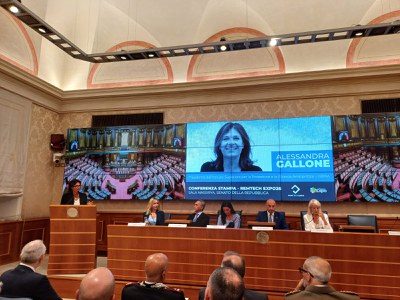
RemTech Expo 2026: the voices of the XX edition
Sep 08, 2026 — Sep 08, 2026 RomeRemediation and regeneration: vision, progress and competitiveness across the environment, infrastructure, territories and health
Today in Rome, at the Nassirya Hall of the Senate of the Republic, the 20th edition of RemTech was presented. The event is scheduled to take place in Ferrara from September 16 to 18.
The press conference was attended by ISPRA President Maria Alessandra Gallone and Director General Fabrizio Penna.
Eco Sanfra
Sep 24, 2026 — Sep 27, 2026 PerugiaEco Sanfra is a festival dedicated to economic, environmental and social sustainability.
Following “Sister Water” and “Brother Sun”, the festival’s journey continues through the Canticle of the Creatures, with “Mother Earth” serving as the cultural compass for its third edition
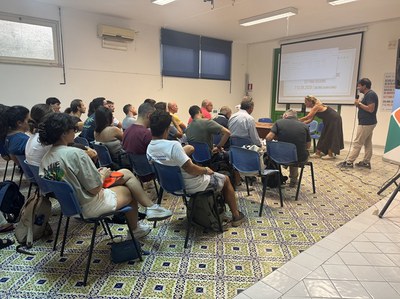
The 7th Summer School on Marine and Coastal Geology, Ecology and Biology takes place on Salina
Sep 07, 2026 — Sep 07, 2026 SalinaA week of training, research and field activities for students, researchers and technical professionals. At the heart of the programme is the study and protection of marine and coastal environments.
The 7th Summer School on Marine and Coastal Geology, Ecology and Biology in Island Environments began on September 7 on Salina. The initiative is dedicated to advanced training and scientific professional development for Master's students, PhD candidates, researchers and technical professionals.
Now in its seventh edition, the Summer School aims to bring together different areas of expertise and disciplines to deepen knowledge of marine and coastal environments. These are particularly sensitive systems where geological processes, marine dynamics, biodiversity, human activities and climate change interact.
29th International Conference on Bear Research and Management
Sep 20, 2026 — Sep 25, 2026 PescasseroliConnecting science, practice and community engagement for human–bear coexistence
The 29th International Conference on Bear Research and Management will be held in Pescasseroli from 20 to 25 September 2026. This leading international event will take place in the heart of the Central Apennines, home to the Marsican brown bear, a critically endangered species.
Race for the cure 2026 - XX edition
Sep 18, 2026 — Sep 20, 2026 Bologna, Giardini MargheritaRACE FOR THE CURE is the Komen Italia’s flagship event and the largest initiative dedicated to the fight against breast cancer. The ISPRA team will continue its journey in Bologna from 18 to 20 September at the Giardini Margherita.
Open to everyone, the event celebrates the PINK WOMEN — women who are currently facing or have faced breast cancer — while raising public awareness of the importance of prevention.
Soil Monitoring in the Anthropocene
Sep 21, 2026 — Sep 21, 2026 Rome, Palazzetto Mattei in Villa Celimontana Via della Navicella n. 12A law that describes the issue and find the solution
Directive is the European Union’s first binding instrument dedicated exclusively to soil. It is also the result of a compromise: no restoration targets, no deadlines, and no land-take neutrality. What remains are harmonised indicators, a definition of “healthy soil”, and reporting obligations. Everything else is left to the Member States.
The centre of gravity therefore shifts from legislation to implementation: from 2026 to 2029, when the first national programmes will be introduced. Those four years will determine whether Europe develops a genuine soil policy or merely a sophisticated system for monitoring its own degradation.
The conference opens up this debate, addressing key issues such as multi-level governance, who will pay for restoration, the thresholds defining “healthy soil”, the spatial justice of land consumption, local knowledge and European standards, industrial site remediation, and urban soil sealing.
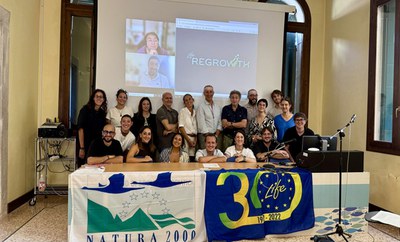
The LIFE REGROWTH Project Gets Underway to Restore the Venice Lagoon Ecosystem
Aug 31, 2026 — Aug 31, 2026 ChioggiaThe European LIFE REGROWTH project (Restoration of Habitat 1150 through the reintroduction of aquatic angiosperms in choked shallow waters of the central-southern basins of the Venice Lagoon) has officially launched. This major ecosystem restoration initiative aims to restore biodiversity and strengthen the resilience of the central-southern areas of the Venice Lagoon.*