Istituto Superiore per la Protezione
e la Ricerca Ambientale

Cerca
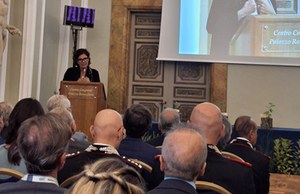
Maria Alessandra Gallone is the new ISPRA president
Feb 25, 2026

Today the official inauguration

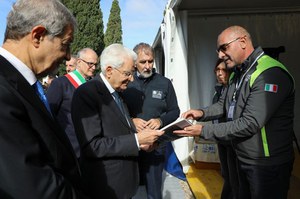
Today, Maria Alessandra Gallone officially took office as the new President of the Institute for Environmental Protection and Research (ISPRA).

Born in Bergamo in 1966, she holds a degree in Foreign Languages and Literatures from the University of Bergamo and is a certified teacher. She has gained extensive institutional experience at both local and national levels. She served as a Senator of the Republic for two legislatures and was a member of the Environment Committee, the Parliamentary Commission of Inquiry on Environmental Crimes, the Justice Committee, and the Agriculture Committee. In recent years, she has served as Advisor to the Minister of University and Research and as an expert for the Minister of Environment and Energy Security, contributing to processes aimed at strengthening integration between universities, research, innovation, and local territories.
“I thank the Minister of Environment, Gilberto Pichetto Fratin, for the trust he has placed in me by appointing me to this role, which I assume with a deep sense of institutional responsibility. ISPRA is a strategic institute for the country: a scientific authority of the highest level, a technical reference supporting public decision-making, and a cornerstone of the National System for Environmental Protection.

At a historic moment marked by climate change, hydrogeological fragility, water crisis, soil consumption, and the need to protect biodiversity, the contribution of science is essential. Sustainable development is not a slogan: it is a balance that must be built every day, with rigor, competence, and responsibility.

My priority will be to enhance the extraordinary professional expertise within the Institute—technologists, scientists, and researchers—promoting respect for skills and the scientific method, strengthening dialogue with ARPA and APPA, and consolidating a culture of prevention.

Education, accurate information, and transparency are fundamental tools to increase public awareness and support institutions in making the most complex decisions. ISPRA must continue to be an authoritative, independent, and credible point of reference, serving the State and future generations.”*

Highlight

Topics in evidence

The Guardian of the Coastal Dunes: The Conservation of the Kentish Plover Tells the Story of the Health of Mediterranean Coasts
Mar 04, 2026

In order to stop the rapid decline of the Kentish plover (Charadrius alexandrinus), the Life ALEXANDRO project has just been launched. It is co-funded by the European Union’s LIFE Programme and aims to protect the species while promoting a sustainable model for coastal management. Classified as “Endangered” on the IUCN Red List of Italian vertebrates, the Kentish plover has declined from more than 1,300 estimated breeding pairs in 2004 to about 500 in 2023, mainly due to tourism pressure and the loss of dune habitats.

The project involves 10 Italian regions and the Croatian region of Zadar, covering a total of about 400 km of coastline. Planned actions include nest protection, monitoring, habitat restoration, and dialogue with public authorities and beach tourism operators. ISPRA will play a central role: it will coordinate concrete conservation actions, develop research activities to identify the most suitable nesting areas at the national scale, and prepare Guidelines for the protection of the species.
continue
Who protects pollinators in Italy? First meeting of the LIFE PolliNetwork National Stakeholder Platform
Mar 03, 2026

The first map of institutional, scientific, economic, and social actors engaged in pollinator protection in Italy is now ready: 258 stakeholders have been identified as part of the PolliNetwork project.

In recent days, the first meeting of the Stakeholder Platform promoted within the LIFE PolliNetwork project and coordinated by WWF Italy took place. The technical meeting marked the first official opportunity for discussion with a broad and diverse audience composed of 116 representatives from around 70 organizations, including public bodies, institutions, universities, infrastructure managers, agricultural organizations, associations, and other entities interested in the protection of pollinating insects in Italy and involved in the restoration and management of the natural habitats where bees, butterflies, and hoverflies live.

continue
Microplastics: How Much Do We Know?
Feb 27, 2026

Microplastics are tiny plastic particles, conventionally defined as being smaller than 5 millimeters in size. They represent a potential threat to global health according to the One Health paradigm.

The BioPlast4Safe Project promotes the study of the characteristics, fate, and potential toxicological and ecotoxicological effects of plastics, with a specific focus on biodegradable polymers as a potential strategy to mitigate plastic pollution, in a from science to action perspective.

ISPRA is a partner of the Project

continue