Istituto Superiore per la Protezione
e la Ricerca Ambientale

Cerca
May 22: World Biodiversity Day
May 22, 2026
From local to global: restoring ecosystems to protect biodiversity, climate, and quality of life

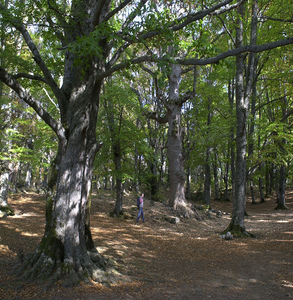
Italy possesses one of the richest wildlife heritages in Europe: about one third of all European animal species are found in Italy. Wildlife makes an important contribution to biodiversity in terms of richness and complexity. However, although in recent decades Italian wildlife biodiversity has seen the numerical increase and geographic expansion of many vertebrate species, a significant portion still remains under threat.

Italian fauna is estimated at more than 58,000 species, and the total rises to around 60,000 taxa when subspecies are also considered. Of the 672 Italian vertebrate species (576 terrestrial and 96 marine), 6 are extinct in Italy and 161 are threatened with extinction (equal to 28% of the assessed species). Italy’s flora is also highly significant because of its richness in species and subspecies; 20.65% of the 8,241 entities of Italian vascular flora are endemic, meaning exclusive to Italian territory, and among these, 1,128 are also regionally endemic, meaning their distribution is restricted to a single region.

May 22 is World Biodiversity Day, established by the United Nations to celebrate the ecosystems of our planet. This year’s official theme is “Acting locally for global impact”.

The Kunming-Montreal Global Biodiversity Framework, the international agreement adopted in December 2022 during COP15, represents the global action plan to halt and reverse biodiversity loss. It includes four global goals for 2050 (Conservation, Sustainable Use, Equity, and Financing) and 23 operational targets to be achieved by 2030. The core of the agreement is the 30x30 target: by 2030, signatory countries have committed to effectively protecting and conserving at least 30% of terrestrial and inland water areas, protecting at least 30% of marine and coastal areas, and restoring at least 30% of degraded ecosystems.

This year’s celebration carries particular significance: we are now in 2026, which means we are exactly halfway between the adoption of the Kunming-Montreal Global Framework (2022) and the deadline for achieving the targets set for 2030.

Maria Alessandra Gallone, President of ISPRA and SNPA, stated:

“Protecting biodiversity begins above all at the local level, as suggested by this year’s official theme, through concrete actions aimed at regenerating ecosystems. Scientific data show us a fragile balance and reveal a major challenge that can still be addressed, provided we are capable of acting with vision, expertise, and continuity, while safeguarding the natural capital on which our well-being depends.

The key word is: regenerate. Only in this way, through nature-based solutions that will also contribute to climate change mitigation and adaptation efforts, will it be possible to protect this immense heritage and maintain a high quality of life for everyone.

In this direction, ISPRA and the National System for Environmental Protection are strongly committed to supporting policies, scientific knowledge, and concrete actions for ecosystem recovery, accompanying the path outlined by the European Union and the Green Deal toward the sustainability goals for 2030 and 2050”.

Highlight

Topics in evidence

CII500K – The New Hydrogeological Map of Italy’s Groundwater
Jun 09, 2026 09:00 AM — Jun 09, 2026 05:00 PM Roma, Auditorium MASE “Ilaria Alpi e Miran Hrovatin”, via Capitan Bavastro 182

The Blue Gold of Our Country

In Italy, we drink groundwater: more than 84% of the country’s civil water demand is supplied by spring water or water extracted from underground aquifers through wells.
A true “Blue Gold” resource that is renewed every year and must be understood, protected, and enhanced.
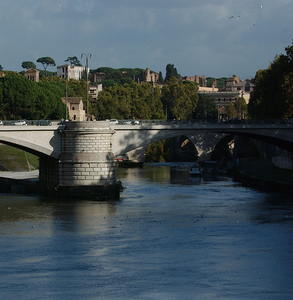
These needs are addressed by the new Hydrogeological Map of Italy at a scale of 1:500,000 (CII500K), which, after being presented to the scientific community, will be officially presented to the public on June 9 during an event at the Auditorium of the Ministry for the Environment and Energy Security.

The event will provide an opportunity to illustrate how the map was developed and to showcase the wealth of information it contains. The project was coordinated by ISPRA and the “Ardito Desio” Department of Earth Sciences at the University of Milan, in collaboration with ISTAT, CMCC (Euro-Mediterranean Center on Climate Change), and the seven District Basin Authorities, as well as with the participation of the wider groundwater expert community: Regions and Autonomous Provinces, ARPA/APPA environmental agencies, universities, research institutions, and professional associations. This initiative represents the first example of “participatory cartography” in Italy.

continue
Greenhouse gas emissions: possible 55% reduction by 2030
May 21, 2026

Italy’s net emissions reduction by 2030 could be in line with the European Union’s 55% target.

This is highlighted in the ISPRA Report “Greenhouse Gas Emissions in Italy: Reduction Targets and Emission Scenarios”, which outlines the progress made by the country eleven years after the Paris Agreement and identifies the strategic levers needed to strengthen the decarbonization pathway.

The Report shows that the ETS (Emission Trading System), supported by the growth of renewable energy sources and industrial innovation, is already following a trajectory consistent with European objectives. Projections indicate an emissions reduction ranging from 60% to 69% in the energy and industrial sectors covered by the European carbon market.

continue
Rome under Rome
Rome under Rome
Jun 10, 2026 09:30 AM — Jun 10, 2026 01:00 PM Rome, sala conferenze Parco Naturale dell'Appia Antica

The new Underground Cavities Map

The city of Rome preserves beneath its surface an extraordinarily complex heritage, the result of natural and human-made stratification developed over thousands of years. Ancient quarries, catacombs, hypogea, hydraulic tunnels, and numerous other underground structures form a structural component of the capital’s urban history, while also representing an element of major importance for territorial knowledge and the prevention of ground instability phenomena.

continue
All ISPRA Events All News

May

May