Istituto Superiore per la Protezione
e la Ricerca Ambientale

Cerca
Coastlines of Excellence, Seas to Protect
Jun 04, 2026

ISPRA, SNPA and Marevivo Join Forces to Highlight the Health of Italy’s Seas

World Environment Day and World Oceans Day

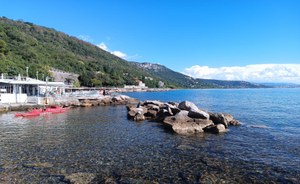
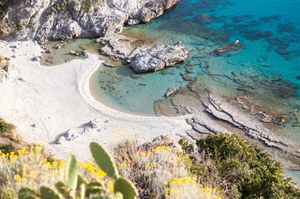
According to analyses carried out over the past four years by the National System for Environmental Protection (SNPA), the latest national data on bathing water quality confirm outstanding results once again for 2026. A remarkable 94.9% of monitored marine bathing waters have been classified as “excellent”, with nearly 6,000 kilometres of coastline achieving the highest standards established under European legislation. During 2025, the System conducted approximately 30,000 water samples and monitored around 5,000 sites across seas, lakes and rivers, ensuring continuous oversight of water quality.

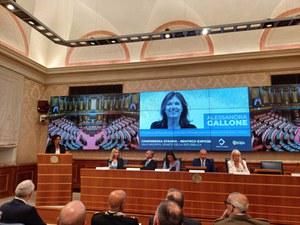
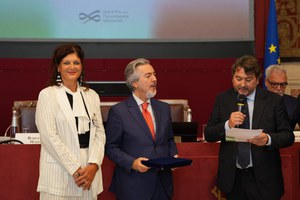
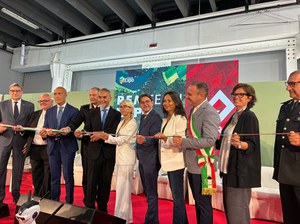
The results were presented today by ISPRA, the National System for Environmental Protection (SNPA) and Marevivo. To mark World Environment Day (5 June) and World Oceans Day (8 June), the three organizations hosted a discussion dedicated to the sea and the protection of marine ecosystems at Marevivo’s Floating Hub.

The findings confirm the high quality of Italy’s coastlines, while also highlighting the importance of considering the marine environment as a whole. Bathing water quality is only one indicator of ecosystem health; biodiversity, habitats, seabed quality, microplastics and climate change are equally strategic aspects that must be monitored and protected to safeguard the future of coming generations.

This shared commitment also includes the activities of the MER Project (Marine Ecosystem Restoration), funded through Italy’s National Recovery and Resilience Plan (PNRR). It is the most ambitious initiative ever undertaken in Italy for the restoration, conservation and protection of marine biodiversity. ISPRA has been designated by the Ministry of Environment and Energy Security as the sole implementing body, while the Ministry serves as the central administrative authority and funding provider.

The Plan includes 37 lines of action, ranging from the restoration of Posidonia oceanica meadows and native flat oyster populations to the exploration of seamounts and the deployment of the new oceanographic vessel Arcadia, a true floating marine laboratory.

Maria Alessandra Gallone, President of ISPRA and SNPA, stated:

"The sea is one of our country’s most valuable assets. The results on bathing water quality are a source of satisfaction, but they also remind us of the importance of continuing to invest in knowledge, monitoring and the protection of marine ecosystems. Protecting the sea means protecting biodiversity, territories, communities and our future”.

Rosalba Giugni, President of Marevivo, added:The partnership between ISPRA, SNPA and Marevivo is of strategic importance. It brings together scientific expertise and civic engagement to promote a broader and more integrated vision of marine health, based on safeguarding the entire marine ecosystem. Protecting the sea and its biodiversity is a shared responsibility that requires awareness, participation and widespread commitment to strengthening a culture of sustainability”.

Bathing Water Quality 2026: All Regional Data Now Available on the SNPA Website

Highlight

Topics in evidence

From the Nest on the Beach to the Open Sea: The Hidden Journey of Mediterranean Sea Turtles
Jun 08, 2026

Every summer, more and more people have the chance to see Caretta caretta sea turtles on Mediterranean beaches, thanks to nest monitoring and protection activities. But the big question is: where do they go when they disappear back into the sea?

For the first time at a Mediterranean-wide scale, researchers from the Life Conceptu Maris project have reconstructed the “hidden” marine life of these turtles across three stages of growth, showing that they do not all live in the same places or in the same way. On the contrary, their habitat changes with age, from young individuals to adults, almost as if they follow different pathways through the ocean.

continue
World Oceans Day
World Oceans Day
Jun 08, 2026 — Jun 08, 2026

On June 8, World Oceans Day, we also celebrate rare and astonishing creatures such as the Dumbo octopus (Insigniteuthis calypso).

It looks as though it has come straight from a cartoonist’s sketchbook, yet it lives in the depths of the Mediterranean Sea—in this video, it is found at a depth of about 1,700 meters—and is easily recognized by the small fins that resemble the ears of the famous little elephant. It is a benthopelagic cephalopod, less than 10 centimeters long, only rarely observed in the Mediterranean and, until a few years ago, known almost exclusively through accidental catches.

Thanks to seafloor exploration campaigns carried out by ISPRA as part of the PNRR MER – Seamounts project, it has been possible to document this species in its natural habitat, expanding our knowledge of the distribution and biodiversity of deep Mediterranean ecosystems.

continue
Rome under Rome
Rome under Rome
Jun 10, 2026 09:30 AM — Jun 10, 2026 01:00 PM Rome, sala conferenze Parco Naturale dell'Appia Antica

The new Underground Cavities Map

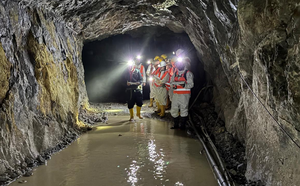
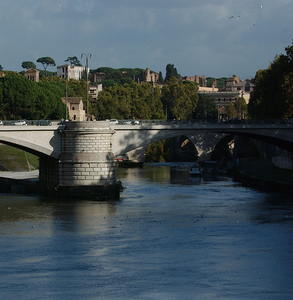
The city of Rome preserves beneath its surface an extraordinarily complex heritage, the result of natural and human-made stratification developed over thousands of years. Ancient quarries, catacombs, hypogea, hydraulic tunnels, and numerous other underground structures form a structural component of the capital’s urban history, while also representing an element of major importance for territorial knowledge and the prevention of ground instability phenomena.

continue
All ISPRA Events All News