Istituto Superiore per la Protezione
e la Ricerca Ambientale

Cerca
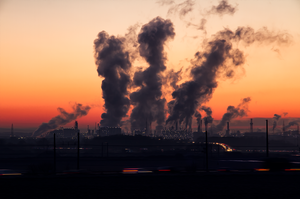
Greenhouse Gas Emissions Fall by 1.5% in 2026 as GDP Grows
Oct 21, 2026

ISPRA Publishes Estimates of Atmospheric Emissions

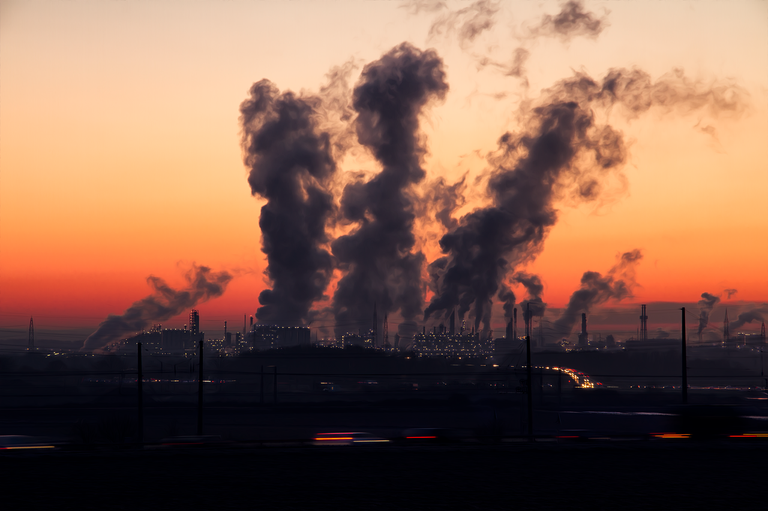
Based on the available data for the second half of the monitoring period, greenhouse gas emissions in 2026 are expected to decrease by 1.5% compared with 2025, while GDP is projected to grow by 0.8%. The overall reduction is driven primarily by a decline in coal consumption, which is used both in the residential sector and in industry, with emissions from industrial activities falling by 7.7%. This is followed by a 1.4% reduction in emissions from energy production and a 1.2% decrease in emissions from heating, in line with natural gas consumption trends. The transport sector also records a slight decline of 0.2%, mainly due to lower diesel consumption for road transport, partially offset by an increase in petrol consumption. No significant changes are expected in 2026 compared with the previous year in agriculture and waste management.

These are the key findings of the quarterly greenhouse gas emissions estimates produced by ISPRA (the Italian Institute for Environmental Protection and Research). This monitoring exercise makes it possible to regularly assess the relationship between economic performance and environmental impact, providing essential insights into the country's climate trends. The latest figures point to an initial reduction in greenhouse gas emissions—a first positive sign that will need to be sustained and strengthened to achieve climate targets.

“The estimates for 2026 confirm a very important trend: the gradual decoupling of economic growth from greenhouse gas emissions” said Maria Alessandra Gallone, President of ISPRA and SNPA (the National System for Environmental Protection). “GDP growth of 0.8% alongside a 1.5% decrease in greenhouse gas emissions is an encouraging and tangible sign that economic growth and environmental sustainability can go hand in hand rather than necessarily being in conflict. This result underscores the importance of decarbonisation policies, energy efficiency and technological innovation, demonstrating how the green transition can also create opportunities for the country's development and competitiveness. We know that achieving European and national climate targets will require continued commitment, consistent action and investment. However, falling emissions in the industrial sector and the growing contribution of renewable energy sources, which meet more than 42% of electricity demand, are important signs of an ongoing transformation.”

The challenge is to consolidate these gains and accelerate change, bringing together environmental protection, economic growth and people's well-being. In this process, the scientific expertise and monitoring provided by ISPRA and the National System for Environmental Protection are essential tools for guiding informed decisions and effective policies.

In 2026, electricity demand stood at 156,671 GWh, representing an increase of 2.5% compared with the same period in 2025 and 3.3% compared with 2024. This energy demand was met by renewable energy sources (RES), which accounted for 42.8%, non-renewable sources, which supplied 41.1%, and net electricity imports, which accounted for the remaining 16.2%.
Highlight

Topics in evidence

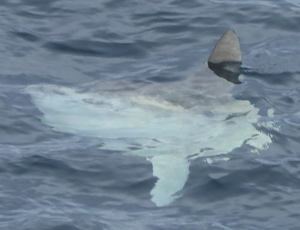
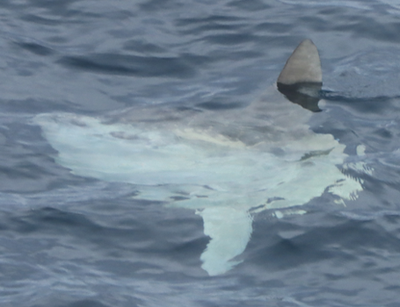
The ocean sunfish in the Mediterranean: new insights into an enigmatic species
Oct 19, 2026

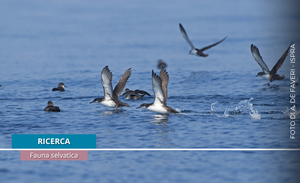
With its large, flattened body, the ocean sunfish (Mola mola) is one of the most distinctive and recognizable inhabitants of the Mediterranean Sea. Encounters with this species are uncommon, but when it appears at the surface, it rarely goes unnoticed. Yet, despite its large size and wide distribution, many aspects of its ecology remain poorly understood, particularly in the Mediterranean.

A new study coordinated by ISPRA has sought to fill some of these knowledge gaps by bringing together the available scientific literature on the species, 14 years of ferry-based observations, and the latest environmental DNA (eDNA) data.

continue
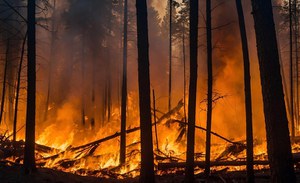
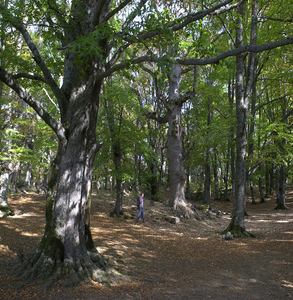
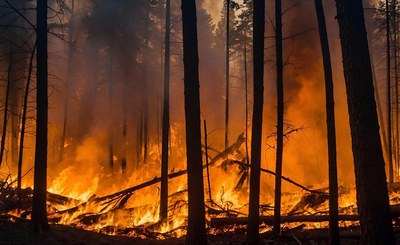
Wildfires: When Fire Erases Green
Oct 16, 2026

Understanding the impacts to protect forests: prevention starts now.
ISPRA updates wildfire data.

Wildfires in Europe and Italy

According to the European Forest Fire Information System (EFFIS), the 2026 wildfire season remains severe across Europe, particularly in Spain, France, Italy, Croatia and Belgium.

Between 1 January and 15 September 2026, Italy recorded 2,076 major wildfires, burning over 1,200 km², an area almost as large as Rome’s municipal territory. Nearly 200 km² of the burned land consisted of forests.

Sicily was the hardest-hit region, accounting for 55% of Italy’s total burned area, followed by Calabria and Puglia, each representing around 10%. Piedmont was the most affected region in northern Italy, while Abruzzo led in central Italy, both accounting for approximately 4%.
Agrigento was the most severely affected province, with 222 km² burned, including around 15 km² of forest.

Protected areas were particularly vulnerable: over 30% of Italy’s total burned area and approximately 40% of burned forest land fell within national parks, nature reserves and Natura 2000 sites.

Major wildfire events

On 20 July, a large fire in the provinces of Agrigento and Palermo burned 63 km², including 12 km² of forest, mainly evergreen woodland and conifer plantations, much of it within ecologically valuable areas.

On 4 August, another serious fire affected Piedmont’s Biella and Vercelli provinces, burning approximately 9 km² of forest, primarily mixed deciduous and coniferous woodland.

Monitoring and prevention

ISPRA’s wildfire monitoring system uses high-resolution satellite observations to provide scientifically reliable data, helping national and regional authorities assess environmental damage and improve forest protection and prevention strategies.

continue
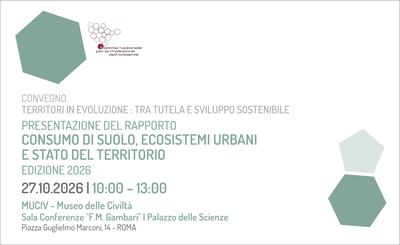
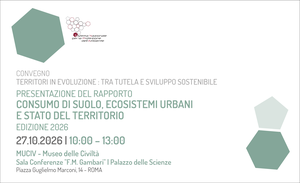
Evolving Territories: Between Conservation and Sustainable Development
Oct 27, 2026 10:00 AM — Oct 27, 2026 01:00 PM Rome, MUCIV - Museo delle Civiltà, Piazza Guglielmo Marconi, 14

Presentation of the report "Land Consumption, Urban Ecosystems, and the State of the Territory – 2026 Edition"

On October 27, the national report "Land Consumption, Urban Ecosystems, and the State of the Territory – 2026 Edition"—produced by the National System for Environmental Protection—will be presented in Rome. The event will highlight key data regarding the transformation of our territory, including land consumption, changes observed in agricultural and natural areas, processes of re-naturalization, and the potential for the regeneration and restoration of urban ecosystems.

continue
All ISPRA Events All News

October

October